


Spot Gold Rises Above $4,400 as Fed and Middle East Risks Sway Gold Prices
TradingKey - On Monday (August 17) in early Asian trading, spot gold (XAUUSD) strengthened, currently trading near $4,406 per ounce. Over the previous week, gold prices rose approximately 0.8% overall, though intraday volatility picked up noticeably. Markets are currently focusing on the impact of weakening U.S. economic data on Fed policy expectations on one hand, while assessing the risk that the Middle East situation and rising energy prices could push inflation higher again on the other.
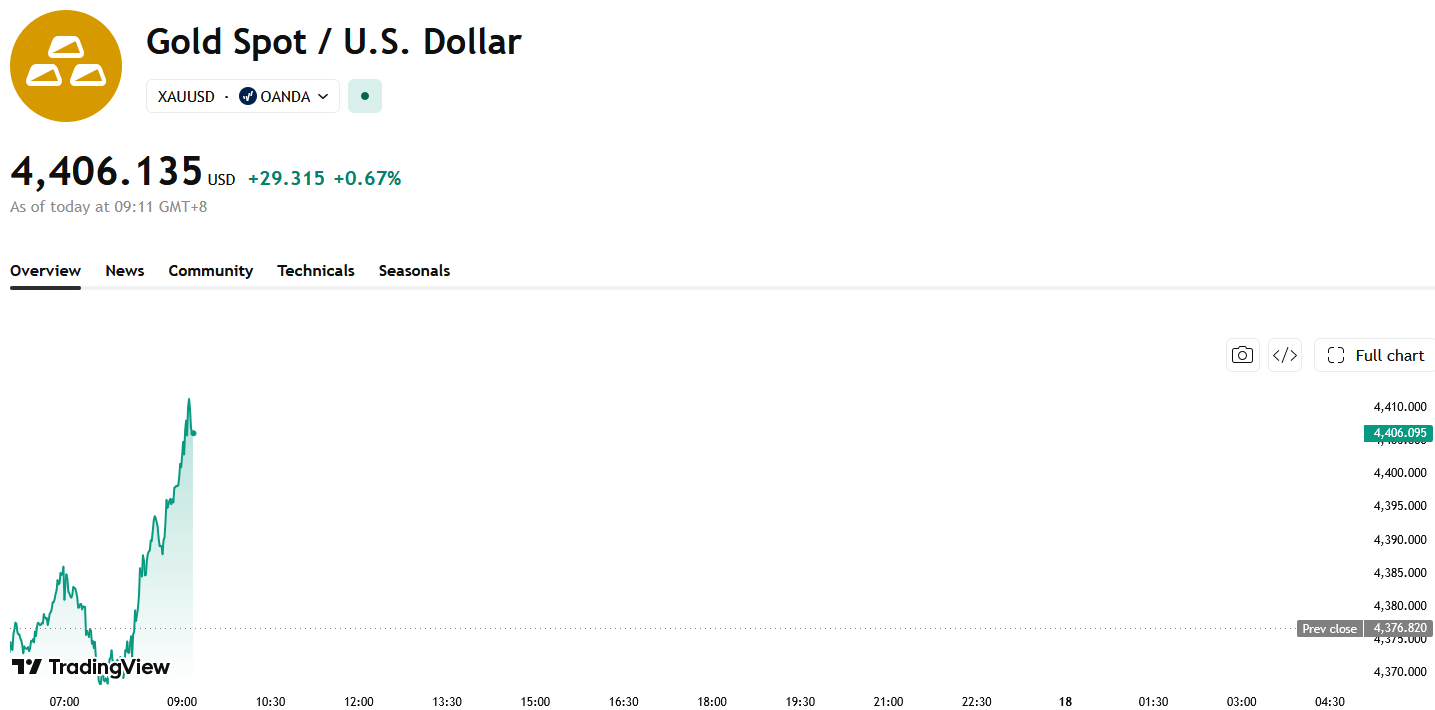
Source: TradingView
The gold market experienced notable volatility last week. Spot gold opened at $4,346 per ounce on August 11 and subsequently climbed higher, hitting a two-month high near $4,450 mid-week. However, as bulls took profits, gold fell as much as 1.3% on Thursday and dropped further toward $4,310 during Friday's session. Subsequently, U.S. retail sales data came in significantly weaker than expected, heightening market concerns over U.S. economic growth; gold rebounded swiftly to close at $4,375.80 per ounce.
Weakening U.S. economic data has been an important reason for gold regaining support recently. July retail sales fell 0.6% month-on-month, ending previous growth momentum and coming in significantly below market expectations for 0.1% growth. Consumer confidence also dropped back, signaling signs of a cooling U.S. consumer sector.
Previously released employment and inflation data also sent relatively dovish signals. July nonfarm payrolls missed expectations, and CPI and PPI figures showed no clear signs of heating inflation, further easing market concerns over a resurgence in inflation and prompting investors to reassess the Fed's future interest rate path.
Market expectations for a September rate hike cooled significantly as a result. CME FedWatch data shows that the probability of a September rate hike has dropped from a high of around 75% in late July to about 33%, with the market now leaning toward the Fed keeping interest rates unchanged. The shift in rate expectations has also relieved pressure on gold as a non-yielding asset.
Meanwhile, uncertainty remains over the situation in the Strait of Hormuz. On August 15 local time, the Iranian Foreign Ministry stated that after weeks of technical consultations, Iran and Oman had agreed on a shipping route plan for the Strait of Hormuz, with both sides still handling follow-up matters such as a joint statement. Iran stated that the arrangement aims to ensure the safe passage of vessels, while adding that whether normal shipping through the strait can fully resume also depends on whether the U.S. fulfills its relevant commitments.
This week, the market will focus key attention on the minutes of the Fed's July policy meeting, as investors look for further clues regarding inflation, employment, and future interest rate policy.
Recommended Articles


