


WTI Futures (USOIL-F) Is up 2.47% on Aug 30: What Is Driving the Move?
WTI Futures (USOIL-F) is up 2.47% at Aug 30 18:05(ET), now at $85.43, with a 7-day down of 1.35%.
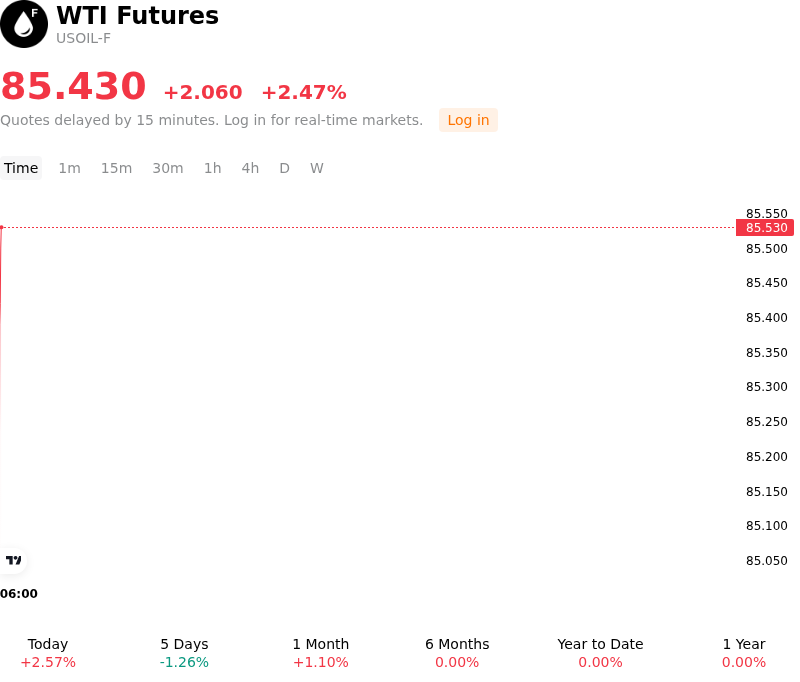
What is driving WTI Futures (USOIL-F)’s stock price up today?
The upward price action in U.S. West Texas Intermediate crude oil futures was primarily driven by a resurgence in geopolitical risk premiums and renewed concerns over physical supply continuity. After a brief retreat triggered by diplomatic talks regarding potential shipping corridors in the Middle East, market sentiment shifted as negotiations stalled and friction surrounding international trade sanctions persisted. Ongoing uncertainty over transit security through critical maritime choke points, particularly the Strait of Hormuz, prompted institutional investors to re-establish geopolitical risk hedges, effectively reversing recent weakness and tightening supply expectations across front-month contracts.
Refining fundamentals and downstream inventory dynamics provided strong structural support to crude prices. Global refinery utilization rates remained elevated, supported by tight product markets and robust demand for middle distillates and motor fuels. Sustained strength in refining margins encouraged refiners to maintain high crude intake, absorbing underlying physical supplies even as commercial crude stocks showed localized baseline builds. The ongoing draw in downstream fuel inventories reinforced the perception among market participants that global demand for refined products remains firm.
Macroeconomic conditions and shifting monetary policy expectations further anchored the bullish momentum. Following recent inflation data releases and central bank guidance, expectations around interest rate trajectories stabilized, offering support to global growth forecasts and broader risk sentiment. A relatively subdued U.S. dollar index helped limit foreign-exchange drag on dollar-denominated commodities, creating a favorable backdrop for commodity capital inflows. From a technical perspective, crude futures successfully defended major technical support levels, triggering systematic short-covering and algorithmic buy programs that amplified intraday upside momentum.
Looking ahead, market participants continue to balance supply risk against broader structural drivers. Key risks monitoring by traders include potential secondary trade sanctions, unexpected transit disruptions across major export choke points, and shifts in OPEC export policies. Conversely, any unexpected weakening in manufacturing indicators or swift resolution to diplomatic impasses could quickly trim geopolitical premiums. In the near term, WTI futures are expected to remain volatile, heavily responsive to real-time geopolitical updates and weekly physical supply metrics.
Technical Analysis of WTI Futures (USOIL-F)
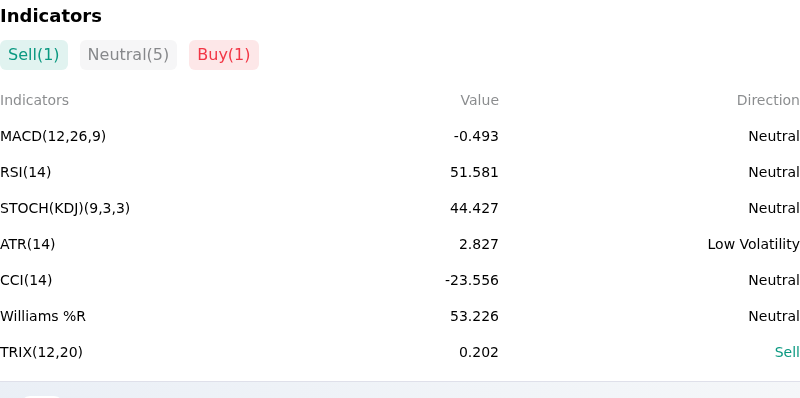
Technically, WTI Futures (USOIL-F) shows a MACD (12,26,9) value of -0.493, indicating a neutral signal. The RSI at 51.581 suggests neutral condition and the Williams %R at 53.226 suggests neutral condition. Please monitor closely.
More details about WTI Futures (USOIL-F)
Recent Events and Risks:
- Geopolitical Risk Premium Unwinding: Progress in diplomatic negotiations between Iran and Oman to establish a joint shipping corridor through the Strait of Hormuz, alongside recovering Persian Gulf exports reaching 15–16 million barrels per day, has substantially deflated the geopolitical risk premium and driven front-month WTI futures lower.
- Unexpected U.S. Crude Inventory Accumulation: Weekly Energy Information Administration (EIA) data revealed an unexpected commercial crude inventory build to 428.9 million barrels, lifting total domestic stocks above five-year seasonal averages and pointing to near-term physical market slack.
- Institutional Demand Growth Downgrades: Consecutive downward revisions to 2026 global oil demand growth by OPEC and the IEA—driven by sluggish industrial activity and slowing consumption across China and Asian markets—continue to cap price rallies and reinforce underlying demand weakness.
- U.S. Dollar Rally and Macro Headwinds: A rebound in the U.S. Dollar Index (DXY) to multi-week highs, coupled with persistent hawkish Federal Reserve interest rate expectations, has increased currency headwinds for dollar-denominated energy contracts and spurred speculative long liquidation.
Recommended Articles


