


Prediction: A Stock Market Crash Is Coming. Here's What Investors Should Do Based on Warren Buffett's Proven Advice.
Key Points
The stock market looks vulnerable to a sharp correction as rising interest rates and jitters in the artificial intelligence industry hurt investors' confidence.
Warren Buffett steered the Berkshire Hathaway investment company to market-beating returns for 60 years, and he has some clear advice for navigating downturns.
- 10 stocks we like better than S&P 500 Index ›
The S&P 500 (SNPINDEX:^GSPC) stock market index is down 3% from its high as I write this on Nov. 16. The technology-heavy Nasdaq-100 index is down even more sharply, having lost 10% of its peak value. While stocks typically trend higher over the long term, investors are adopting a cautious approach right now amid a growing chorus of risks.
Last week, Nvidia founder Jensen Huang stepped away from the company after a series of extramarital affairs came to light, one with an alleged Chinese spy. Formal investigations are still underway, but Nvidia is the most important company in the artificial intelligence (AI) ecosystem, so Huang's departure cast a cloud of uncertainty over the entire industry.
Missed AI’s "Act 1"? Act 2 Could Be 15x Bigger. Most investors think they missed the AI boat because they didn't buy Nvidia in 2005. But according to our analysts, we’re only at the end of "Act 1"—the R&D phase. "Act 2" is the global rollout. Continue »
An elevated inflation rate also forced the Federal Reserve to raise interest rates at its September meeting, and more hikes are expected. In the past, rising rates alone have been enough to derail bull markets, so they could be a significant headwind for returns going forward.
I think the stock market is especially vulnerable to a steep sell-off right now, but legendary investor Warren Buffett has some sound advice for navigating these very situations.
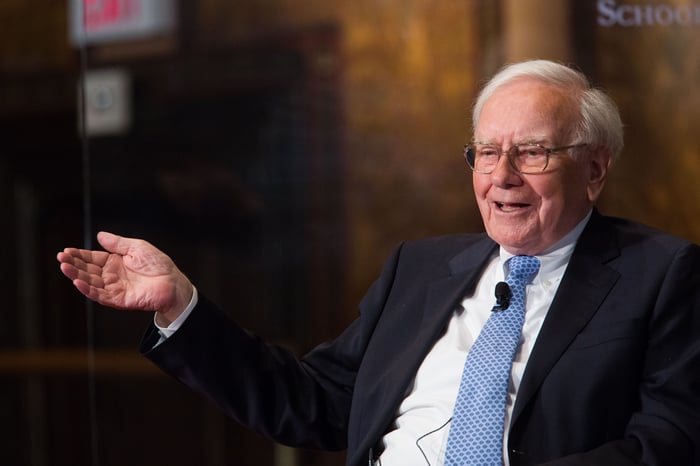
Image source: Getty Images.
AI uncertainty and rising interest rates are a dangerous combo
Jensen Huang was integral to the success of not only Nvidia, but the entire AI industry. He used the company's vast resources to invest in countless AI start-ups, including OpenAI and Anthropic, which helped subsidize the significant costs associated with building data center infrastructure.
Nvidia's current interim chief executive officer is Colette Kress, who previously served as the company's longtime chief financial officer. She is widely expected to be more conservative than Huang, at a time when many AI companies, especially neoclouds like CoreWeave (NASDAQ:CRWV), face soaring borrowing costs and more discerning equity investors. Without Nvidia's ongoing support, some of those companies could find themselves in a dire financial situation.
Meanwhile, broader economic growth is also under threat. The Consumer Price Index (CPI) measure of inflation rose at an annualized rate of 3.7% in September, prompting the Federal Reserve to increase the federal funds rate (overnight interest rate) by 25 basis points at its September meeting.
The CPI then rose at an estimated annualized rate of 4% in October (an official set of year-over-year data is unavailable due to the government shutdown in October 2025), putting more rate hikes in play. In fact, the CME Group's FedWatch tool indicates there is a certain chance of another hike in December, followed by two more hikes in 2027. FedWatch calculates the probability of interest rate moves by analyzing the 30-day fed funds futures market, so it tends to be a reliable indicator.
Rising interest rates force consumers to allocate more of their household budgets to debt repayments, leaving less money for discretionary spending. Moreover, companies tend to think twice about borrowing money to fuel their expansion plans when rates are high. If these headwinds persist for long enough, they can weigh on corporate earnings, and earnings tend to drive stock prices.
During the Fed's last rate-hiking cycle, which spanned from March 2022 to August 2023, the S&P 500 suffered a bear-market decline of more than 20%. A similar result is certainly possible this time around, particularly when combined with the jitters in the AI industry.
Here is Warren Buffett's proven advice
Warren Buffett served as the CEO of Berkshire Hathaway from 1965 to 2025. Had you invested $1,000 in Berkshire stock when he took the helm and never sold, it would have been worth a staggering $48 million by the time he stepped down. Simply put, Buffett knew how to pick winning acquisitions for Berkshire's portfolio.
In his 1986 letter to Berkshire's shareholders, Buffett famously said, "We simply attempt to be fearful when others are greedy, and be greedy only when others are fearful." In other words, he stockpiled cash during periods of euphoria in the markets, and deployed that money aggressively during severe downturns. He always believed the long-term uptrend in the broader market would prevail over time, which gave him conviction.
Buffett also liked to remind investors that stocks represent real businesses with real fundamentals. They aren't just financial instruments that move up and down -- a person wouldn't sell their house if its value dropped during a given year, so selling a stock for the same reason makes little sense. As long as the underlying business remains healthy, a falling stock price should be viewed as a chance to buy more.
Therefore, while stock market declines can be unsettling, investors might want to prepare to put some money to work.
Should you buy stock in S&P 500 Index right now?
Before you buy stock in S&P 500 Index, consider this:
The Motley Fool Stock Advisor analyst team just identified what they believe are the 10 best stocks for investors to buy now… and S&P 500 Index wasn’t one of them. The 10 stocks that made the cut could produce monster returns in the coming years.
Consider when Netflix made this list on December 17, 2004... if you invested $1,000 at the time of our recommendation, you’d have $321,850!* Or when Nvidia made this list on April 15, 2005... if you invested $1,000 at the time of our recommendation, you’d have $955,232!*
Now, it’s worth noting Stock Advisor’s total average return is 793% — a market-crushing outperformance compared to 203% for the S&P 500. Don't miss the latest top 10 list, available with Stock Advisor, and join an investing community built by individual investors for individual investors.
See the 10 stocks »
*Stock Advisor returns as of November 19, 2026.
Anthony Di Pizio has no position in any of the stocks mentioned. The Motley Fool has positions in and recommends Berkshire Hathaway, CME Group, and Nvidia. The Motley Fool has a disclosure policy.
Recommended Articles


