


Not SpaceX: SPX Technologies Could Be the Better Way to Profit From Increased Scrutiny Over AI Infrastructure Spending
Key Points
Orbital data centers face high depreciation and operational risks, and it's far from clear what their depreciation rate will be.
SPX benefits from increasing AI data center demand and regulatory trends.
- These 10 stocks could mint the next wave of millionaires ›
Space Exploration Technologies (NASDAQ:SPCX), known as SpaceX, is a fine and worthy investment. Still, I think a company with a similar ticker, cooling technology and detection and measurement company SPX Technologies (NYSE:SPXC), may be a better way to invest in AI infrastructure. That's particularly the case given the possibility of increased scrutiny of AI data centers amid recent political developments. Here's why.
A matter of risk
The key consideration boils down to risk. I think SpaceX has a known unknown, orbital data centers, which creates uncertainty around a key element of its growth plans. In comparison, I think a known unknown might lead to more favorable outcomes for SPX Technologies, not least given tightening water regulations and scrutiny of water use in terrestrial data centers.
Missed AI’s "Act 1"? Act 2 Could Be 15x Bigger. Most investors think they missed the AI boat because they didn't buy Nvidia in 2005. But according to our analysts, we’re only at the end of "Act 1"—the R&D phase. "Act 2" is the global rollout. Continue »
SpaceX's known unknown
SpaceX management has claimed orbital data centers could be deployed as early as 2028, so it's reasonable to conclude that they are baked into the stock's valuation. And now we get to the difficult part. We know that data centers have a depreciation rate, but what is the depreciation rate for an orbital data center?
It's not an esoteric question. In fact, it speaks to matters at the heart of the debate around AI infrastructure investment. Let's put it this way: If a machine worth $10 million depreciates at a 10% rate, then management will need $1 million in maintenance capital spending to replace it, while a machine depreciating at a much higher rate of 25% needs $2.5 million per year. The extra $1.5 million in spending eats into cash-flow generation.
In a terrestrial data center, even if its graphics processing units (GPUs) and other infrastructure depreciate at a 33% rate (over three years), they can be replaced. For GPUs, older models can be used for lower-intensity workloads. As such, hyperscalers can depreciate GPUs over a five- to six-year period.
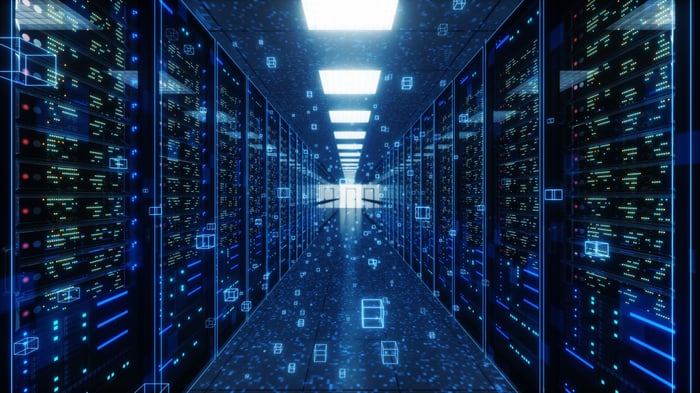
Image source: Getty Images.
However, in an orbital data center, it's likely to be astronomically expensive (pun intended) to replace the architecture in orbit. Moreover, the cost of an orbital data center means it's not tailored for low-intensity work. As such, orbital data centers could end up with very high depreciation rates, equivalent to the useful life of high-end GPUs, possibly 33%. Throw in launch and other risks around their operations, and it's possible the rate could even be higher, thereby challenging the cash-flow assumptions investors have penciled in for SpaceX.
SPX Technologies
If you are looking for an under-the-radar stock with heavy exposure to AI infrastructure spending, then heating, ventilation, and air conditioning (HVAC) company SPX Technologies might fit the bill. The company generates 73% of its revenue from its HVAC business, which encompasses cooling towers and engineered air movement technology.
AI data centers generate a large amount of heat that needs to be removed, and SPX's cooling towers help remove it and return cooled water as part of a closed-loop system. Moreover, SPX's management has increased its exposure to data centers by acquiring FIS Water, a company that provides water management and control solutions that improve water quality and protect equipment. As such, they are a complementary fit to SPX's cooling towers.
An improving end market environment
SPX's management recently confirmed that demand in its data center segment was increasing and accelerating compared to a few months ago, so its current demand trends are clearly positive. Moreover, for investors worried about a potential slowdown in data center investment due to weakening financing conditions for neoclouds, it should be noted that more than 90% of its data center business is tied to hyperscalers.
Finally, SPX's known unknown is the possibility of a more favorable legislative and regulatory environment. Any increase in scrutiny around water conservation, environmental efficiency, and water efficiency plays to the strength of its highly engineered solutions and would likely boost its prospects.
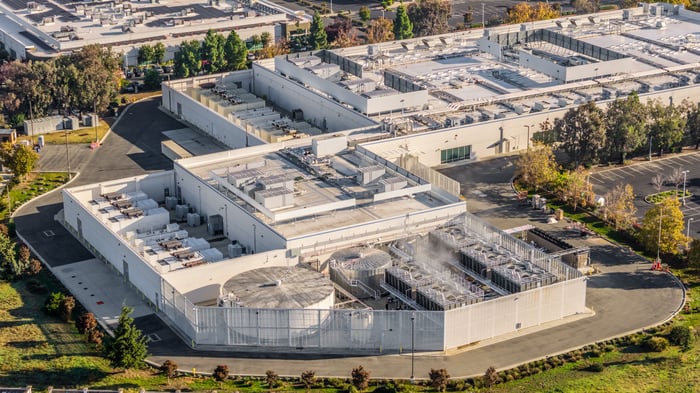
Image source: Getty Images.
Trading at less than 16 times forward earnings estimates, and with double-digit earnings prospects over the next few years, SPX Technologies looks like an excellent value stock for investors seeking AI exposure.
Missed AI’s "Act 1"? Act 2 Could Be 14x Bigger
Most investors think they missed the AI boat because they didn't buy Nvidia in 2005.
But according to our analysts, we’re only at the end of "Act 1"—the R&D phase. "Act 2" is the global rollout, a massive technology build-out that Google’s CEO says could be more profound than fire or electricity.
While everyone watches the chip designers, one "backbone" company provides the critical technology that Nvidia and AMD literally cannot function without. We’ve detailed this under-the-radar player in our new AI Playbook.
Continue »
Lee Samaha has no position in any of the stocks mentioned. The Motley Fool has positions in and recommends Space Exploration Technologies. The Motley Fool has a disclosure policy.
Recommended Articles


