


Nikkei 225 Bucks Trend to Gain As Kospi Slumps 3%; Kioxia Tumbles 8%, SK Hynix and SoftBank Drop 6%
TradingKey - Japanese and South Korean stock markets diverge; Nikkei tracks US stock gains to open higher, KOSPI drops 2.4%, Kioxia plummets 8%, SK Hynix and SoftBank tumble 6%.
On November 5 during Asian trading hours, stock markets in Japan and South Korea diverged significantly, with Japanese stocks rebounding to open higher while South Korean stocks opened lower under pressure. South Korea's benchmark KOSPI Index opened lower and continued to drop, falling 2.73% to temporarily trade at 5,528.67 points; Samsung Electronics slipped 3.44%, approaching the 210,000 mark at 210,500 Korean won; SK Hynix plunged 6.09%, breaking below the key 1.4 million mark to trade at 1,311,000 Korean won.
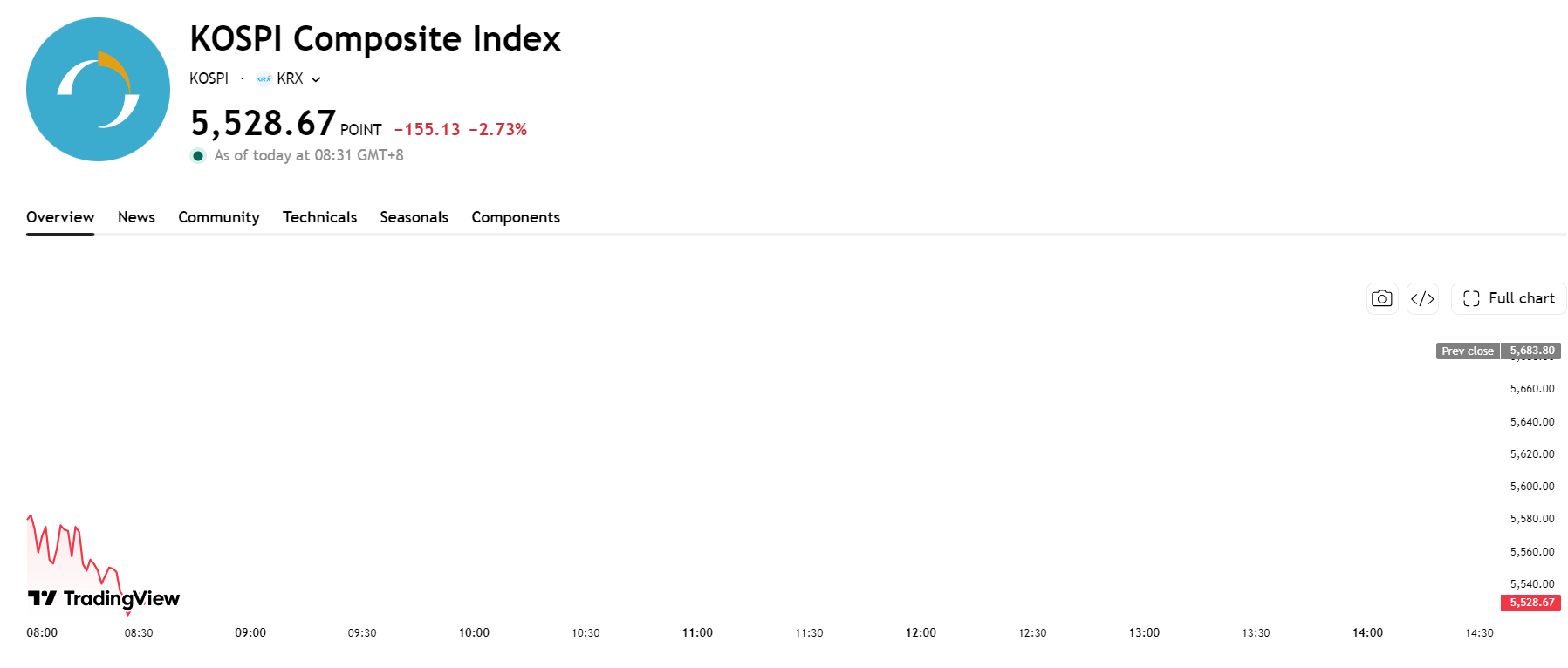 KOSPI index chart, source: TradingView
The Nikkei 225 Index opened higher and extended gains, rising 0.34% to temporarily trade at 62,402.68 yen; Kioxia dropped 8.37% to 9,835 yen; SoftBank fell 6.18%, approaching the 4,000 mark at 4,005 yen.
Despite a Democratic sweep of Congress, as the post-election political uncertainty finally cleared, the market staged a classic 'sell-the-fact' trade, with both the S&P 500 and the Nasdaq Composite Index rebounding with strong bullish candles. Meanwhile, Japanese stocks, as a market highly correlated with US equities, promptly absorbed the bullish sentiment from the overnight US market rally, driving the Nikkei index to open higher smoothly.
After the Democratic Party won control of both houses of Congress, concerns over strict hearings and environmental reviews facing the 2027 AI capital expenditures (CapEx) of major US tech giants such as Alphabet (GOOG), Amazon (AMZN), and Microsoft (MSFT) intensified in the market. As earnings in the South Korean stock market are heavily reliant on computing power demand driven by high-bandwidth memory (HBM) and traditional DRAM, foreign institutions heavily sold off South Korea's two chip giants at today's open, causing the KOSPI to open sharply lower.
Recommended Articles


