


Elon Musk Predicts SpaceX Could Reach $1 Trillion in Annual Revenue Run Rate by Year-End 2027. Here's What Needs to Happen.
Key Points
Artificial intelligence (AI) infrastructure and services now comprise 52% of Space Exploration Technologies' total revenue.
SpaceX's Super Intelligence (SI) division grew 830% year over year during the third quarter.
Rising capital expenditures from AI hyperscalers should be a powerful tailwind for SpaceX as the company expands its compute capacity.
- 10 stocks we like better than Space Exploration Technologies ›
During Space Exploration Technologies' (NASDAQ: SPCX) third-quarter earnings call, Elon Musk laid out an ambitious plan to reach a $1 trillion annualized revenue run rate by December 2027.
That might sound like fantasy, considering SpaceX generated less than $19 billion in total revenue last year. But as the company evolves from a rocket manufacturer and satellite internet provider into one of the world's fastest-growing artificial intelligence (AI) infrastructure businesses, there's a compelling case for taking Musk's prediction seriously.
Missed AI’s "Act 1"? Act 2 Could Be 15x Bigger. Most investors think they missed the AI boat because they didn't buy Nvidia in 2005. But according to our analysts, we’re only at the end of "Act 1"—the R&D phase. "Act 2" is the global rollout. Continue »
Let's dive into what SpaceX needs to do to reach Musk's trillion-dollar revenue target and assess if now is a good time to buy the stock.
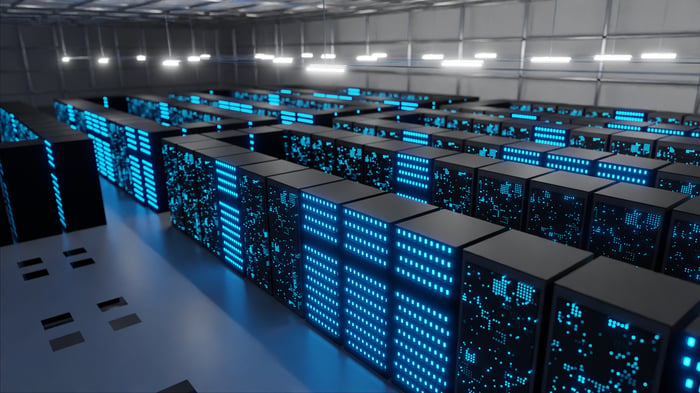
Image source: Getty Images.
SpaceX is becoming an artificial intelligence (AI) powerhouse
For most of its history, SpaceX was known for its Starlink internet connectivity business and Falcon and Starship rocket launch business. However, the company's combination with xAI and Cursor has dramatically changed its growth trajectory.
During the quarter, SpaceX generated $14.6 billion in total revenue, representing 161% year-over-year growth. Its Super Intelligence (SI) division grew 830% year over year to $7.6 billion. Artificial intelligence (AI) now accounts for 52% of SpaceX's total sales.
Musk seems to think this growth is just getting started. During the earnings call, he revealed that SpaceX expanded its AI computing capacity to 1.7 GW, up from 0.6 GW a year earlier. He expects capacity to reach between 2.5 and 3 gigawatts by December, and says he's "fairly confident" the company can add an incremental 10 gigawatts during 2027.
If this is achieved, it would bring SpaceX to 13 gigawatts by the end of next year. Musk also says the company has a more ambitious plan to bring on an incremental 20 gigawatts next year.
This infrastructure build-out is the foundation of Musk's trillion-dollar goal. A $1 trillion annualized revenue run rate means SpaceX would generate $250 billion in quarterly revenue by the end of 2027. In other words, it does not mean the company would actually report $1 trillion in revenue for the full year.

Space Exploration Technologies CEO Elon Musk. Image source: The White House.
Wall Street expects the hyperscalers to keep spending
One reason Musk's prediction deserves consideration is his track record of rapidly building AI infrastructure. In 2024, xAI built its Colossus I supercomputer in just 122 days. That execution speed could be an enormous competitive advantage as AI hyperscalers scramble to secure additional compute.
According to Citi, Amazon, Microsoft, Alphabet, and Meta Platforms are projected to spend a combined $5.35 trillion on capital expenditures (capex) through 2030. Much of this investment will go toward data centers, semiconductors, networking equipment, and power infrastructure.
Importantly, investors should understand that SpaceX has already benefited from leasing AI capacity through its relationships with Google Cloud, Anthropic, and Reflection AI, complemented by a growing portfolio of advertising and software products from Grok and Cursor.
Reaching a $1 trillion revenue run rate is a steep hill to climb
The biggest question surrounding Musk's forecast isn't simply whether SpaceX can build enough AI infrastructure. It really boils down to whether the company can actually generate enough revenue from its infrastructure to justify his prediction.
Let's consider a scenario in which AI accounts for 90% of SpaceX's revenue by December 2027, with Starlink and Space contributing the remaining 10%. That would mean $900 billion in annualized revenue is attached to AI services, alongside $100 billion from its other businesses.
Here's where AI capacity becomes the important variable in the equation. As referenced, SpaceX generated $7.6 billion in AI revenue during the third quarter. This equates to about $30 billion annually. With 1.7 gigawatts of installed capacity, that implies $18 billion in annualized revenue per gigawatt.
Suppose SpaceX reaches 15 gigawatts by December 2027. To generate $900 billion annually from AI, the revenue productivity from capacity agreements would need to increase to nearly $60 billion per gigawatt -- more than triple today's level.
There are reasons why AI revenue productivity should improve throughout next year. Nvidia's next-generation Vera Rubin compute architecture is expected to deliver higher performance, while growing demand for AI inference should help SpaceX monetize its infrastructure more efficiently. Moreover, software subscriptions from Grok and Cursor could also contribute to the segment's overall growth.
Where things get a little messy is that, even under this AI-heavy scenario, Starlink and Space would also need to triple their current combined revenue pace. This means Musk's $1 trillion target requires much more than data center expansion. SpaceX would essentially need exceptional execution, stronger monetization, and sustained customer demand across all facets of the business.
At a high level, the long-term investment thesis around SpaceX is becoming more compelling. The company increasingly resembles a hyperscaler, an AI neocloud provider, a satellite connectivity company, and a space transportation business.
Even if Musk's forecast proves overly optimistic, SpaceX is demonstrating the ability to capitalize on several enormous market opportunities simultaneously. For this reason, SpaceX stock may be worth a consideration for investors looking for a new spin on the AI trade.
Should you buy stock in Space Exploration Technologies right now?
Before you buy stock in Space Exploration Technologies, consider this:
The Motley Fool Stock Advisor analyst team just identified what they believe are the 10 best stocks for investors to buy now… and Space Exploration Technologies wasn’t one of them. The 10 stocks that made the cut could produce monster returns in the coming years.
Consider when Netflix made this list on December 17, 2004... if you invested $1,000 at the time of our recommendation, you’d have $350,756!* Or when Nvidia made this list on April 15, 2005... if you invested $1,000 at the time of our recommendation, you’d have $1,363,905!*
Now, it’s worth noting Stock Advisor’s total average return is 922% — a market-crushing outperformance compared to 213% for the S&P 500. Don't miss the latest top 10 list, available with Stock Advisor, and join an investing community built by individual investors for individual investors.
See the 10 stocks »
*Stock Advisor returns as of October 22, 2026.
Citigroup is an advertising partner of Motley Fool Money. Adam Spatacco has positions in Alphabet, Amazon, Microsoft, and Nvidia. The Motley Fool has positions in and recommends Alphabet, Amazon, Meta Platforms, Microsoft, and Nvidia. The Motley Fool has a disclosure policy.
Recommended Articles


