


If a Stock Market Crash Is Coming, Warren Buffett Has Advice for Investors Right Now
Key Points
Buffett managed to steer Berkshire Hathaway's portfolio through many dramatic market sell-offs.
Buffett and his team were also quite good at spotting investment opportunities during market crashes.
If you believe a market crash is coming, following one of Buffett's core investing philosophies could be a great way to grow your portfolio long term.
- 10 stocks we like better than S&P 500 Index ›
Although Warren Buffett has formally left Berkshire Hathaway, the lessons he taught investors over decades of investing will live on forever.
Not only was Buffett arguably the greatest investor ever, but he also has a ton of experience from spending so many decades in the business. He also has a wealth of experience investing in difficult market environments, including recessions and bear markets.
Missed AI’s "Act 1"? Act 2 Could Be 15x Bigger. Most investors think they missed the AI boat because they didn't buy Nvidia in 2005. But according to our analysts, we’re only at the end of "Act 1"—the R&D phase. "Act 2" is the global rollout. Continue »
That's why investors should always use his teachings to guide their own investing journey. With the stock market trading at elevated levels, many investors have begun to worry about a market crash, or at least a significant pullback.
If a stock market crash is coming, Buffett has advice for investors right now.
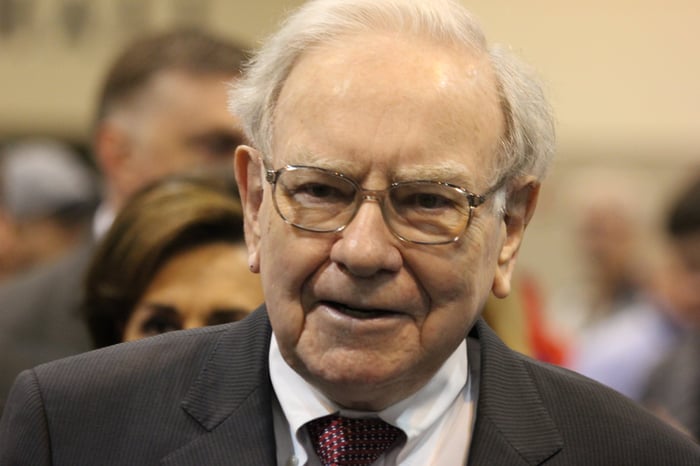
Image source: The Motley Fool.
Market crashes can be good for long-term investors
I've been through a few big market sell-offs so far in my investing journey. And I'm not going to sugarcoat it and say that I fully enjoyed the experience, or saw it as a blessing in disguise. The reality is that sell-offs can be stressful and feel quite bleak while they are happening.
But the other reality is that the market has bounced back from them fairly quickly, especially since the pandemic, when everything in the market seems to move at warp speed.
Whether it's due to how digitized investing has become or some other phenomenon, it's an even better reason to listen to this classic piece of advice from Buffett right now.
"... Be fearful when others are greedy, and greedy when others are fearful," Buffett first said in a letter to shareholders in 1986.
This means that when market conditions seem too good to be true, they probably are, so be on high alert. When conditions seem bad and feel like the market will never bounce back, it probably eventually will, and likely sooner than you think.
We've seen Buffett play contrarian and buy beaten-down stocks or sectors on numerous occasions, whether it was Coca-Cola in 1988, Bank of America in 2011, or the remaining stake Berkshire didn't already own in Burlington Northern Santa Fe Railroad in 2009.
All of these moves were made in distressed times for each of these stocks or their broader sectors, and would turn into big long-term winners. Investors of all kinds can do the same as Buffett and take advantage of opportunities when market fear is high, especially long-term investors.
How to put Buffett's advice into action
While some may interpret Buffett's advice as simply buying the dip in the broader market, or any stock for that matter, I would encourage long-term investors to take it one step further by incorporating other aspects of Buffett's wisdom.
But before that, investors should try to set aside some cash so they are ready if and when a market crash materializes. Obviously, predicting any near-term event in the stock market is nearly impossible, so having some cash available is generally a good practice.
This doesn't mean selling your portfolio or stopping investing in the market, but perhaps you can adjust your strategy. For instance, let's say you currently practice dollar-cost averaging and invest $300 in the S&P 500 (SNPINDEX: ^GSPC) or another broad-based exchange-traded fund (ETF) each month.
If you are worried about the market, perhaps you can reduce your monthly investment amount to $150 or $200 and stow the rest in cash, at least until you have some cash built up and ready to deploy should the market sour. In today's higher-yield environment, cash can also enjoy very solid risk-free interest rates.
Back to my earlier point: what you invest in during a sell-off matters. If you're looking at individual stocks, it's best to do research now so that if they do sell off, you know what you're buying and at what price you want to enter.
Buffett liked to buy stocks that generate strong returns on invested capital over the long term. He also regularly looked for stocks with fortress balance sheets that could navigate operational challenges during a tough market.
Investors can find these stocks now. If they trade at a high multiple, think about the multiple you'd want to buy at and then wait to pull the trigger. Additionally, when the whole market declines, you want to buy stocks whose thesis remains intact.
Should you buy stock in S&P 500 Index right now?
Before you buy stock in S&P 500 Index, consider this:
The Motley Fool Stock Advisor analyst team just identified what they believe are the 10 best stocks for investors to buy now… and S&P 500 Index wasn’t one of them. The 10 stocks that made the cut could produce monster returns in the coming years.
Consider when Netflix made this list on December 17, 2004... if you invested $1,000 at the time of our recommendation, you’d have $361,650!* Or when Nvidia made this list on April 15, 2005... if you invested $1,000 at the time of our recommendation, you’d have $1,437,517!*
Now, it’s worth noting Stock Advisor’s total average return is 936% — a market-crushing outperformance compared to 213% for the S&P 500. Don't miss the latest top 10 list, available with Stock Advisor, and join an investing community built by individual investors for individual investors.
See the 10 stocks »
*Stock Advisor returns as of October 5, 2026.
Bank of America is an advertising partner of Motley Fool Money. Bram Berkowitz has no position in any of the stocks mentioned. The Motley Fool has positions in and recommends Berkshire Hathaway. The Motley Fool has a disclosure policy.
Recommended Articles


