

3 Reasons Not to Claim Social Security at 70

Source The Motley Fool

Key Points

  • Studies show that only 10% of working Americans plan to wait until 70 to claim Social Security.

  • Circumstances such as chronic health conditions or difficulty finding a new job may be why.

  • Claiming Social Security at 70 may require living into your 80s to break even.

  • The $23,760 Social Security bonus most retirees completely overlook ›

Few decisions are more important than when to claim Social Security benefits. While the numbers clearly indicate that waiting until age 70 will score you the highest monthly benefits, it's not always the right choice.

Timing

Social Security benefits can be claimed as early as 62, although monthly benefits are reduced for filing before full retirement age (FRA) -- 67 for those born in 1960 or later. However, benefits grow by about 8% per year between FRA and age 70 due to delayed retirement credits. That means if you're due a monthly benefit of $2,500 at age 67, you can expect roughly $3,100 instead at age 70.

Missed AI’s "Act 1"? Act 2 Could Be 15x Bigger. Most investors think they missed the AI boat because they didn't buy Nvidia in 2005. But according to our analysts, we’re only at the end of "Act 1"—the R&D phase. "Act 2" is the global rollout. Continue »

Here's the tricky bit, though: Your situation is unique, and while waiting until 70 may be right for a friend or neighbor, it could be the wrong decision for you.
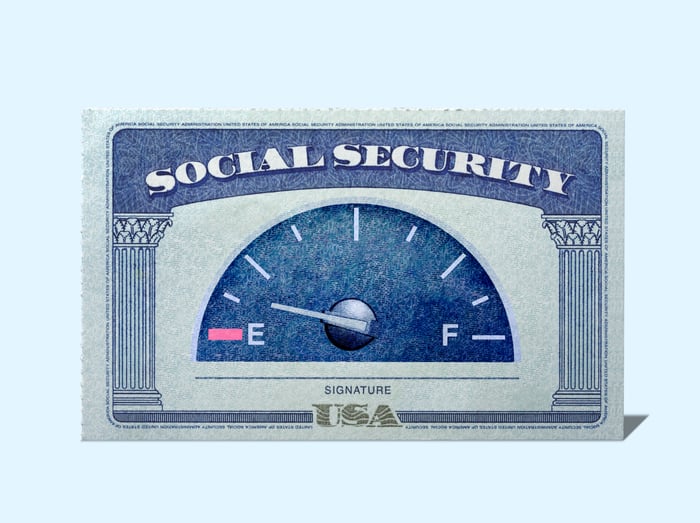
A Social Security card with a fuel gauge in the middle.

Image source: Getty Images.

3 Reasons not to claim Social Security benefits at 70

Anyone planning for retirement has likely heard how much more they could receive in Social Security benefits by waiting. Yet, studies show that only 10% of American workers plan to wait that long. And there may be plenty of good reasons for not waiting. For example:

  1. Shorter life expectancy: If you deal with chronic health issues or your family history suggests you may have a shorter life expectancy, delaying benefits to age 70 may never allow you to "break even" compared to claiming earlier. Typically, those who live into their early 80s or beyond benefit most from waiting.
  2. Immediate need: If you've been laid off, can't find work, or lack sufficient savings to pay everyday expenses, you may need Social Security benefits earlier to avoid debt. While no one wants to be in this position, it's become a way of life for many. While waiting until you're older would earn you larger checks, those funds may not make up for years of financial strain or the high interest rates you paid on borrowed money during that time.
  3. Lifestyle costs: If you wait until 70 for larger checks, you may miss opportunities to enjoy travel, hobbies, or time with family while you're younger and healthier. If you have other resources -- such as diversified investments, Treasury bonds, a part-time job, or an annuity -- to cover these expenses, waiting until 70 may be the easy decision. If not, you might have to dig down to determine how you want to spend your 60s.

Claiming benefits at 70 may maximize monthly benefits, but it doesn't maximize well-being for every retiree. The state of your health, cash-flow needs, asset allocation, marital situation, and lifestyle goals must all be weighed as you determine the best age to claim.

The $23,760 Social Security bonus most retirees completely overlook

If you're like most Americans, you're a few years (or more) behind on your retirement savings. But a handful of little-known "Social Security secrets" could help ensure a boost in your retirement income.

One easy trick could pay you as much as $23,760 more... each year! Once you learn how to maximize your Social Security benefits, we think you could retire confidently with the peace of mind we're all after. Join Stock Advisor to learn more about these strategies.

View the "Social Security secrets" »

The Motley Fool has a disclosure policy.

Disclaimer: For information purposes only. Past performance is not indicative of future results.
placeholder
Dollar holds above 100 near a 3-month high — three Fed speakers and a $69 billion auction land tonightThe dollar index closed at 100.43 on Monday, its highest close since late July, after a weekly gain of about 1% — the best in more than three months — and is holding above the 100.00 handle in Asia. Three Fed officials speak tonight alongside a $69 billion two-year note auction, the first leg of $183 billion of Treasury supply this week.
Author  Suzie
Sep 22, Tue
The dollar index closed at 100.43 on Monday, its highest close since late July, after a weekly gain of about 1% — the best in more than three months — and is holding above the 100.00 handle in Asia. Three Fed officials speak tonight alongside a $69 billion two-year note auction, the first leg of $183 billion of Treasury supply this week.
placeholder
October hike odds climb toward 60% as Goldman and BofA both flip — what Warsh's "dose of accommodation" really changedRate futures now price roughly 55% to 62% for a 25bp hike at the October 27-28 FOMC, up from about 30% before Chair Warsh's post-meeting framing that the Fed is merely "removing some accommodation." Goldman Sachs has added an October hike to its forecast and Bank of America now sees moves in both October and December. Here is the repricing, the language behind it, and the two data points that decide it.
Author  Irene Q.
Sep 23, Wed
Rate futures now price roughly 55% to 62% for a 25bp hike at the October 27-28 FOMC, up from about 30% before Chair Warsh's post-meeting framing that the Fed is merely "removing some accommodation." Goldman Sachs has added an October hike to its forecast and Bank of America now sees moves in both October and December. Here is the repricing, the language behind it, and the two data points that decide it.
placeholder
Memory chips surge, Nasdaq notches a second straight record close — why the Dow fell 185 points anywayMicron gained 5%, SanDisk 6.8%, Seagate 4% and Western Digital 3% as the memory complex led the Nasdaq Composite to a second consecutive record close of 27,244.28. But the Dow fell 185 points as JPMorgan, Wells Fargo and Schwab slid more than 3% each — a split tape that says more about positioning than about the economy.
Author  Irene Q.
Sep 23, Wed
Micron gained 5%, SanDisk 6.8%, Seagate 4% and Western Digital 3% as the memory complex led the Nasdaq Composite to a second consecutive record close of 27,244.28. But the Dow fell 185 points as JPMorgan, Wells Fargo and Schwab slid more than 3% each — a split tape that says more about positioning than about the economy.
placeholder
US input costs rose at the fastest pace in four years — the September flash PMI beat is an inflation story, not a growth storyUS September flash PMIs came in far above expectations, with the composite at 58.4, a five-year high. But the detail that moved markets was input cost inflation at its fastest since October 2022, driven by fuel, transport and supply shortages. Brent is back above $100 and the 10-year Treasury yield has hit its highest since 2007.
Author  Suzie
Sep 24, Thu
US September flash PMIs came in far above expectations, with the composite at 58.4, a five-year high. But the detail that moved markets was input cost inflation at its fastest since October 2022, driven by fuel, transport and supply shortages. Brent is back above $100 and the 10-year Treasury yield has hit its highest since 2007.
placeholder
WTI (USOIL) Is down 2.03% on Sep 25: Here Is WhyWTI (USOIL) is down 2.03% at Sep 24 22:20(UTC+0), now at $92.517, with a 7-day down of 3.63%.What is driving WTI (USOIL)’s stock price down today?The drop in WTI crude oil prices was primarily driven by
Author  TradingKey
Sep 25, Fri
WTI (USOIL) is down 2.03% at Sep 24 22:20(UTC+0), now at $92.517, with a 7-day down of 3.63%.What is driving WTI (USOIL)’s stock price down today?The drop in WTI crude oil prices was primarily driven by
goTop
quote