


Oracle Tumbles 7% as Project Jupiter Data Center Force Majeure Notice Sparks Delay Concerns
TradingKey - On September 24, Oracle (ORCL) fell by up to 5% in pre-market trading and slid over 7% after the opening bell. Market concerns were triggered by a force majeure notice issued by the company regarding Project Jupiter, a massive data center in New Mexico. Investors' focus is shifting from huge AI orders to delivery schedules and capital recovery.
According to Bloomberg, Oracle has issued a formal notice to developer Stack Infrastructure, seeking to defer payments if the project fails to begin operations as scheduled in 2028. The move does not imply relinquishing its status as the primary tenant, nor does it mean it has received a payment waiver. Oracle still stated that the project is progressing on schedule, but did not specifically address the notice itself.
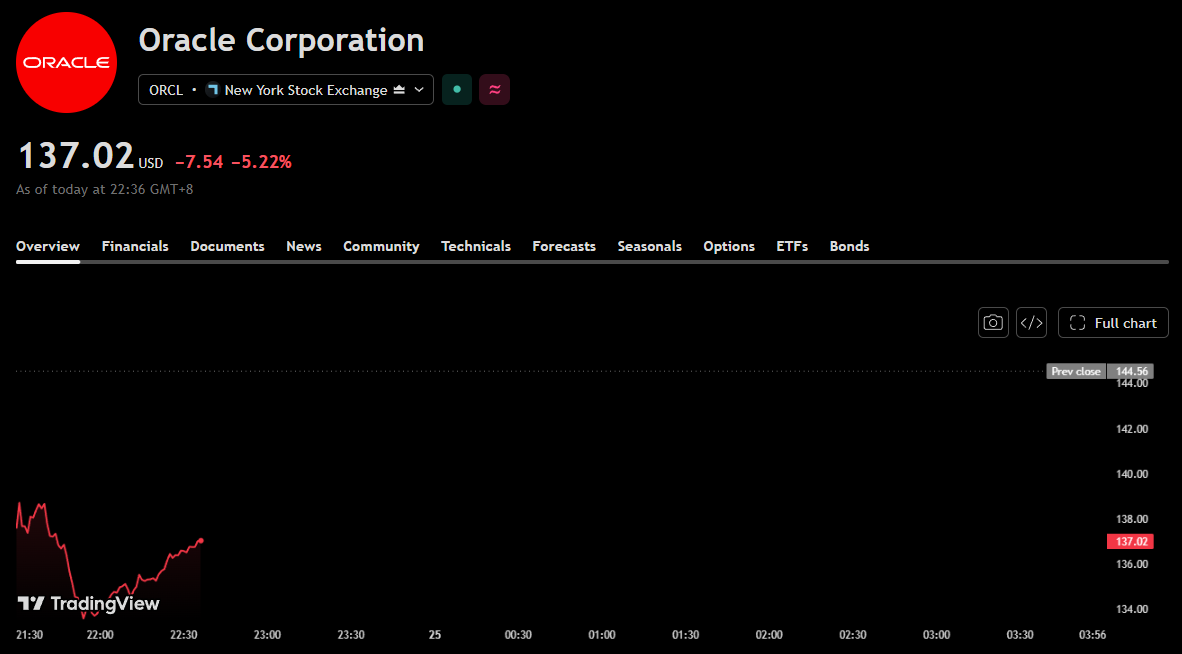
Oracle stock price chart, Source: TradingView
The risk originates on the energy side. The campus design capacity reaches 2.45 gigawatts, with plans to use Bloom Energy's natural gas fuel cells for power supply. The key supporting pipeline's commissioning date has been delayed to February 1, 2027, after its route application was repeatedly rejected by the New Mexico State Land Office. Disrupted fuel supply could impact power generation, facility commissioning, and computing capacity delivery.
The reason project delays are rattling financial markets lies in the project's financing arrangement. Operating through a special purpose vehicle, the project received equity funding from Blue Owl Capital and an $18 billion project loan from approximately 20 banks. If Oracle successfully defers payments, the developer's cash collections could be pushed back, while construction expenditures and financing obligations may not necessarily pause in tandem.
Market analysis points out that force majeure relief depends on specific contracts, and performance grace granted in one contract does not automatically extend to financing or power supply agreements. Therefore, the payment buffer Oracle is seeking may translate into financial pressure for project shareholders and lenders.
The credit market has already shown signs of concern. Project loan quotes disclosed on September 18 fell to around 89 to 91 cents on the dollar. Following this news, shares of Blue Owl Capital and the fuel cell supplier also plunged, showing that pressure has spread to equity backers and suppliers.
For Oracle, a deeper issue is the speed of order realization. In the first quarter of fiscal 2027, the company's remaining performance obligations reached $664 billion, but only about 13% is expected to be recognized as revenue over the next 12 months. Massive long-term contracts still require continuous construction and actual delivery before they can be progressively realized.
Meanwhile, capital expenditures for the quarter were approximately $28.5 billion, exceeding operating cash flow of about $23.1 billion, resulting in negative free cash flow of around $5.4 billion. The book balance of borrowings stood at approximately $125.3 billion at quarter-end, which does not yet include all lease obligations. Operating cash flow also included about $11.4 billion in customer advances with a significant financing component, which correspond to future service delivery obligations. If the project is delayed, the lag between investment expenditures and cash receipts could widen further.
This decline reflects market scrutiny over the quality of AI expansion. Oracle needs to answer not just whether orders can grow, but whether energy, construction, payments, and debt servicing can align on schedule. The delivery progress of this project is becoming an important touchstone for whether its growth logic can be realized.
Recommended Articles


