


Prediction for Tesla Stock in 3 Years: The Bear Case
Key Points
Tesla's biggest bear case isn't technological failure.
Building breakthrough technology is only the first step. Scaling it into profitable businesses is what ultimately matters.
Tesla could make meaningful technological progress and still disappoint investors if that progress falls short of the market's lofty expectations.
- These 10 stocks could mint the next wave of millionaires ›
Three years from now, Tesla (NASDAQ: TSLA) could have successful Robotaxis operating in multiple cities. Optimus robots could be working inside factories. Its artificial intelligence systems could be among the most advanced in the world.
And the stock could still disappoint investors. That may sound impossible. But it's arguably a realistic bear case that many investors overlook.
Missed Nvidia in 2009? This Rare Signal Is Flashing Again. In 2009, a "Double Down" signal flashed for a little-known chipmaker called Nvidia. For the first time in years, that same "Total Conviction" signal is flashing for a company 1/100th the size of Nvidia. Continue »
When people think about Tesla's downside, they usually imagine a collapse in electric-vehicle sales, intense competition from BYD, or a failure by Elon Musk to deliver on his promises. Those are legitimate risks.
But Tesla doesn't have to fail for the stock to underperform. It simply has to execute these opportunities more slowly than investors expect.
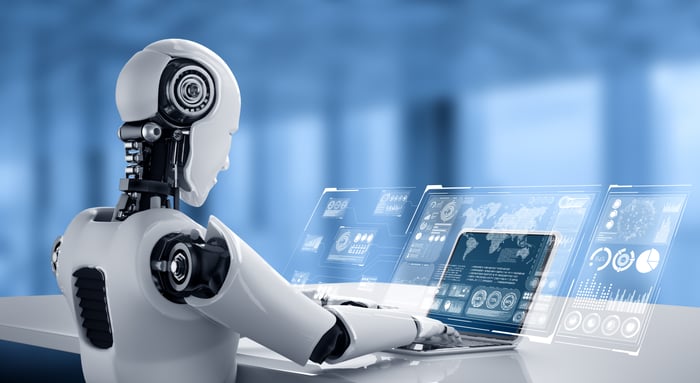
Image source: Getty Images.
Tesla's biggest challenge has changed
For years, Tesla's success depended largely on selling more electric vehicles.
That's no longer the case. Today, much of Tesla's valuation reflects what investors believe comes next: Robotaxis, Optimus, artificial intelligence, and software-driven services. Those businesses could eventually generate far higher margins than manufacturing cars does.
But here's the thing. Building revolutionary technology doesn't automatically create shareholder value. Commercializing it at the right time and with the right capital investment can.
That's the challenge Tesla now faces. Tesla's latest earnings call may have marked an important shift in management's messaging. Rather than focusing on what Tesla can build, Musk spent more time discussing how difficult it will be to scale those products.
Speaking about Optimus, Musk said, "I really want to emphasize here that the production scaling challenge is very substantial." He even described it as "the hardest product to scale manufacturing that we've ever made at Tesla."
Those comments deserve attention. Musk wasn't questioning whether Tesla could build a capable humanoid robot. He was acknowledging that turning a breakthrough technology into a mass-market business is an entirely different challenge.
The same applies to Robotaxis. Launching autonomous vehicles in selected markets is an impressive milestone. Building a global ride-hailing network that earns attractive returns while satisfying regulators, insurers, and customers is a much taller order.
Time may become Tesla's biggest competitor
The bear case isn't that Robotaxis or Optimus fail. It's that they take longer than investors expect to become meaningful profit engines.
That matters because Tesla has entered one of the most capital-intensive periods in its history. The company continues investing billions of dollars -- $25 billion or more just in 2026 -- into AI infrastructure, custom chips, data centers, Robotaxis, and Optimus. Those investments may create enormous value over the long run.
But until Tesla generates meaningful cash flow, its core automotive business must fund much of that spending. That creates a difficult balancing act.
Competition in the EV industry remains extremely intense, particularly from the Chinese players such as BYD. It doesn't help that Tesla's automotive margins also remain below their historical highs after years of price reductions.
In short, if these new ventures reach profitability later than expected, it could create enormous financial stress for the group.
Expectations could become the real problem
Ironically, Tesla's biggest risk may not be execution. It may be expectations.
Imagine that three years from now, Tesla has expanded Robotaxis into additional cities, and Optimus performs useful work inside its factories. Objectively, that would represent remarkable progress. But would it justify today's expectations? That's the question investors should ask.
To put it into perspective, Tesla's stock trades at a price-to-sales ratio of 11.2 as of this writing, and that's after the recent correction. Its most formidable rival, BYD, trades at just 1.8 times its price to sales.
If commercialization progresses steadily, but not spectacularly, the gap between investor expectations and financial results could narrow through valuation rather than faster earnings growth.
For a company that's already trading at a market capitalization of $1 trillion, the risk is not inconsequential.
What does it mean for investors?
Let's begin by saying that Tesla's bear case isn't all that bad.
Three years from now, the company may possess world-class AI, increasingly capable Robotaxis, and impressive humanoid robots.
Still, there's no guarantee that these ventures will scale on time and on budget. If there's any hiccup in the execution process, or if these businesses take longer than expected to reach profitability, there's a good chance that the stock valuation could adjust to the new reality.
It may be that three years from now, Tesla remains a trillion-dollar company. But that scenario is probably going to be disappointing for its most ardent supporters.
Don’t miss this second chance at a potentially lucrative opportunity
Ever feel like you missed the boat in buying the most successful stocks? Then you’ll want to hear this.
On rare occasions, our expert team of analysts issues a “Double Down” stock recommendation for companies that they think are about to pop. If you’re worried you’ve already missed your chance to invest, now is the best time to buy before it’s too late. And the numbers speak for themselves:
- Nvidia: if you invested $1,000 when we doubled down in 2009, you’d have $568,693!*
- Apple: if you invested $1,000 when we doubled down in 2008, you’d have $59,543!*
- Netflix: if you invested $1,000 when we doubled down in 2004, you’d have $397,405!*
Right now, we’re issuing “Double Down” alerts for three incredible companies, available when you join Stock Advisor, and there may not be another chance like this anytime soon.
See the 3 stocks »
*Stock Advisor returns as of August 8, 2026.
Lawrence Nga has no position in any of the stocks mentioned. The Motley Fool has positions in and recommends Tesla. The Motley Fool recommends BYD Company. The Motley Fool has a disclosure policy.
Recommended Articles


