


Warren Buffett Set a Personal Goal to Give Away His Entire $140 Billion Berkshire Stake by 2034. Here's What That Means for Future Share Supply.
Key Points
Last month, former Berkshire Hathaway CEO Warren Buffett announced plans to donate his remaining stake in Berkshire Hathaway, worth around $140 billion.
The recipients of Buffett's Berkshire shares may decide to hold on to their positions, limiting the impact of this transfer on share supply and price action.
Even if the foundations decide to sell their Berkshire stock, a resurgence in share repurchases can absorb the impact.
- 10 stocks we like better than Berkshire Hathaway ›
Warren Buffett started giving away his Berkshire Hathaway (NYSE: BRKA) (NYSE: BRKB) shares 20 years ago, but the legendary investor is speeding up the process. Last month, Buffett announced his plans to dispose of his remaining shares between now and Dec. 31, 2034.
On the same day as the press release, Buffett converted $6 billion in Berkshire Class A shares into Class B shares and donated them to several private foundations.
Missed Nvidia in 2009? This Rare Signal Is Flashing Again. In 2009, a "Double Down" signal flashed for a little-known chipmaker called Nvidia. For the first time in years, that same "Total Conviction" signal is flashing for a company 1/100th the size of Nvidia. Continue »
Interestingly enough, for the first time in 20 years, Buffett gave nothing to the Gates Foundation, opting instead to give only to various affiliated foundations, including The Susan Thompson Buffett Foundation, as well as the private foundations run by each of his three children.
While there's rampant speculation about why Buffett skipped out on the Gates Foundation this time, there is one more pertinent question on the minds of Berkshire Hathaway stock investors: How will this accelerating transfer of Buffett's stake impact the company and its shares moving forward?
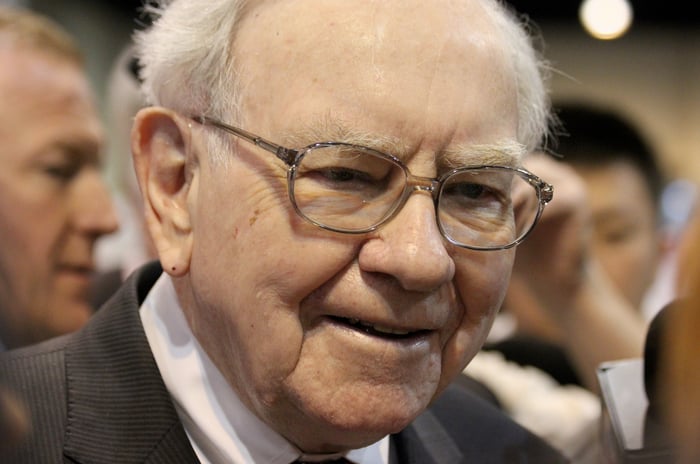
Image source: The Motley Fool.
Buffett and the big transfer
Currently, the Oracle of Omaha holds a 13.2% economic interest in Berkshire Hathaway. This position is worth around $140 billion, implying that Buffett will give away an average of $17.5 billion each year for the next eight years.
However, it's as if these shared, once transferred, will immediately hit the market. The Internal Revenue Service (IRS) may require private foundations to donate 5% of their overall assets annually.
While Securities and Exchange Commission (SEC) filings from The Gates Foundation suggest that it has sold off the bulk of the $47 billion in Berkshire shares it has received over the past 20 years , Buffett's family foundations may opt to hold on to their gifted positions.
Even if the family foundations liquidate their positions, this is likely to happen gradually. Furthermore, Berkshire's present and future share repurchase plans could mitigate the impact of some of these shares hitting the open market.
A shift, but not necessarily a dramatic one
At the same time Buffett is initiating this great transfer, Berkshire Hathaway is seemingly shifting back to "buyback mode." According to published reports, the company has bought back between $5 billion and $11 billion worth of its own shares.
Berkshire has typically repurchased shares when it believes the company is trading below its intrinsic value. With nearly $400 billion in cash on hand, the company has plenty of capital it could return to investors. That said, it's not as if newly appointed CEO Greg Abel is looking to "dismantle" the Berkshire empire or even shrink it.
Although it still sits on a relatively large cash reserve, the company, under new leadership, has continued to make major deals and investments so far this year. Major transactions include Berkshire's $8.5 billion acquisition of Taylor Morrison and its $10 billion participation in Alphabet's $80 billion equity offering.
In short, while Berkshire's ownership may shift between now and 2034, it's not necessarily a dramatic one. Until subsequent developments suggest otherwise, don't expect Buffett's large transfer to materially affect the company's corporate governance, strategy, or price action.
Should you buy stock in Berkshire Hathaway right now?
Before you buy stock in Berkshire Hathaway, consider this:
The Motley Fool Stock Advisor analyst team just identified what they believe are the 10 best stocks for investors to buy now… and Berkshire Hathaway wasn’t one of them. The 10 stocks that made the cut could produce monster returns in the coming years.
Consider when Netflix made this list on December 17, 2004... if you invested $1,000 at the time of our recommendation, you’d have $397,405!* Or when Nvidia made this list on April 15, 2005... if you invested $1,000 at the time of our recommendation, you’d have $1,344,091!*
Now, it’s worth noting Stock Advisor’s total average return is 953% — a market-crushing outperformance compared to 214% for the S&P 500. Don't miss the latest top 10 list, available with Stock Advisor, and join an investing community built by individual investors for individual investors.
See the 10 stocks »
*Stock Advisor returns as of August 7, 2026.
Thomas Niel has no position in any of the stocks mentioned. The Motley Fool has positions in and recommends Alphabet and Berkshire Hathaway. The Motley Fool has a disclosure policy.
Recommended Articles


