


Korean Stocks Trigger Circuit Breakers Twice in a Single Day; SK Hynix and Samsung Electronics Both Plunge 12%, Kioxia Tumbles Over 15%
TradingKey - Japanese and South Korean stock markets suffered a "Black Tuesday," with major indices and individual stocks, including the KOSPI Index, Nikkei 225 Index, Samsung Electronics, and Kioxia, all plummeting.
During the Asian session on June 23, Japanese and South Korean stock markets continued to weaken, with South Korean equities performing even worse. Following today's opening, South Korea's mainboard KOSPI Index and the tech-heavy KOSDAQ Index triggered programmatic trading halts twice in a single day due to sharp declines—a rare occurrence that plunged the market into extreme panic.
By the close, the KOSPI Index plummeted nearly 10%, breaking straight through the 9,000-point mark to close at 8,203.84 points, marking its lowest level since June 12. SK Hynix and Samsung Electronics, at the epicenter of this storm, also faced heavy sell-offs, with both plunging over 12%. However, Samsung Electronics' market capitalization (2,212.18 trillion KRW) overtook that of SK Hynix (1,957.73 trillion KRW).
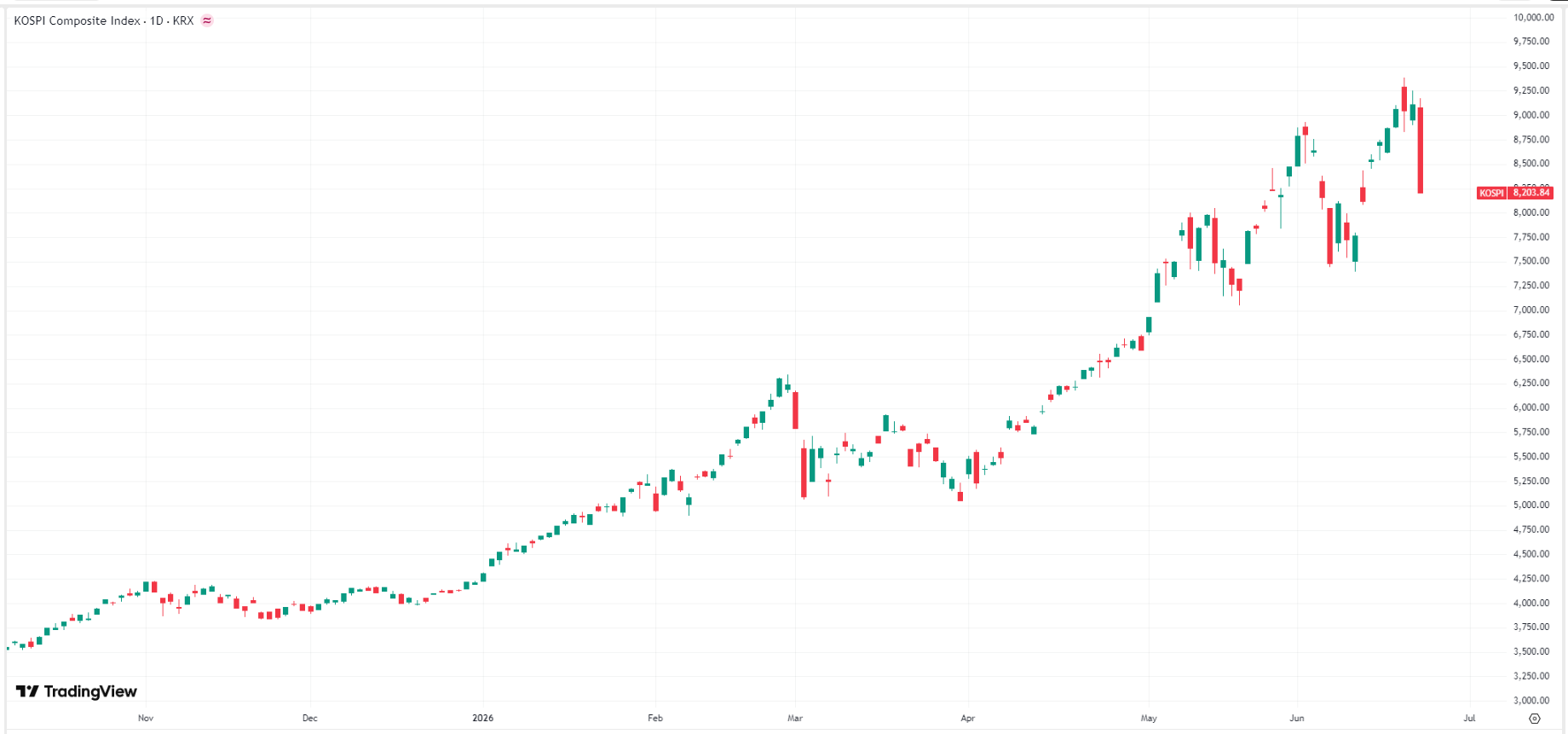 KOSPI Index chart, Source: TradingView
Compared to the KOSPI Index, the Nikkei 225 Index showed more resilience, falling only about 3% and erasing the gains of the past three days. However, the Nikkei 225 surrendered its key support level of 70,000 points, closing at 69,788.38. Meanwhile, Japanese flash memory giant Kioxia also plummeted over 15% to close at 92,290 yen, marking a new low for the past seven trading days.
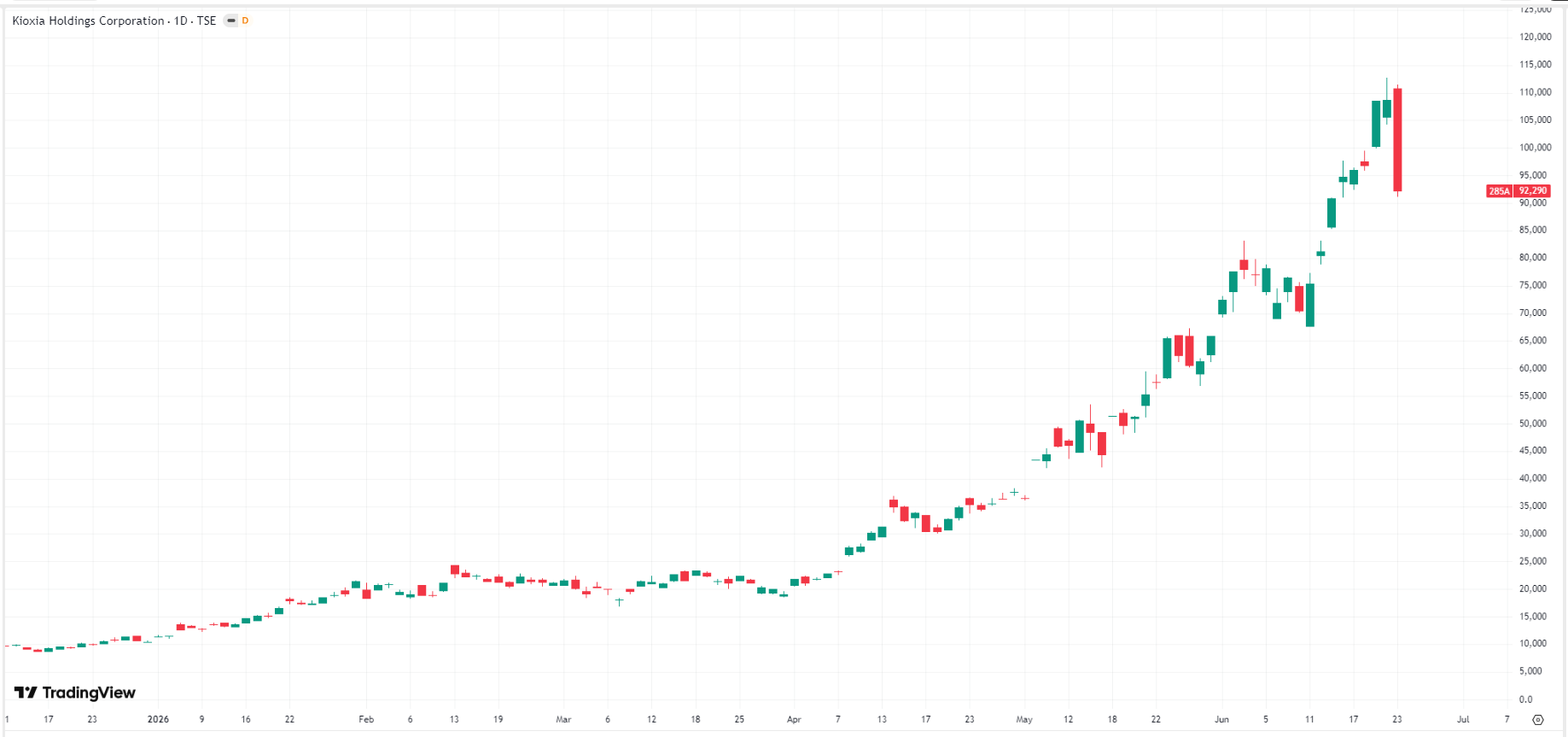
Kioxia price chart, Source: TradingView
This massive collective shake-up in Asia-Pacific equity markets is, in essence, a structural stampede of long positions. It was triggered by a combination of high-level valuation corrections in global AI tech stocks, a deep correction in US semiconductor stocks that spread panic, cash flow anxiety sparked by space and AI giant SpaceX's (SPCX) massive debt issuance, and an 'unexpected brake' from South Korean domestic regulatory policies. However, is this 'violent washout' of high-leverage capital the beginning of a crash, or is it a golden buying opportunity?
Currently, the defense line and confidence of global bulls are entirely pinned on Micron's ( MU) earnings report, which will be released after the US market close on June 24. Micron's guidance on its future HBM pricing power and long-term agreement (LTA) delivery data will directly determine whether the AI chip supercycle is ending or entering a new phase. If there is even the slightest softening in Micron's guidance, today's double trading halts in the Japanese and South Korean stock markets could turn out to be the precursor of a mid-term peak for tech stocks this year.
Recommended Articles


