


History Says You Can Get a Better Deal on SpaceX Stock If You Wait This Long
Key Points
SpaceX popped about 20% above its IPO price on its first day of trading.
Historical data shows large, hot IPOs often have very modest gains after one year.
If you're considering buying SpaceX, waiting out the initial pop is likely a wise move.
- 10 stocks we like better than Space Exploration Technologies ›
Elon Musk's Space Exploration Technologies (NASDAQ: SPCX), or SpaceX, gained about 20% on its first day of trading on Friday, June 12, and continued climbing higher in the days after becoming a publicly traded company, as of this writing.
The result has pushed SpaceX's valuation above $2.5 trillion and made Musk the world's first trillionaire. Figures that high are difficult to comprehend, even for someone who writes about financial topics every day.
Will AI create the world's first trillionaire? Our team just released a report on the one little-known company, called an "Indispensable Monopoly" providing the critical technology Nvidia and Intel both need. Continue »
But despite SpaceX's initial success, history is not kind to blockbuster initial public offerings (IPOs). In fact, those that have huge gains in the first week of their IPO rarely hang on to those gains a year later. Here's why it might be better to wait out the buying frenzy right now if you want to own SpaceX stock.
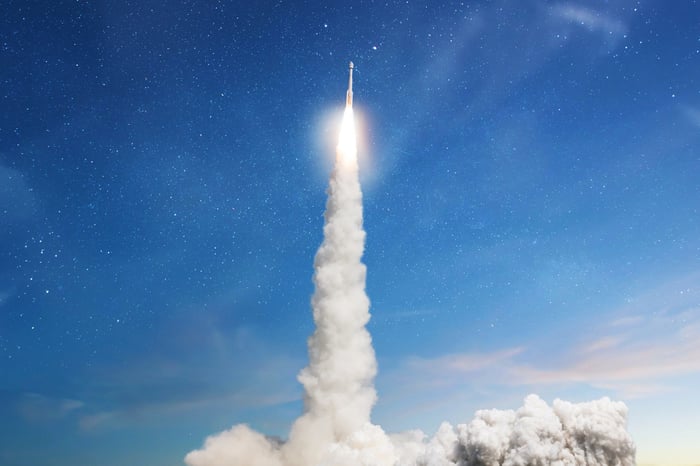
Image source: Getty Images.
Why SpaceX is attracting so much attention
SpaceX shares were already priced at a premium for the IPO, but they've rocketed even higher since then. Its current price-to-sales is an astonishing 130, compared to about 10 for the average tech stock.
Investors have a high tolerance for expensive stocks these days (probably not a great thing) and have mostly ignored how expensive SpaceX shares are. There are a few reasons they're ignoring the premium, including the company's potential for so many big opportunities.
Sure, it's a rocket company with ambitions to go to Mars, but it's also an artificial intelligence (AI) company that wants to send data centers into space and a satellite internet company. There's also increasing chatter that Tesla (NASDAQ: TSLA) will be merged with SpaceX, so maybe soon it will be an EV and robotics company, too.
Space is popular again, and I think that's part of the draw here, but the main reason is that AI stocks can nearly do no wrong these days, and that's likely driving much of SpaceX's popularity. The company said in its S-1 filing that its artificial intelligence total addressable market (TAM) -- which includes AI infrastructure, consumer subscriptions, enterprise applications, etc. -- is a staggering $26.5 trillion.
Companies can say their TAM is essentially whatever they want it to be, so take that figure with a grain of salt. But what I'm trying to get at is that investors believe in SpaceX's opportunities. And that's pushing the stock higher, at least for now.
The track record for extended gains for blockbuster IPOs isn't great
A recent Barron's article highlighted research by Jefferies analysts showing that IPOs by companies worth $10 billion or more during the past 26 years have averaged 26.5% returns in their first week. But one year later, they were up by just 3.5%.
That very modest increase shows just how quickly investors can cool on an IPO company, even after an initial surge in interest.
That got me wondering how Tesla stock performed over its first year. If you look at the opening price for the stock on its IPO day (not its actual IPO price, which most real investors would not have been able to purchase anyway), its shares were up more than 18% a year later. But 14 months after Tesla's IPO, the stock had gained just 3.4%.
That's pretty close to Jefferies' findings. And it's worth considering right now as SpaceX stock is soaring.
There's no guarantee that SpaceX shares will fall from where they're at right now, of course. But buying into the frenzy right now, after SpaceX stock was already trading at a premium anyway, doesn't seem like a smart move.
IPOs understandably get a lot of attention from investors, and I get the draw of getting in early on a stock you believe has significant potential. But based on this historical data, you may be better off waiting a year or so before buying SpaceX.
Should you buy stock in Space Exploration Technologies right now?
Before you buy stock in Space Exploration Technologies, consider this:
The Motley Fool Stock Advisor analyst team just identified what they believe are the 10 best stocks for investors to buy now… and Space Exploration Technologies wasn’t one of them. The 10 stocks that made the cut could produce monster returns in the coming years.
Consider when Netflix made this list on December 17, 2004... if you invested $1,000 at the time of our recommendation, you’d have $424,531!* Or when Nvidia made this list on April 15, 2005... if you invested $1,000 at the time of our recommendation, you’d have $1,273,016!*
Now, it’s worth noting Stock Advisor’s total average return is 940% — a market-crushing outperformance compared to 209% for the S&P 500. Don't miss the latest top 10 list, available with Stock Advisor, and join an investing community built by individual investors for individual investors.
See the 10 stocks »
*Stock Advisor returns as of June 17, 2026.
Chris Neiger has no position in any of the stocks mentioned. The Motley Fool has positions in and recommends Jefferies Financial Group and Tesla. The Motley Fool has a disclosure policy.
Recommended Articles


