


SpaceX Climbed Nearly 20% in Its First Day of Trading. Here's Where the Stock Price Will Be in 3 Months, According to History.
Key Points
SpaceX rose $75 billion last week in the world’s biggest-ever IPO.
The company is heading for “a significant growth phase,” chief Elon Musk says.
- These 10 stocks could mint the next wave of millionaires ›
SpaceX (NASDAQ: SPCX) advanced more than 19% on Friday, its first day of trading -- and reached a market value of $2.1 trillion. This immediately puts it in the league of the world's biggest tech companies, such as Apple and Microsoft, in the so-called "trillion-dollar" club. SpaceX set its IPO price at $135, the stock opened at $150, and it closed at more than $160. The IPO offers SpaceX a spot in the record books, as it raised $75 billion for the biggest IPO ever.
It isn't uncommon for a stock to soar on its IPO day, and we saw this recently with names such as Cerebras Systems surging 68% on its debut last month and biotech Parabilis Medicines advancing 58% during its first trading day last week. So now, the natural question is: How will SpaceX stock perform in the weeks and months to come? A look at history suggests where the stock price might be in three months...
Will AI create the world's first trillionaire? Our team just released a report on the one little-known company, called an "Indispensable Monopoly" providing the critical technology Nvidia and Intel both need. Continue »
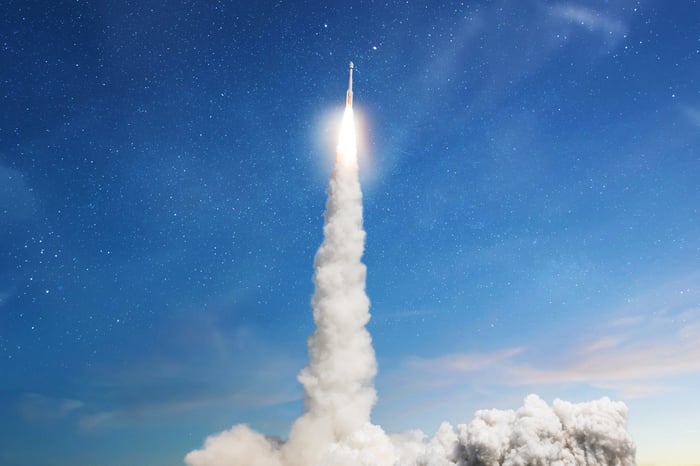
Image source: Getty Images.
The SpaceX excitement
First, let's talk a bit about SpaceX and why it's generated so much excitement. SpaceX is led by Elon Musk, who is also the chief of Tesla, and at both companies, Musk is known for his big ambitions and innovations -- for example, at SpaceX, he aims to put data centers in space. Though Musk's roadmap doesn't please everyone, certain major investors, such as Ark Invest and Baron Capital, are supporters and have backed SpaceX since its earlier days.
SpaceX focuses on three businesses: rocket launches, satellite-based connectivity, and artificial intelligence (AI). Today, Starlink, the connectivity service, is the growth engine, generating $4.4 billion in income from operations last year, for a 120% gain year over year. And what's particularly interesting is SpaceX's strengths in rocket launches can serve all of its businesses, as goals across each rely on delivering certain types of equipment to space -- the fact that SpaceX can do this on its own is a big plus, as it offers the company flexibility, control, and a better cost structure.
Musk said on a livestream before the IPO that the company is heading into "a significant growth phase," according to CNBC. One of the plans is to send 100,000 satellites into space for communications.
Hefty investments required
All of this is exciting, and if Musk reaches some of his goals, the company may be extremely successful. But it's important to note that these projects involve a good deal of risk, too. This is because they require hefty investment, and we can't be sure that certain goals, which depend on new or not yet fully developed technology, will be reached.
Last year, capital spending in the AI business was particularly high, reaching $12 billion, and overall, SpaceX delivered an annual loss of $4.9 billion. Considering Musk's growth ambitions, I would expect this heavy investment to continue. So, while SpaceX could offer enormous rewards down the road, risk remains high.
Now let's talk about stock performance and what may happen next. A look back in time at other big IPOs can offer us some clues. SpaceX's first-day gain is actually in line with the average first-day return of IPOs from 1990 through last year. An IPO report from the University of Florida's Jay Ritter shows the average gain at 21.6%.
10 big IPOs
And a look at 10 of the biggest U.S. IPOs from 1999 through 2023 offers us a clear performance pattern. Eight out of the 10 delivered a decline in the three-month period following their market debuts. And the average drop was about 13%. For example, Meta Platforms slid 50% in its first three months of trading, while Uber Technologies lost 4%.
All of this suggests that, if SpaceX follows the pattern of other enormous IPOs, the stock price could fall over the coming three months. In fact, if it's in line with the average, it could drop to $139, a level that's only slightly above its IPO price.
Though it's impossible to predict near-term stock performance with 100% certainty, history suggests that SpaceX, like other enormous IPOs before it, may not result in immediate gains for investors. All of that means, if you're intrigued by SpaceX, you don't have to rush to get in on the stock -- it's likely there will be additional buying opportunities down the road.
Where to invest $1,000 right now
When our analyst team has a stock tip, it can pay to listen. After all, Stock Advisor’s total average return is 935%* — a market-crushing outperformance compared to 207% for the S&P 500.
They just revealed what they believe are the 10 best stocks for investors to buy right now, available when you join Stock Advisor.
See the stocks »
*Stock Advisor returns as of June 15, 2026.
Adria Cimino has positions in Tesla. The Motley Fool has positions in and recommends Apple, Meta Platforms, Microsoft, Tesla, and Uber Technologies. The Motley Fool has a disclosure policy.
Recommended Articles


