


US-Iran Peace Deal Ignites Japan, South Korea Stocks: Nikkei Tops 69,000 for First Time, South Korea’s Kospi Surges 5.2%
TradingKey - During the Asian trading session on June 15, Japanese and South Korean equity markets closed significantly higher, boosted by news of a peace agreement signed between the United States and Iran. Geopolitical risks cooled significantly, which, combined with improving fundamentals in the semiconductor industry, propelled major indices in both markets to strong gains.
In the Japanese market, the Nikkei 225 Index closed at 69,317.45 points, up 4.99%, breaking above the 69,000-point threshold for the first time in history with a daily gain of approximately 3,300 points. The TOPIX concurrently rose by over 3%, closing near 4,000 points. The 10-year Japanese Government Bond (JGB) yield fell 5.5 basis points to 2.58% as safe-haven assets faced a sell-off.
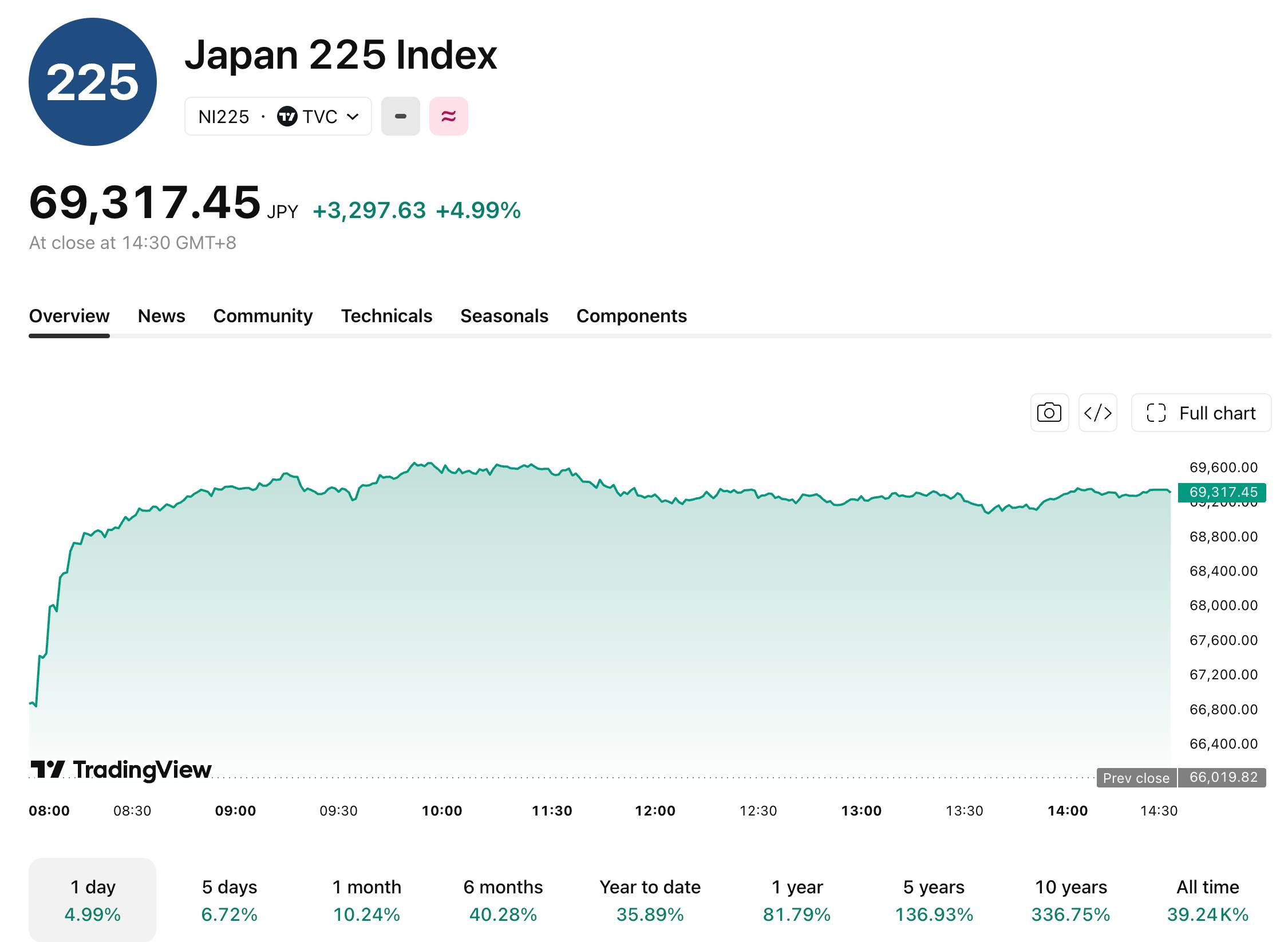
[Source: TradingView]
Semiconductor and related equipment stocks led the gains. SoftBank Group closed up 10.75%, while Tokyo Electron and Advantest both rose by more than 7%. The passive components sector also performed exceptionally well, with Taiyo Yuden surging over 23%, Ibiden over 19%, and Murata Manufacturing over 17%.
The South Korean market also surged higher. The KOSPI index closed at 8,545.98 points, up 5.2%, having touched 8,603.48 points intraday for a maximum gain of 5.91%. During the morning session, the Korea Exchange triggered a circuit breaker, suspending program trading for five minutes after KOSPI 200 index futures rose 5%.
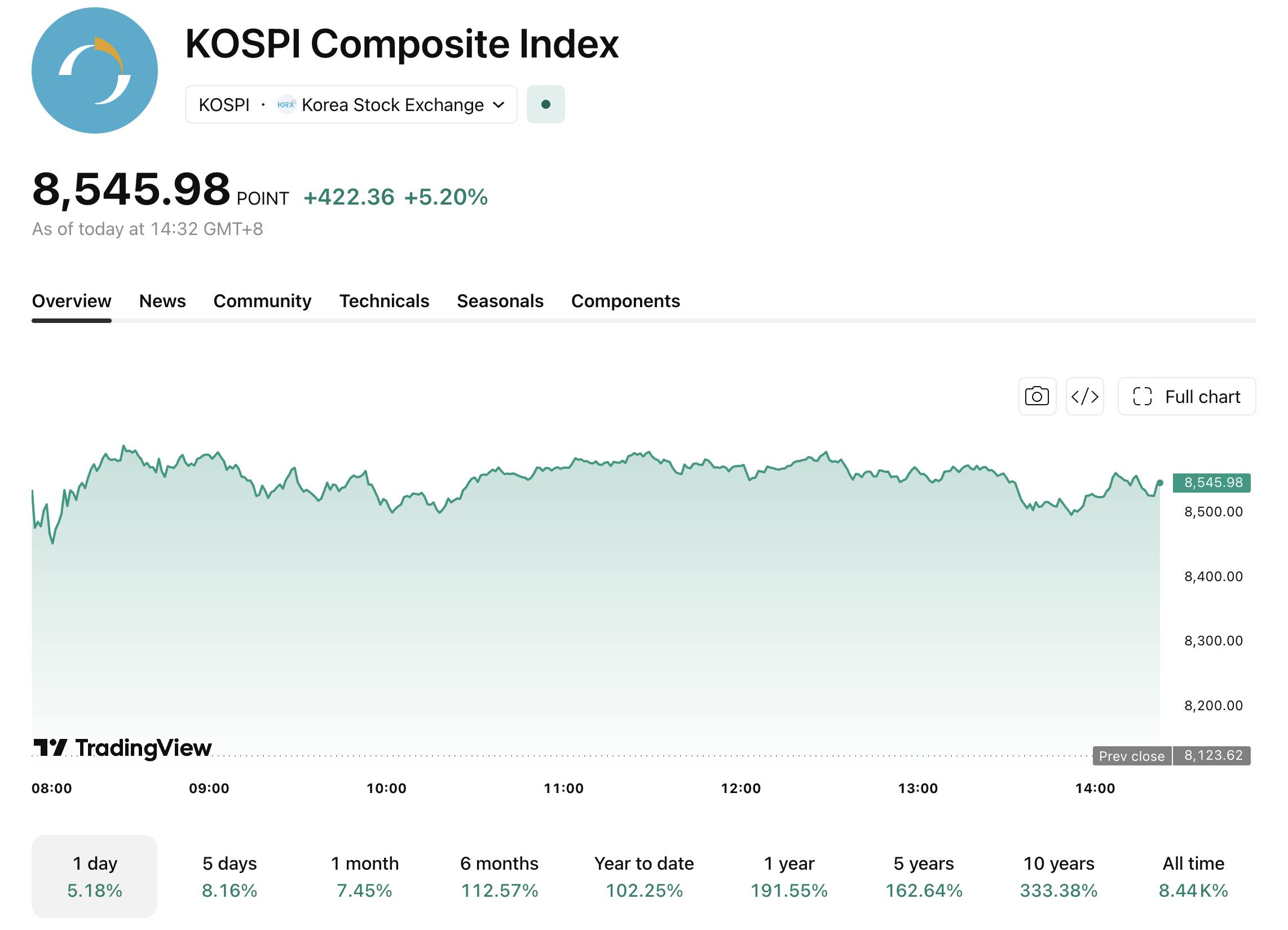
[Source: TradingView]
Chip stocks saw the most significant rallies, with SK Hynix climbing 6.42% to close at 2,288,000 won and Samsung Electronics rising 4.5% to 337,000 won; together, they drove the KOSPI to a daily gain of over 5%. LG Electronics rose approximately 8%. The South Korean won recovered to around 1,512 against the US dollar from the 1,530 level seen the previous week.
The core catalyst for this rally was the peace agreement reached between the U.S. and Iran on June 14 ET, in which both sides announced a permanent cessation of all military operations; the formal signing ceremony is scheduled for June 19 in Switzerland. As the Strait of Hormuz reopened, international oil prices plunged, with WTI crude falling over 5% to around $80 per barrel. With the rapid dissipation of geopolitical risk premiums, futures for the three major U.S. indices rose in tandem, with Nasdaq 100 futures gaining over 1%, while gold prices rebounded to $4,300 per ounce.
Recommended Articles


