


Samsung Strike Crisis Temporarily Resolved: 6.2% Pay Raise, 10.5% Chip Division Bonus, Shares Rise Over 6%
TradingKey - Samsung Electronics reached a tentative wage agreement with union leaders on Wednesday night, averting a general strike originally scheduled for Thursday at the last minute. Samsung shares rose more than 6% in early Thursday trading, while KOSPI 200 futures surged 5%, triggering a circuit breaker. As of 10:21 a.m. Seoul time on May 21, Samsung's stock price stood at 293,500 won, up 6.25%.
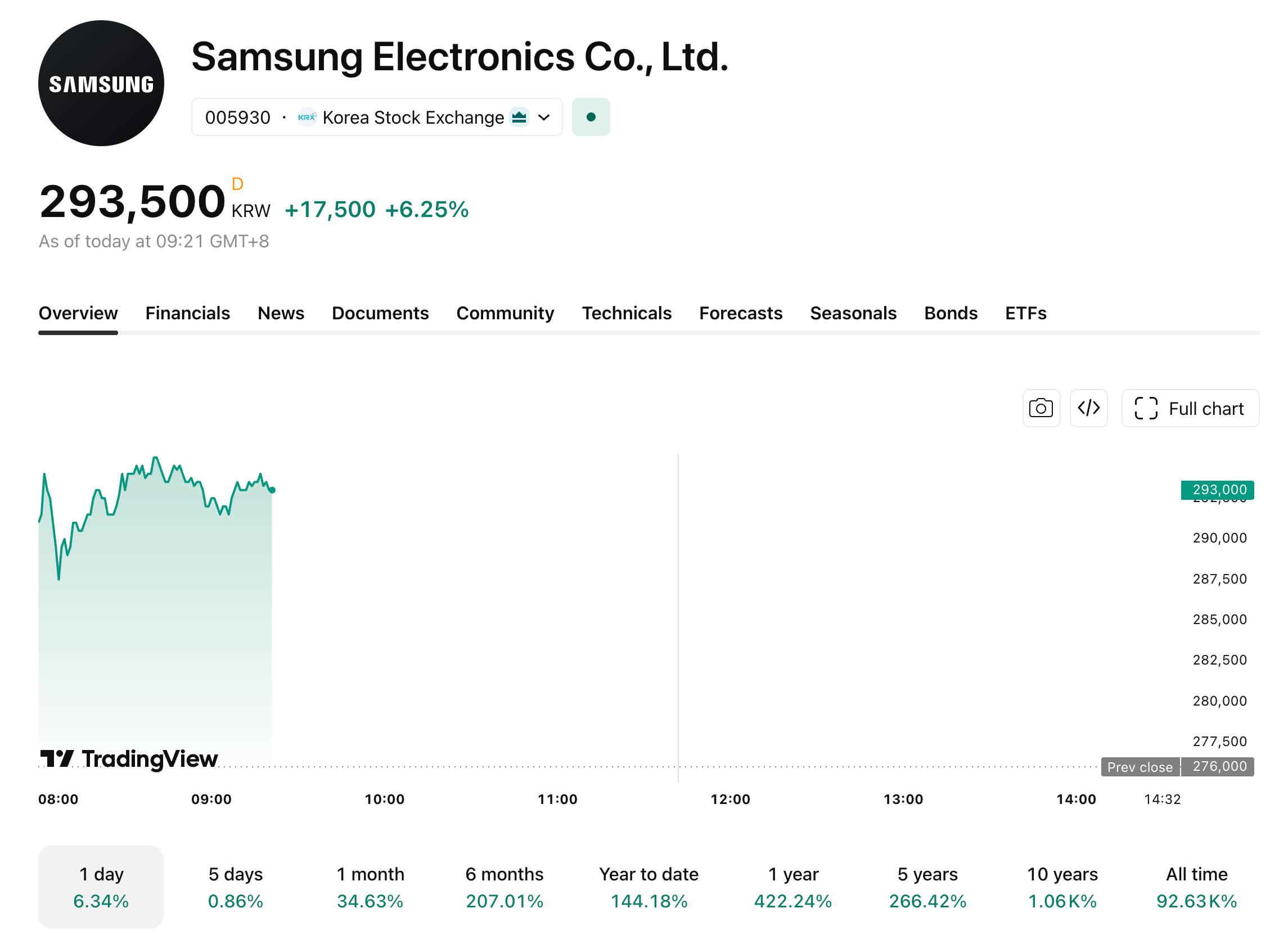
[Source: TradingView]
According to a statement released by Samsung, management and labor reached a preliminary consensus on the 2026 wage and collective bargaining agreement. The union subsequently confirmed that the full-scale strike, originally planned to last from May 21 to June 7, has been suspended.
The main terms of the tentative agreement include: an average salary increase of 6.2% for 2026; a new special operating performance bonus for the semiconductor division, set at 10.5% of business performance as determined through labor-management negotiations, with no distribution cap. The bonus will be paid in after-tax shares, with one-third eligible for immediate sale and the remaining two-thirds locked for one and two years, respectively. The agreement retains the company's existing profit-sharing mechanism.
The agreement also sets long-term performance targets: an annual operating profit goal of 200 trillion won for the semiconductor division from 2026 to 2028, and a goal of 100 trillion won from 2029 to 2035. If these targets are met, employees will receive additional stock rewards, with the specific distribution plan to be determined through subsequent labor-management negotiations.
Samsung Electronics stated in its announcement that the agreement strikes a balance between safeguarding the company's operational principles and enhancing employee incentives. The company had previously warned that demands for performance bonuses in loss-making departments would undermine its fundamental operating principles.
The union's core demand to allocate 15% of the company's operating profit to a performance bonus pool and permanently include it in labor contracts was not met in this agreement. Instead, it was replaced by the aforementioned 10.5% profit-linked stock bonus. Although the union failed to achieve the 15% profit distribution target, it agreed to suspend the strike pending a vote by its members.
The strike crisis escalated sharply over the past few days. On May 18, the Suwon District Court in South Korea approved a partial injunction requested by Samsung, ordering the union to maintain normal production or face fines. On the morning of May 20, the third round of government-mediated talks between labor and management broke down. That night, South Korean Labor Minister Kim Young-hun urgently convened late-night negotiations, finally brokering an agreement before midnight.
The root of the conflict lies in the unequal distribution of profits brought about by the AI boom. Samsung Electronics' operating profit in the first quarter of 2026 reached 57.2 trillion won, a staggering 756% year-on-year increase, with the semiconductor division contributing 93.9%. The union pointed out that rival SK Hynix had abolished bonus caps in 2025 and allocated 10% of its annual operating profit to a bonus pool, resulting in average bonuses more than triple those of equivalent positions at Samsung.
All union members will vote on the tentative proposal from May 22 to 27. If the agreement is rejected, the strike could still resume. The voting results are expected to be announced on May 28.
Recommended Articles


