

Bitcoin Reclaims $80,000 as Wall Street Bullish Sentiment Soars, Fidelity Declares Bear Market Over

Source Tradingkey

TradingKey - BTC Reclaims $80,000 as Wall Street Backs Bulls and Fidelity Declares the Bear Market Over.

On September 29, Bitcoin (BTC) reclaimed the $80,000 mark and continued to fluctuate at high levels, temporarily trading at $81,079, once again approaching strong resistance at $82,000–$83,000. As the price of BTC rose, its market capitalization climbed to around $1.63 trillion, ranking 14th among global assets and surpassing Tesla (TSLA).
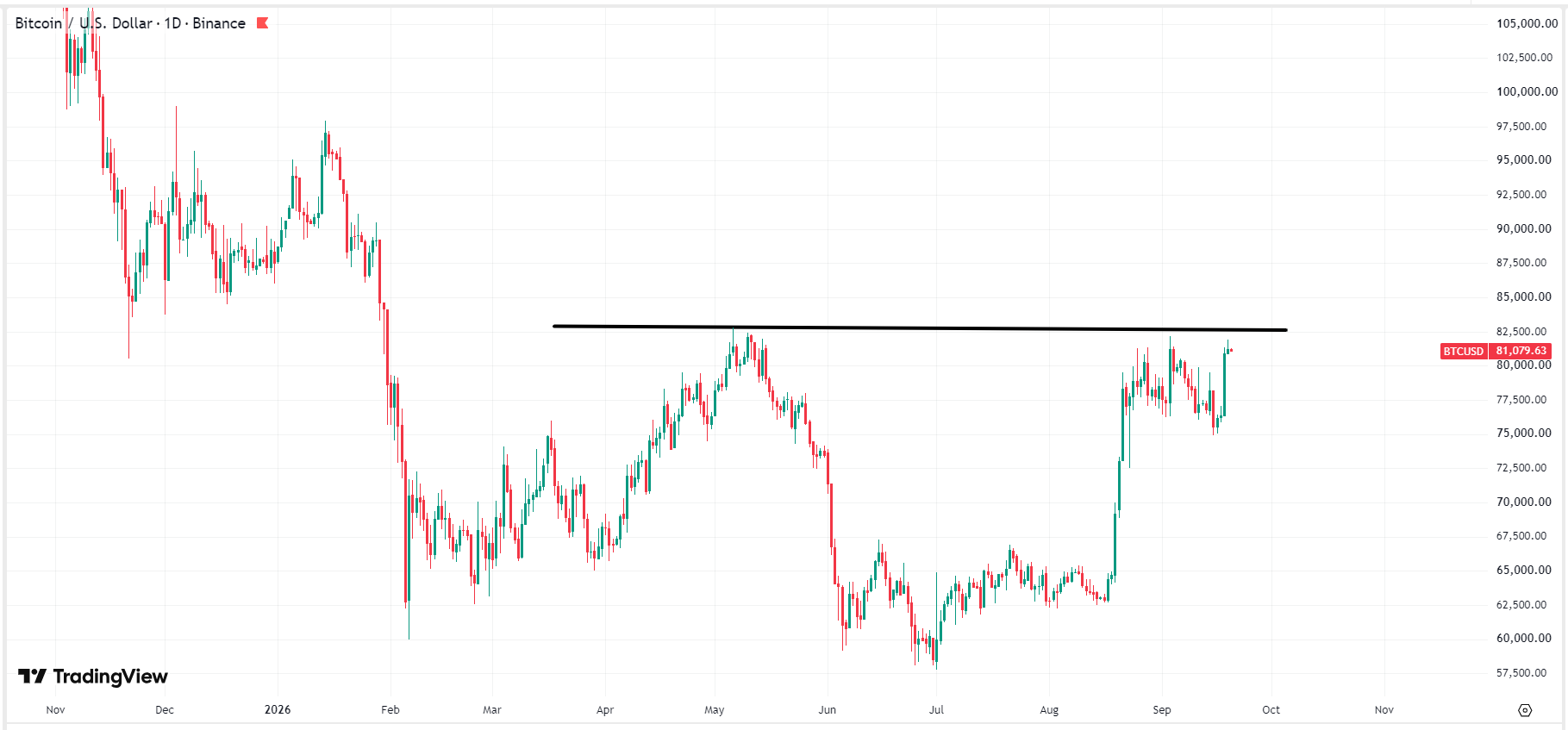
bitcoin-btc-price-81a86b42994649adb785681e8ce7b6f1Bitcoin price chart, Source: TradingView

In early September, impacted by expectations of Fed rate hikes and the procedural vote rejection of the Clarity Act, Bitcoin's price continued to fall from an interim high near $82,000, dropping below $7.5 on September 15, representing a cumulative correction of about 9%. As these two major negative factors materialized, Bitcoin's price gradually recovered and rebounded strongly once again.

On September 16 local time, the Federal Reserve announced a 25-basis-point rate hike, and Bitcoin's price rebounded after a brief dip. Subsequently, the U.S. SEC announced an innovation exemption statement on September 17, providing a compliance framework for on-chain trading of traditional securities and tokenized U.S. equities. The boundary between traditional finance (TradFi) and decentralized finance (DeFi) is rapidly blurring, providing Bitcoin with ample long-term compliant capital support.

In the face of Bitcoin's strong price performance, Fidelity takes a relatively optimistic view, claiming that the Bitcoin winter has ended. Fidelity's Director of Global Macro Jurrien Timmer posted on September 19, stating, "Bitcoin has finally begun to rebound after hovering near the $60,000 support zone for nearly a year, which is typically the duration of a Bitcoin winter, so I feel a new four-year cycle bull market has begun."

On the same day, Alex Thorn, Head of Research at Galaxy, also released a positive bullish signal, predicting Bitcoin's future price action from a technical analysis perspective. Alex Thorn posted, "Hopefully (BTC) Sunday close is above the 50-week moving average to gain further confirmation."
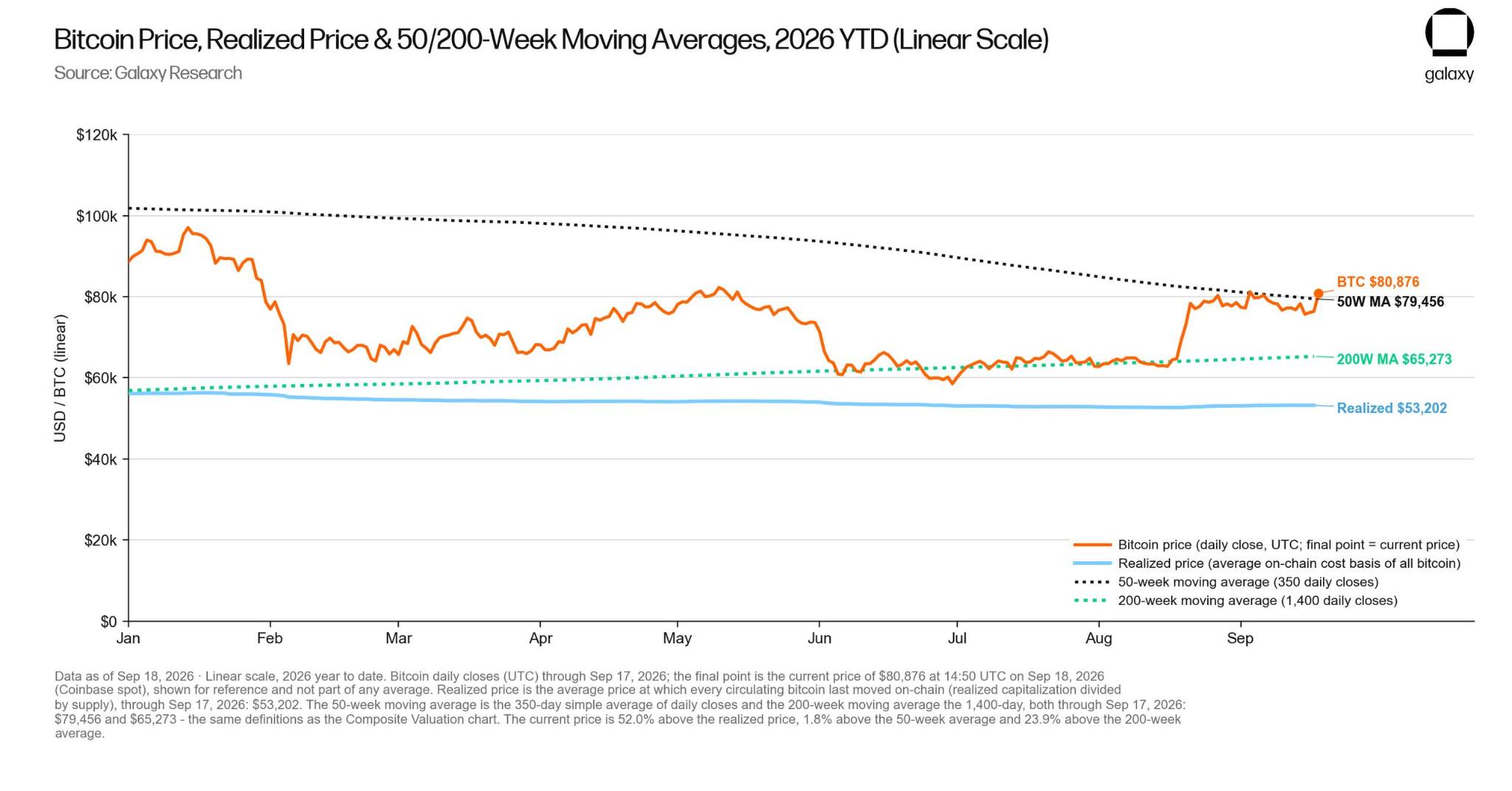
abtc-btc-cf61cbe64a1c4189bb2d3413bb109d16Bitcoin price and 50-week moving average, Source: Galaxy Research

In addition, VanEck is also bullish on Bitcoin's outlook. Matthew Sigel, its Head of Digital Assets Research, recently stated in an interview with CNBC, "Bitcoin could rise to $100,000 next year, with concerns over government debt and fiscal sustainability providing support for its price."

Disclaimer: For information purposes only. Past performance is not indicative of future results.
placeholder
Fed hike odds near 90% into Wednesday's decision — how to trade the dollar, gold and the S&P 500A 0.3% monthly core CPI print has lifted the market-implied probability of a 25bp Fed hike on 16 September to roughly 86.5% ~ 90%, which would be the first increase since July 2023. Here is the decision timeline, the pricing versus the forecasts, both scenarios, and the key levels for the dollar, gold and the S&P 500.
Author  Suzie
Sep 14, Mon
A 0.3% monthly core CPI print has lifted the market-implied probability of a 25bp Fed hike on 16 September to roughly 86.5% ~ 90%, which would be the first increase since July 2023. Here is the decision timeline, the pricing versus the forecasts, both scenarios, and the key levels for the dollar, gold and the S&P 500.
placeholder
Bitcoin falls below $75,000 as the CLARITY Act fails in the Senate — what the vote means for cryptoThe US Senate blocked the Digital Asset Market CLARITY Act in a 49-50 procedural vote, sending Bitcoin briefly below $75,000 — its biggest one-day drop since June. Ethereum fell more than 8%, Coinbase slid 10% and $75 billion of crypto market value evaporated. Here is what the vote was, why it failed, and the levels that matter now.
Author  Suzie
Sep 16, Wed
The US Senate blocked the Digital Asset Market CLARITY Act in a 49-50 procedural vote, sending Bitcoin briefly below $75,000 — its biggest one-day drop since June. Ethereum fell more than 8%, Coinbase slid 10% and $75 billion of crypto market value evaporated. Here is what the vote was, why it failed, and the levels that matter now.
placeholder
Dollar index tops 100 for the first time since July as the Fed's hawkish dot plot sinks inThe U.S. dollar index broke back above 100 for the first time since 31 July after the Fed delivered its first rate hike since 2023, with the dot plot showing 16 of 18 officials expect at least one more increase this year. Here are the levels that matter for DXY, the currencies feeling it most, and what to watch next.
Author  Irene Q.
Sep 17, Thu
The U.S. dollar index broke back above 100 for the first time since 31 July after the Fed delivered its first rate hike since 2023, with the dot plot showing 16 of 18 officials expect at least one more increase this year. Here are the levels that matter for DXY, the currencies feeling it most, and what to watch next.
placeholder
Gold rebounds to near $4,350 on weaker US Dollar, falling oil pricesGold price (XAU/USD) rises to near $4,345 during the early Asian session on Friday. The precious metal rebounds from a six-week low amid falling oil prices and a weaker US Dollar (USD). Traders continue to assess the latest Federal Reserve (Fed) rate hike and policy cues.
Author  FXStreet
Sep 18, Fri
Gold price (XAU/USD) rises to near $4,345 during the early Asian session on Friday. The precious metal rebounds from a six-week low amid falling oil prices and a weaker US Dollar (USD). Traders continue to assess the latest Federal Reserve (Fed) rate hike and policy cues.
placeholder
US to delay new "overcapacity" tariffs on China — what the pause means for trade, inflation and the dollarWashington is expected to hold off announcing new tariffs over Chinese "overcapacity" until after the 24 September summit, according to Bloomberg. The postponed plan would have added 7.5% to Chinese goods, taking second-term US tariffs to around 20%. Here is what is on the table, and what a deal versus no deal would mean for the yuan, Hong Kong equities and the dollar.
Author  Mitrade
Sep 18, Fri
Washington is expected to hold off announcing new tariffs over Chinese "overcapacity" until after the 24 September summit, according to Bloomberg. The postponed plan would have added 7.5% to Chinese goods, taking second-term US tariffs to around 20%. Here is what is on the table, and what a deal versus no deal would mean for the yuan, Hong Kong equities and the dollar.
goTop
quote