


Tokyo core inflation hits 2.7% and the Yen firms
- USD/JPY slips back below 158.00 as Tokyo core inflation jumps to 2.7%.
- The reading beats a 2.4% forecast and is the highest since November 2025.
Tokyo's core inflation rate, which leaves out fresh food, jumped to 2.7% in September from 1.8%, against a 2.4% forecast. Prices excluding food and energy rose a full point to 3%, so the jump goes beyond fuel bills.
Japan's August jobless rate, released at the same time, rose to 2.5% from 2.4%. Tokyo's numbers tend to show up in Japan's national figures about three weeks later, which adds to the case for a second hike from the Bank of Japan (BoJ) after its September 18 increase to 1.25%.
Traders had cut their bets on an October hike by about half after the BoJ's meeting summary a day earlier. USD/JPY's first move on the number was smaller than its move on that summary.
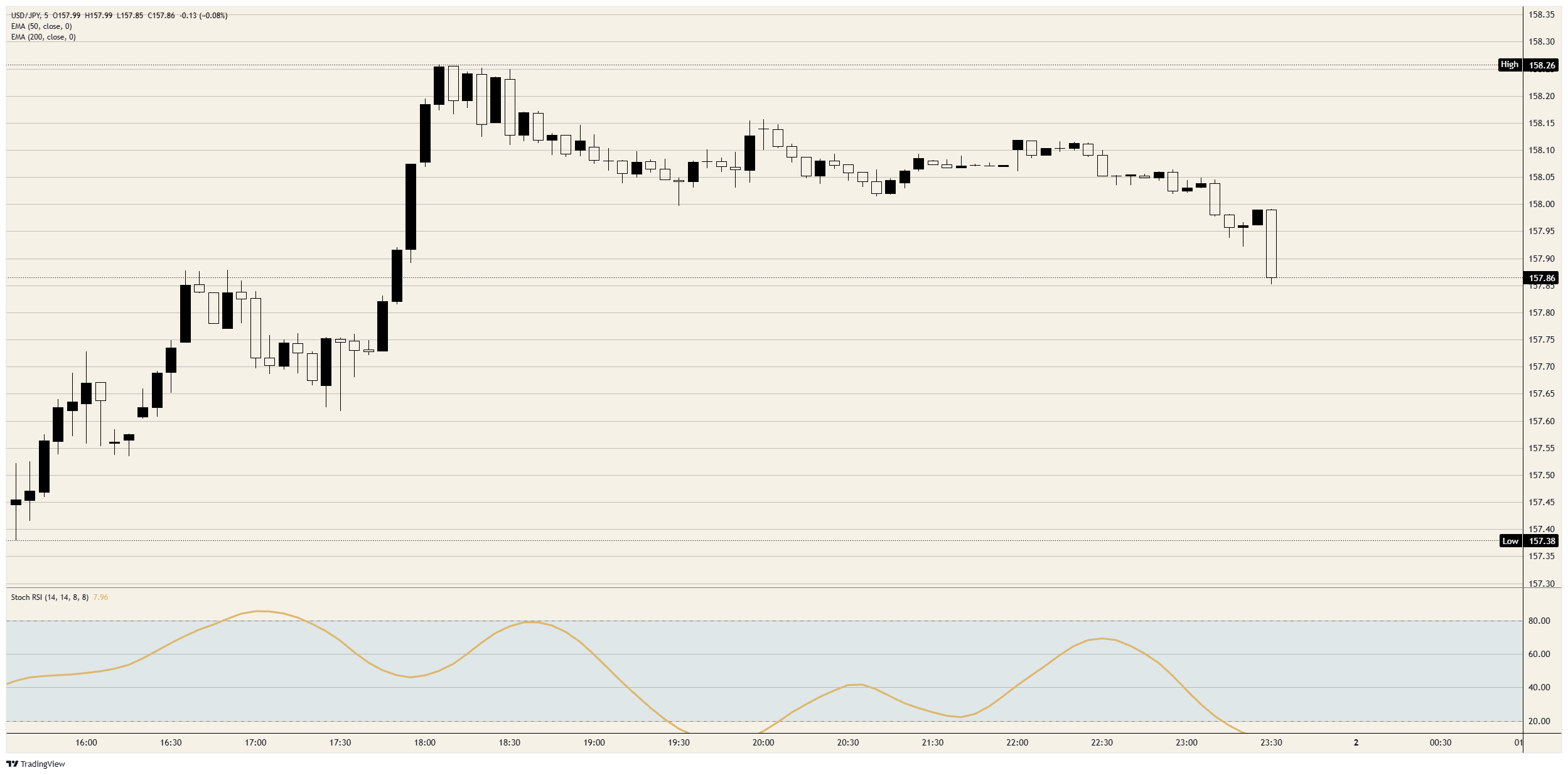
USD/JPY fell back below 158.00 in the first bar after the 23:30 GMT release and stayed well above 157.50. It had held over 158.00 from Thursday's last leg higher until the bars just before the number, when it slipped under that level.
The pair is now near the middle of Thursday's range, which runs from above 157.00 to just short of 158.50. The five-minute Stochastic Relative Strength Index (Stoch RSI), a momentum gauge, is near 8, at the bottom of its range and still falling.
USD/JPY 5-minute chart
Japanese Yen FAQs
The Japanese Yen (JPY) is one of the world’s most traded currencies. Its value is broadly determined by the performance of the Japanese economy, but more specifically by the Bank of Japan’s policy, the differential between Japanese and US bond yields, or risk sentiment among traders, among other factors.
One of the Bank of Japan’s mandates is currency control, so its moves are key for the Yen. The BoJ has directly intervened in currency markets sometimes, generally to lower the value of the Yen, although it refrains from doing it often due to political concerns of its main trading partners. The BoJ ultra-loose monetary policy between 2013 and 2024 caused the Yen to depreciate against its main currency peers due to an increasing policy divergence between the Bank of Japan and other main central banks. More recently, the gradually unwinding of this ultra-loose policy has given some support to the Yen.
Over the last decade, the BoJ’s stance of sticking to ultra-loose monetary policy has led to a widening policy divergence with other central banks, particularly with the US Federal Reserve. This supported a widening of the differential between the 10-year US and Japanese bonds, which favored the US Dollar against the Japanese Yen. The BoJ decision in 2024 to gradually abandon the ultra-loose policy, coupled with interest-rate cuts in other major central banks, is narrowing this differential.
The Japanese Yen is often seen as a safe-haven investment. This means that in times of market stress, investors are more likely to put their money in the Japanese currency due to its supposed reliability and stability. Turbulent times are likely to strengthen the Yen’s value against other currencies seen as more risky to invest in.
Recommended Articles


