


British Pound sinks as Warsh’s hawkish dots power US Dollar
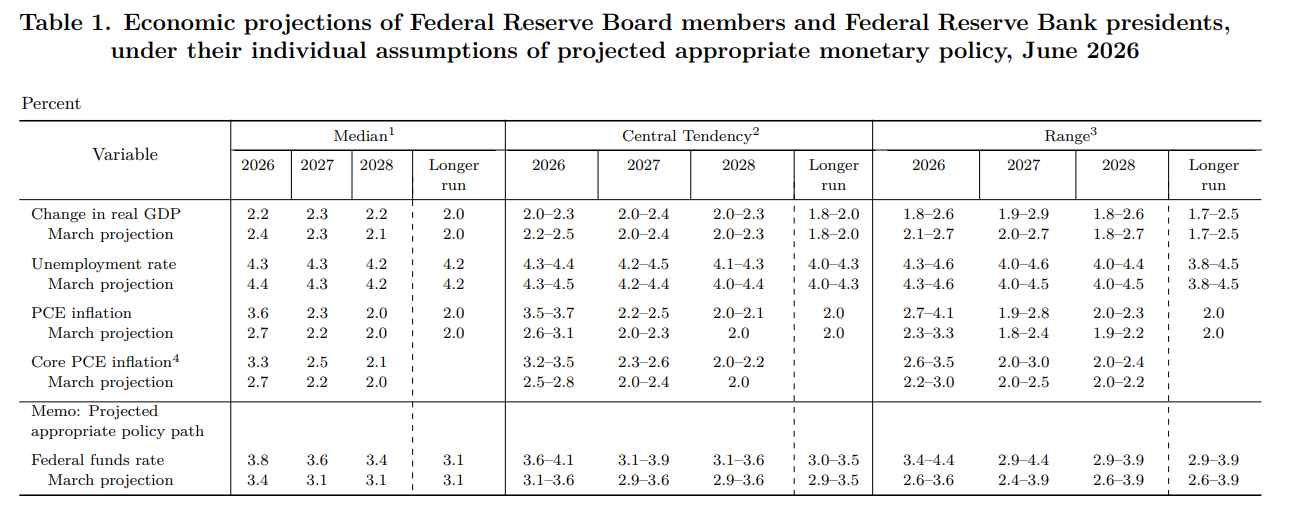
- Fed holds rates steady, but dot plot splits hawkishly.
- Core PCE forecast stays well above the Fed’s target.
- Removed guidance leaves traders focused on Warsh’s policy tone.
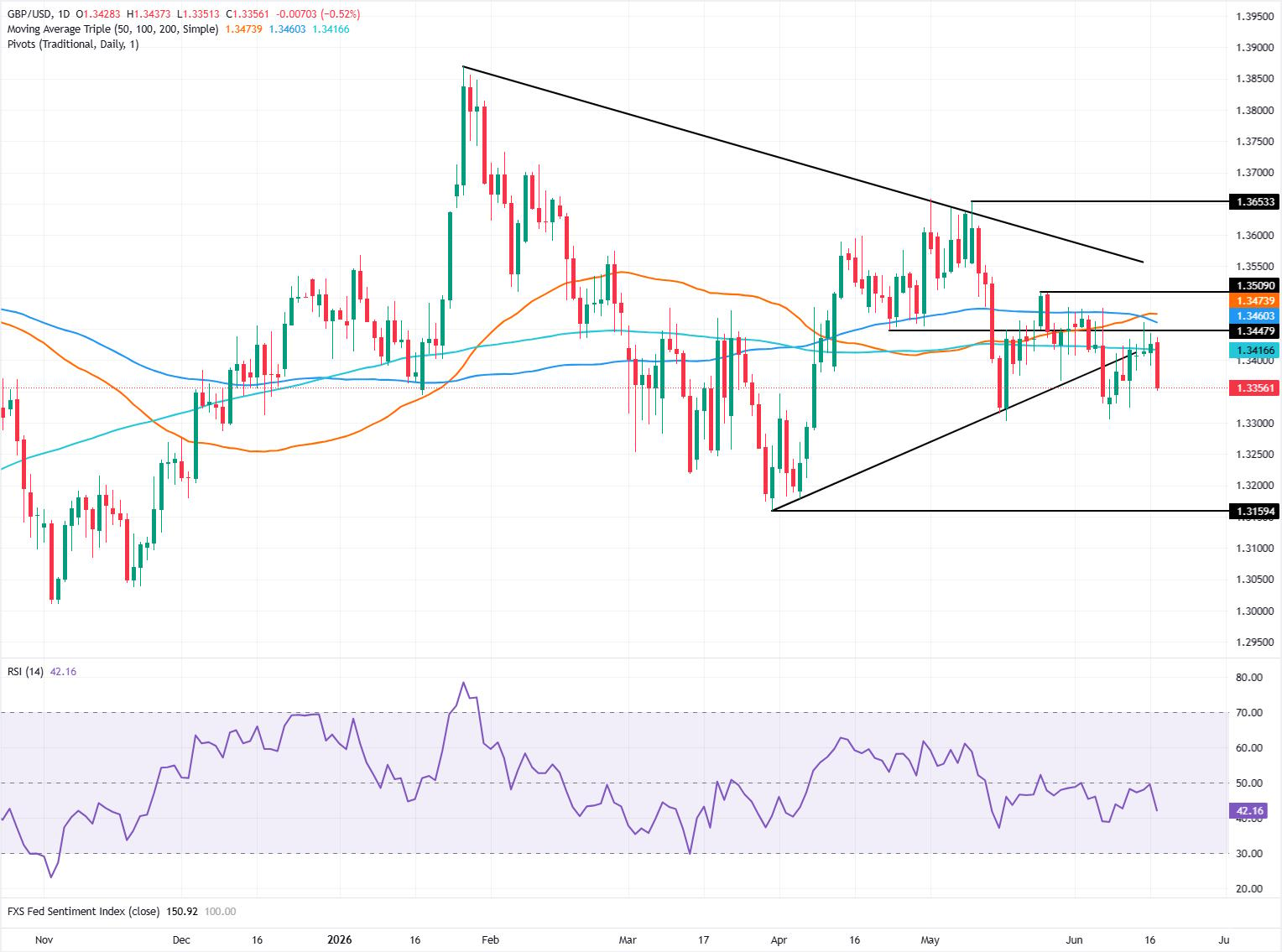
Cable collapses during the North American session, as the Federal Reserve keep interest rates unchanged, but the ‘dot-plot’ hints at a divided central bank, with half of the eighteen reported dots in the ‘dot-plot’ seeing interest rates higher, which boosted the Greenback. The GBP/USD trades volatily within the 1.3350-1.3400 range, down 0.52%.
Sterling GBP/USD slides as Fed projections revive higher-rate risks
In the statement, the Fed eliminated forward guidance language, marking Kevin Warsh’s first lead on monetary policy. The Fed recognised that the economy continues to grow strongly, despite uncertainties surrounding the Middle East conflict, and noted that the jobs market remains stable, with the unemployment rate staying nearly unchanged.
Furthermore, “Inflation remains elevated relative to the Committee’s 2 per cent goal, in part reflecting supply shocks that have driven price increases in certain sectors, including energy. The Committee will deliver price stability.”
The Summary of Economic Projections (SEP) indicates that the median forecast is for the Fed Funds Rate to finish at 3.8%, up from 3.4% in March. The economy is expected to expand by 2.2% by the end of 2026. Meanwhile, Core PCE, the Fed’s preferred inflation measure, is projected at 3.3%, which is 1.3% above the Fed’s 2% target.
GBP/USD reaction to the decision
The GBP/USD tanked to four-day lows of 1.3351, before finding some relief, yet traders are bracing for the press conference of the new Fed Chair, Kevin Warsh. If he leans dovish, a recovery towards 1.3400 is possible, but most of the Federal Open Market Committee (FOMC) favours higher rates. If that’s reassured by Warsh, a test of 1.3300 is on the cards.
Fed FAQs
Monetary policy in the US is shaped by the Federal Reserve (Fed). The Fed has two mandates: to achieve price stability and foster full employment. Its primary tool to achieve these goals is by adjusting interest rates. When prices are rising too quickly and inflation is above the Fed’s 2% target, it raises interest rates, increasing borrowing costs throughout the economy. This results in a stronger US Dollar (USD) as it makes the US a more attractive place for international investors to park their money. When inflation falls below 2% or the Unemployment Rate is too high, the Fed may lower interest rates to encourage borrowing, which weighs on the Greenback.
The Federal Reserve (Fed) holds eight policy meetings a year, where the Federal Open Market Committee (FOMC) assesses economic conditions and makes monetary policy decisions. The FOMC is attended by twelve Fed officials – the seven members of the Board of Governors, the president of the Federal Reserve Bank of New York, and four of the remaining eleven regional Reserve Bank presidents, who serve one-year terms on a rotating basis.
In extreme situations, the Federal Reserve may resort to a policy named Quantitative Easing (QE). QE is the process by which the Fed substantially increases the flow of credit in a stuck financial system. It is a non-standard policy measure used during crises or when inflation is extremely low. It was the Fed’s weapon of choice during the Great Financial Crisis in 2008. It involves the Fed printing more Dollars and using them to buy high grade bonds from financial institutions. QE usually weakens the US Dollar.
Quantitative tightening (QT) is the reverse process of QE, whereby the Federal Reserve stops buying bonds from financial institutions and does not reinvest the principal from the bonds it holds maturing, to purchase new bonds. It is usually positive for the value of the US Dollar.
Recommended Articles


