


Coffee (COFFEE) Is up 2.15% on Jul 28: What Changed in Supply and Demand?
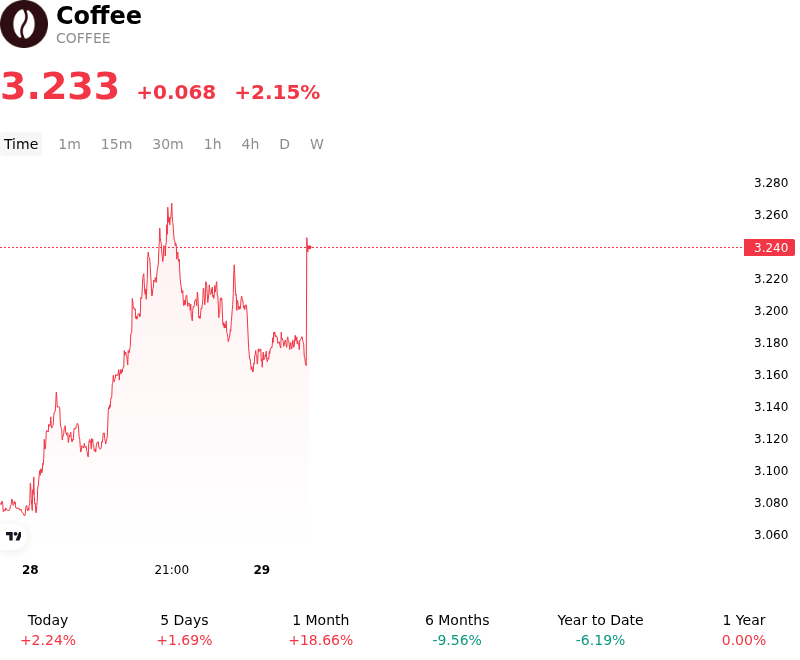
Coffee (COFFEE) is up 2.15% at Jul 28 04:20(ET), now at $3.2335, with a 7-day up of 1.90%.
What is driving Coffee (COFFEE)’s stock price up today?
The advance in coffee prices is primarily driven by an intensified weather premium as the Brazilian winter reaches its peak volatility window. Meteorological forecasts indicating a significant drop in temperatures across the high-altitude regions of Minas Gerais and São Paulo have triggered a rapid repricing of frost risk. Even in the absence of a confirmed freeze event, the threat of sub-zero temperatures during the tail end of the harvest season forces a contraction in short positions and encourages speculative buying to hedge against potential yield losses for the subsequent crop cycle.
On the supply side, the move is supported by lower-than-anticipated harvest yields reported by major Brazilian cooperatives. Recent field data suggests that the current crop is producing a higher percentage of smaller beans, which indicates that earlier moisture deficits during the cherry development stage were more damaging than initially modeled. This downward revision in production expectations is tightening the global supply-demand balance, particularly as the market transitions between crop years.
Institutional positioning is also responding to the continued depletion of ICE-certified warehouse stocks. The persistent decline in available exchange-monitored inventory suggests that destination demand remains resilient despite higher price levels, leaving the market vulnerable to supply-side shocks. This physical tightness is compounded by logistical constraints in major exporting hubs, where container availability and port congestion in South America continue to delay shipments to North American and European roasters.
The upward momentum is further reinforced by currency dynamics, specifically the strengthening of the Brazilian Real against the US Dollar. A firmer Real reduces the local-currency returns for Brazilian producers, incentivizing them to withhold supply from the international market in anticipation of higher prices. This reduction in origin selling has removed a significant source of overhead resistance, allowing technical buying to accelerate the intraday move as the commodity breaches key resistance levels.
Looking forward, the market remains highly sensitive to extended weather models and any shifts in the South American climate outlook. While the current rally reflects immediate supply anxieties, investors are closely monitoring the upcoming flowering period in the final quarter of the year, as any continued dryness could jeopardize the next production outlook and sustain the current structural deficit in the global coffee market.
Technical Analysis of Coffee (COFFEE)
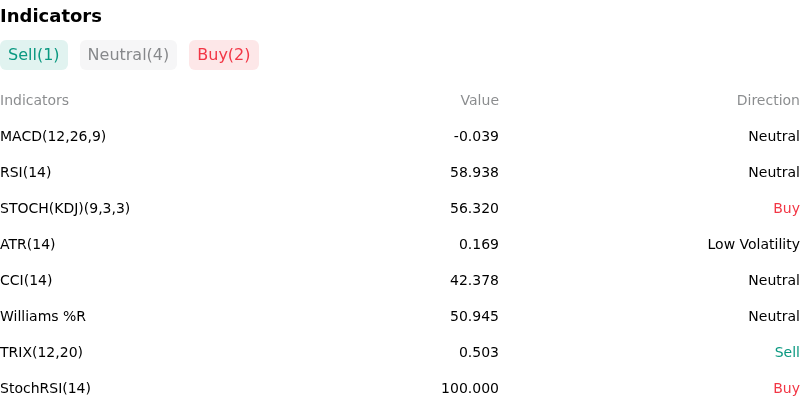
Technically, Coffee (COFFEE) shows a MACD (12,26,9) value of -0.039, indicating a neutral signal. The RSI at 58.938 suggests neutral condition and the Williams %R at 50.945 suggests neutral condition. Please monitor closely.
More details about Coffee (COFFEE)
Recent Events and Risks:
- Favorable Rainfall in Brazil: Recent meteorological reports indicating widespread precipitation across Minas Gerais and Sao Paulo are mitigating long-term drought concerns and supporting the 2025/26 flowering stage, prompting speculators to unwind long positions as production outlooks improve.
- EU Deforestation Regulation (EUDR) Delay: The European Commission's recent proposal to postpone the implementation of strict anti-deforestation rules by twelve months has dampened immediate procurement urgency from European roasters, leading to a significant reduction in the "panic buying" premium that had supported prices throughout the previous quarter.
- Steady Growth in Certified Stocks: ICE-monitored Arabica inventories have continued their upward trajectory, reaching multi-month highs with a significant volume of Brazilian-origin beans currently awaiting grading, which increases the immediate deliverable supply and pressures the front-month futures curve.
- Seasonal Robusta Harvest Pressure: The commencement of the harvest in Vietnam is expected to increase global Robusta availability in the coming weeks, creating a bearish cross-commodity spillover effect on Arabica prices as the supply tightness in the broader coffee complex begins to ease.
Recommended Articles


