




Where to Invest Money to Get Good Returns in Australia: 10 Best Investment Options for 2026

Most people think they need to have millions of A$ in their accounts to make investments that yield profits. But that isn't the case. You can invest the money you've got in hand and enjoy dividends every passing minute. The best part? You don't need to be a financial genius to get started.
Many Aussies ask: what is the best way to invest money in Australia? There's no sure-fire route. But there are several financial vehicles you can bank on to deliver the goods when it comes to profits.
In this guide, we'll run you through 10 mediums that'll do that. These routes didn't appear by chance; we did our research to spot investment channels that are low-risk and grow your money with minimal fuss. Itching to uncover these options? Let's get going.
The Impact of the RBA Cash Rate on Investment in 2026
You're ready to know where you can put your funds and have it grow. We feel it too. But before we get into that, there's something you need to know: the RBA cash rate.
The RBA is the Reserve Bank of Australia, and it's the body that sets the interest rates on investment vehicles within the country.
On May 5th, 2026, the RBA board voted to raise the official rate by 25 basis points. This resulted in an interest rate of 4.35%. This was the third consecutive hike of the year, and was a result of speculation that conflicts in the Middle East could lead to global energy price surges and inflation.
What does this mean for investors? High rates mean more returns on savings accounts and term deposits. But they can also cause costly mortgages. For those in the shares' scene, short-term dips will occur, but long-term investors will take in profits.
This breakdown shows us that while it's possible to make profitable investments in 2026, picking the right options is non-negotiable.
What Is the Best Way to Invest Money in Australia?
What is the best way to invest money in Australia? The reality is there's no one magic option that'll see you get big returns. As an investor, the “don't put all your eggs in one basket” saying goes from being a regular phrase to sound advice.
To get profits you seek, you must spread your money across different investments. This is called what financial experts call diversification. But you don't just put funds on different vehicles just for the fun of it. You’ll need to gauge factors such as your:
Goal
Timeline
Risk tolerance
And contrary to popular belief, you don't need to be a millionaire to start investing. You can begin your investment journey with A$500 or A$1,000. This capital, when invested right, can get you profits that become huge when they compound.
However, investments can swing either way. Before hopping on the investing train, have an emergency fund with money that can take care of your expenses for three to six months. That way, even if your investments go haywire, you can still stay afloat for a reasonable period.
“Start Invest with an ASIC-regulated broker. Fast AUD funding via PayID. ”
Where to Invest Money for Good Returns in 2026
If you're looking for where to invest money to get good returns in Australia this year, here are 10 routes to consider:
#1 High-Interest Saving Accounts (HISA)
This is the easiest starting point for any Aussie who wants to know how to invest money in 2026. Top HISAs in Australia have annual rates that can max out at 5.90%. So, if you invest A$10,000, you'd get back $590 after a year. That's better than having those funds sit in an account where surcharges eat away its value.
You don't need to worry about the safety of your money in a high-interest savings account. The government protects up to A$250,000 through its Financial Claims Scheme. The best part? You can set up this type of account and access its funds with ease.
#2 Term Deposits
This is like having a handshake deal with your bank. You tell them to lock away your money for a select timeline (i.e., 12 months) and they'll give you a guaranteed interest rate on the amount you put in.
Unlike high-interest savings accounts where rates fluctuate to fit RBA rates, term deposits are insulated from rate variance. Once the bank locks in your rate, it'll remain so until the maturity date. The only disadvantage is these accounts won't benefit from rate increments.
#3 Exchange-Traded Funds
Exchange-Traded Funds, also known as ETFs, are becoming red-hot in Australia. An ETF lets you invest in a group of assets or shares at the same time. This lets you diversify your investment portfolio immediately.
Wondering how to get the best ETFs to invest in? Use Betshares Australia 200 ETF (A200) to track down the best 200 ASX companies for an annual fee of 0.04%. There's also the Betashares Nasdaq-100 ETF (NDQ) that grants access to the holdings of top non-financial companies (i.e., Apple) for a 5-year annualised return of 16.51%.
#4 Australian Shares
Want your patriotism to show in your investments? Consider Australian shares. These are the units of companies based in Australia that are publicly listed and traded on the Australian Securities Exchange (ASX).
Keying into these shares makes you a part of the company you're investing in. So, if the company does well, the share price will rise: if it encounters an issue, share value will fall.
Looking at the bright side, most ASX-listed companies give regular cash payments to shareholders. And with Australia’s franking credits system in the mix, you don't have to worry about being taxed twice on one corporate payout.
“Trade Australian Shares with an ASIC-regulated broker. Fast AUD funding via PayID. ”
#5 Property
Landed properties have always been a valid form of investment in Australia, and it isn't any different in 2026. According to a recent KPMG report, the prices of homes across the nation are expected to rise by 7.7% this year. This report suggests Perth will be the strongest performer, as house prices within this region are expected to grow by almost 13% this year.
The key drivers behind the surge of home prices in Australia stems from demand that isn't waning anytime soon.
But there's a caveat we must inform you about. The current RBA rate is 4.35% means that mortgages will become more expensive than they were years ago. As such, Aussies interested in the housing market might need to pay a large deposit to secure a property.
While active real estate isn't for everyone based on the finances needed for entry, it's still one of the best investments in Australia for investors playing the long game.
#6 Real Estate Investment Trusts (REITs)
Don't have A$100,000 to make a down payment on a home in Australia? That sucks. But there's a passive and inexpensive route of investing cash into the property market. The method? REITs.
A REIT has a stake in multiple properties. This includes regular houses, shopping centres, and hospitals. And the best part? The law states that at least 90% of the proceeds gotten as rental income from these properties be paid out to investors.
You can purchase REITs on the ASX, like you would for shares. That said, you can sell them in minutes if you need the funds ASAP.
One of Australia's biggest REITs, GPT Group (ASX: GPT), gives investors an annual return of 4.96%. And if you can invest for three straight years, you could get yields hovering around 35%.
#7 Superannuation
Superannuation or super, is the retirement fund that the company you work at contributes into every quarter. As specified by the Australian Tax Office, the contributed amount is 12% of your ordinary time earnings (OTE) for the quarter.
What's great about superannuation rules in AU is that you can decide what fund your employer contributes to every quarter. Most Aussies select the AustralianSuper as it delivers yields that can reach 14% if you're under its DIY Mix Options.
One mistake most Aussies make is not knowing the retirement fund their superannuation is in. While your employer can pick a fund for you, there are options that could give more returns. Switching to a high-growth alternative could be just what makes you extra thousands of Australian Dollars when you retire.
#8 Government Bonds
This investment route looks boring on the surface. But it should excite you to know that it can pay out as expected even when the economy is unstable.
Think of a government bond as a loan the Australian government takes from investors. As one of these investors, you'd get regular interest payments regularly. When the loan (bond) reaches its maturity, you'll get your original investment amount back.
Australian Government Bonds (AGBs) have an AAA credit rating, etching them among the safest investment vehicles in the world. You can buy bonds via ETFs like the iShares Core Composite Bond ETF using your brokerage account and get returns of around 1.93% every three years.
#9 Gold
Gold has been on a purple patch lately. In 2025, its prices rose by over 60%. This rise led it to close out the year valued at over $4,000 (A$5,573) per ounce for the first time ever.
Gold is still rising in 2026, and experts suggest that it could go past the $6,000 (A$8,359) per ounce mark in 2026. Aussies who want to diversify their portfolio should consider investing in gold either physically or via an ASX gold ETF such as PMGOLD. Either way, they could be in for serious profits in 2026 and early next year.
#10 Cryptocurrency
The wild card of investments is cryptocurrencies. This is due to its volatility. For context, while a coin could double its value today, it could crash by 80% within five minutes.
As it stands, Bitcoin remains the first among equals in the cryptocurrency world. And since it's popular, you can buy Bitcoin in Australia via ASX-listed ETFs such as the Monochrome Bitcoin ETF (IBTC).
But since this crypto investments can go either way, it'll be in your best interests to make it 2% to 3% of your total portfolio. By doing this, you won't be reeling in losses when the token you invested in crashes.
“Start Invest with an ASIC-regulated broker. Fast AUD funding via PayID. ”
How Much Money Do You Need to Start Investing?
You don't need to have all the money in the world to start your investment journey. This table shows how much you can use to invest in the vehicles mentioned in this guide:
Your Investment Journey Starts Here!
The 4.35% interest rate set by the RBA has created an array of investment opportunities for Aussies. But there's no foolproof route, so we recommend diversifying your portfolio across the 10 vehicles highlighted in this guide.
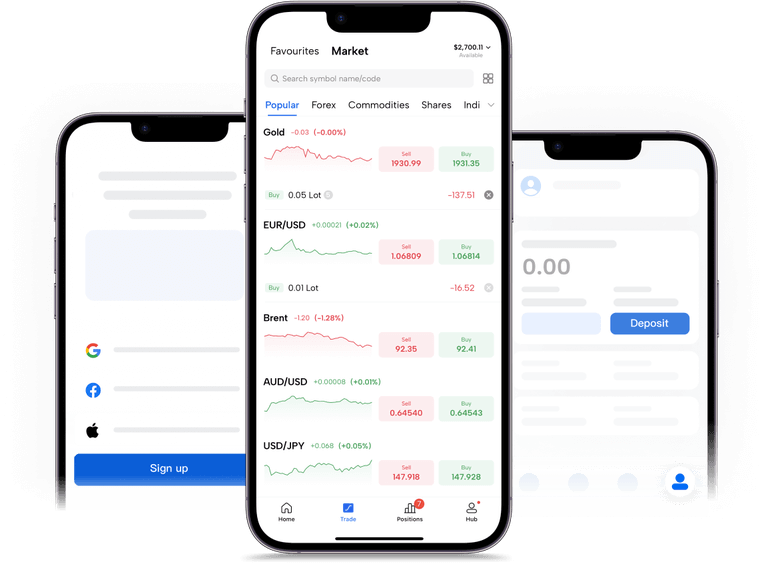
If you're a newbie in the investment world, you won’t get overwhelmed with Mitrade in the picture. This platform provides access to the best investments in Australia in 2026 (shares, ETFs, gold, and more).
What's better? It isn't a must to start out with real money. You can create a demo account and test run things yourself. When you're grounded, you can invest real money and get returns.


1. What are the best beginner-friendly investments in Australia?
Top investments for beginners include high-interest savings accounts, ETFs, and superannuation. These investment vehicles are low-cost and simple to understand.
2. Will the RBA increase interest rates soon?
With inflation rising, the RBA is expected to raise interest rates further at its next meeting that'll happen in June. If an increment takes place, the yields tied to popular investment routes will rise.
3. Are cryptos a good investment option?
Investing in cryptocurrencies is great and can give you returns of up to 50% or 60%. But, in the same vein, its value could crash when you least expect it. As such, only about 3% of your portfolio should be on crypto-related investments so you can recover easily.
Disclaimer: The content presented above, whether from a third party or not, is considered as general advice only. CFD trading involves significant risk of loss. Past performance does not guarantee future results. This article serves informational purposes only and does not constitute financial advice. Consider your risk tolerance before trading.


