


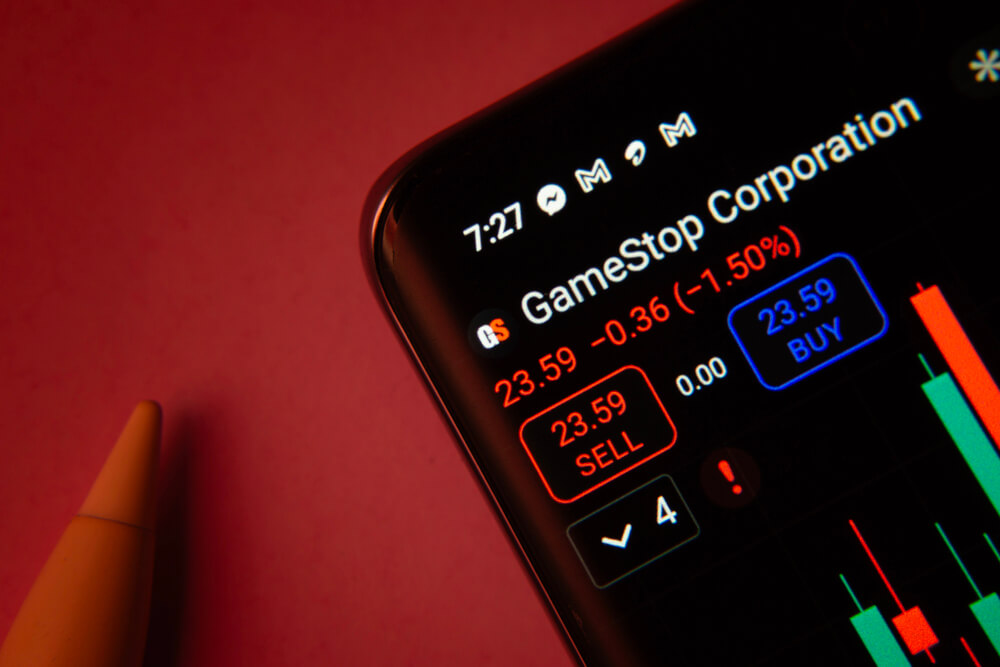
In January 2021, GameStop’s share price went from $4 to nearly $500 in a matter of weeks, a gain of over 11,000%. Then, just as fast, it lost most of that value. Thousands of traders who got in early made life-changing profits. And many who arrived late lost everything they had put in.
That is the world of meme stocks.
These are not your typical stocks that rise and fall on earnings reports and business fundamentals. Meme stocks move on internet hype, social media posts, and the collective excitement of online communities. And every few months, a new one captures the world’s attention.
Before you get caught up in the excitement of the next one, you should know what meme stocks are, how they work, and what affects their prices. This article explains all these, and much more.
What Is a Meme Stock?
A meme stock is shares in a company whose trading activity is pumped up via social media. The internet buzz outweighs the fundamentals of the underlying business, which causes the share price to respond to viral posts rather than the company’s revenue, cash flow, and profits.
But why meme? For starters, a meme, pronounced “meem”, is an inside joke that internet users share among themselves. It is usually a funny picture, video, or piece of text, and it often spreads very fast from person to person.
So, meme stocks get their name because they become popular through viral internet hype. Just like a funny picture turns into a viral meme when thousands of people share and copy it online, a meme stock goes viral when an online community of everyday people teams up to buy it all at once.
How Meme Stocks Went Mainstream?

The term itself became popular in early 2021 when a group of retail traders piled into GameStop. GameStop, a struggling brick-and-mortar video game retailer with a bleak business outlook, suddenly became the most talked-about stock in the world because a Reddit user in the WallStreetBets community convinced members that if they bought it in masses, the hedge funds that had shorted the stock would be forced to cover their bets. And that would skyrocket the stock price, and therein lay an opportunity of a lifetime for the investors.
A Michigan Law study noted that the influx of retail traders into meme stocks in 2021 was enabled by boredom from the COVID-19 pandemic. This was also a time that governments issued stimulus checks to support consumption. Add to that the fact that zero-commission trading apps like Robinhood had just brought stock trading to millions of new users, and you have perfect conditions for a cult-like movement, the study said.
But the most important catalyst of the movement was social media. Retail “armies” organized on Reddit, Discord, and Telegram. They created and shared screenshots of huge gains through Twitter (now called X) and TikTok.
Between 2024 and 2026, the idea of a meme stock had grown beyond GameStop to include any stock that can go vertical on hype and then crash just as fast once the buzz fades.
How Do Meme Stocks Work?
Every meme stock is a regular stock until it goes through a cycle that turns it into one. A typical cycle has three main phases:
Phase 1: Social proof
This can also be referred to as the social media spark phase because it the stage where people see screenshots of enormous gains flooding their feeds. Users share posts, memes, and videos highlighting the specific stock, and viewers assume that the trade must be working. That pulls more buyers in.
Phase 2: FOMO
As more people see the hype around the stock, many of them swear to not be the ones who did nothing when an opportunity came. This fear of missing out, or FOMO, pushes hesitant investors to act fast, and as a result, the stock price skyrockets.
Because many of the stocks that become meme stocks are targets of short sellers, the hype that accompanies FOMO creates what the market calls a short squeeze. That is, as more regular people buy, the investors, usually hedge funds, who bet against the stock start losing massive amounts of money. And to stop the losses, the investors are forced to buy back the shares they borrowed. The result is a short squeeze.
Phase 3: Distribution and crash
Those who bought the stock early enough start selling at the peak, and as more do, the selling pressure, which is often combined with fading social media buzz, causes the price to collapse. And late buyers are left holding a stock that has lost most of its value almost overnight.
What Are the Key Characteristics of Meme Stocks?
From the definition alone and how they work, it is easy for one to imagine that any volatile stock is a meme stock. But the thing is that meme stocks are more than that. You can identify one if it has the following traits:
Driven by viral social media activity: The stocks’ popularity start from analyses posted on social media, and then people use the same platforms to coordinate buying.
Extreme, FOMO-fueled volatility: Once mass buying starts and FOMO sets in, the stocks can move 100% or even more within a single trading session, and then give it all back just as fast.
Massive retail investor concentration: A lot of the social media activity is the work of retail traders.
Price action is disconnected from business reality: Interest in the stock doesn’t align with the company’s financial or operational status.
Small or financially distressed: Most meme stocks are either micro-cap or small-cap companies, or larger businesses that are struggling. The financial weakness is actually part of the appeal because these companies tend to attract heavy short selling, which sets the stage for a short squeeze when the retail crowd piles in.
Meme Stocks and Short Selling: What’s the Intertwined Relationship?
Short selling is one of the main reasons meme stocks explode the way they do. And it is an investment strategy popular among hedge funds, where they borrow the shares of a meme stock and sell them immediately, hoping to buy them back later at a lower price.
But a crowd of retail investors may, for one reason or another, pile into that same stock and cause its price to surge. The result is that the short seller starts losing money fast and is forced to buy back the shares at a higher price. That forced buying pushes the price even higher, which forces more short sellers to cover, and the chain reaction keeps going. That chain reaction is a short squeeze, and it is the engine behind most of the biggest meme stock rallies in history.
The squeeze can also be amplified through options. When traders buy large volumes of call options on a meme stock, market makers are forced to hedge by purchasing the underlying shares. That drives the price higher, which makes even more call options profitable, which triggers more hedging, and so on. This is a gamma squeeze, and when it happens alongside a short squeeze, the result is the kind of astronomic price move that makes meme stocks infamous.
Many retail investors and traders understand this intertwined relationship well. That is why they deliberately target stocks with high short interest to create meme stocks.
What Meme Stocks Are Available to Trade Right Now?
GameStop is the first meme stock to gain global attention, but it wasn’t the only one. Below is a list of meme stocks that are available to trade right now:
GameStop (GME)
AMC Entertainment (AMC)
Trump Media & Technology Group (DJT)
Bed Bath & Beyond (BBBY)
BlackBerry Limited (BB)
Koss Corporation (KOSS)
Nokia (NOK)
The names above are already established and have gone through the full meme stock cycle, but still trade like meme stocks. There are others that currently have the right conditions to become the next meme stock; we can call them potential meme stocks. They include:
SoundHound AI (SOUN)
Opendoor Technologies (OPEN)
C3.ai (AI)
Beyond Meat (BYND)
Plug Power (PLUG)
Lucid Group (LCID)
Tilray Brands (TLRY)
What Key Factors Affect Meme Stock Prices?
Meme stocks do not trade like regular ones. And that means forces that would normally cause share prices to move may not do much for meme stocks. The key factors that influence meme stock prices include:
1. Social media mention frequency: The more certain people or accounts talk about the stock, the more interest it generates, and this is often the earliest signal that a meme run is building.
2. Influencer and key opinion leader posts: Many people have created a following on the internet through offering suggestions for stock picks. Just one post from them is enough for their audience to start a buying spree.
3. Levels of short interest and the short interest ratio: A high short interest means that a short squeeze, when it happens, will be massive. Traders often monitor these metrics to identify potential meme stocks or accumulate active meme stocks and push hedge funds to cover.
4. Broker margin requirement updates and trading restrictions: Brokers often increase the margin requirements on meme stocks when the rally heats up. The goal is often to tame the momentum. Some may restrict trading on the stock so that no more new money comes into the stock.
Pros and Cons of Investing in Meme Stocks
Meme stocks can make you a lot of money, but they can take it away just as fast. So, before you decide to put money into one, here are the upsides and downsides you must be aware of:
Are Meme Stocks a Good Investment for You?
It depends on how you describe yourself.
If you are an long term investor, which means you want to build wealth over time, you would be interested in companies with robust fundamentals. That means you will want to invest in a company whose fundamentals, like profits and income, can enable the stock to grow with time. Meme stocks do not fit that description. A better fit would be broad market index funds, ETFs, or shares in financially healthy companies with a track record of steady growth.
But if you want to capture short-term price moves regardless of what the underlying business looks like, which means you are a trader, then meme stocks are a great asset. And for traders in the UAE, CFDs are one of the most suitable ways to trade them. Here is why:
✅You can profit in both directions.
✅You can act fast without large capital. That is, you can utilize leverage to open a large position with a fraction of the full trade value.
✅You are not stuck holding the stock.
You maight be interested in the article >>> What are CFDs? CFDs basics you need to know before trading
How to Invest in and Trade Meme Stocks in the UAE?
You can invest in or trade meme stocks either through stock brokers, CFD brokers.
1 Stock Brokers
A brokerage firm is a company that links buyers and sellers in a market. A stock broker like Interactive Brokers lets you buy and own the actual stock, which makes it the vehicle to use when investing for the long-term.
Pros:
✅You own the actual shares of the company.
✅You earn dividends if the company is in the position to pay them.
✅You can hold your investment for decades without overnight charges.
Cons:
❌Investors may face withholding tax since the UAE has no tax treaty with the US.
❌You can only profit when the stock goes up.
1 CFD Brokers
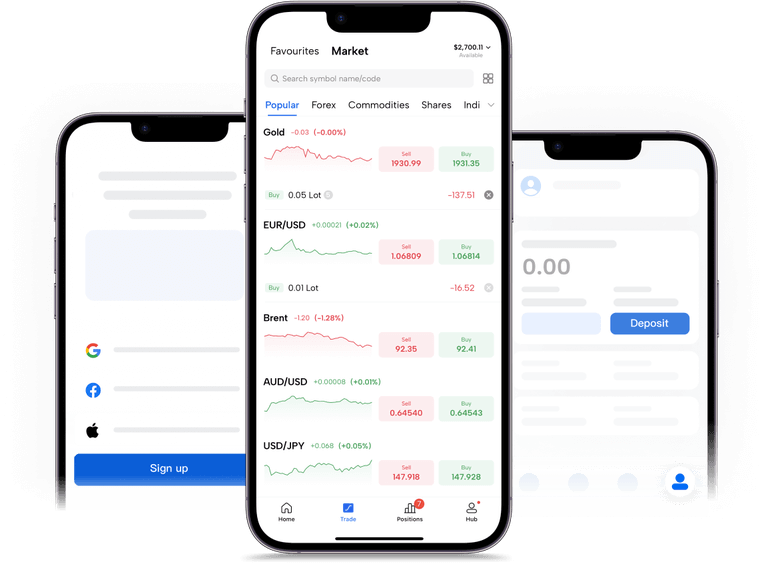
A CFD, or contract for difference, is a trading method that lets you speculate on price movements of a stock. A CFD broker like Mitrade allows you to take a buy or sell position and profit or lose based on how the price moves.
Pros:
✅You can profit whether the stock rises or falls by going long or short.
✅Brokers offer leverage, which lets you open larger positions with a smaller amount of capital.
✅You avoid certain taxes because you don’t own the underlying stock.
Cons:
❌Leverage amplifies losses just as it amplifies gains.
❌Overnight fees apply if you hold a position beyond a single trading session.
How to Trade Meme Stocks on Mitrade in the UAE?
Step 1: Create an account. And if you are new to CFDs trading, Mitrade offers a demo account loaded with $50,000 in virtual funds where you can learn through practice and without the risk of losing money.
Step 2: Fund your account. Mitrade allows you to start trading meme stocks as low as $50.
Step 3: Search for the meme stock by its ticker symbol. Select your position size, and choose whether to go long or short. And before you confirm the trade, set a stop-loss to protect yourself from a sudden reversal.
Some of the benefits you get by using Mitrade for trading meme stock CFDs include:
✅Provides a free demo account valued $50,000.
✅You can open a live account with as little as $50.
✅Zero commision and low spread.
✅Leverage of up to 1:200.
✅Built-in risk management tools.
✅The platform operates under the UAE’s Capital Markets Authority.
✅Mitrade integrates live market data and a news feed directly into the platform so you are not chasing updates across different tabs.

Suitable Strategies for Trading Meme Stocks Safely
Those with a plan can benefit immensely from meme stocks. The plan, or strategy, allows you to know when it is safe to get in and profitable to get out. Some strategies you can implement include:
1. Always set a stop-loss, and consider a trailing stop
A stop-loss is an order that instructs the broker to automatically close your trade when the price falls to a level you set in advance. Meme stocks are one of the most volatile assets in the market; that is, they can reverse violently and without warning the moment social media buzz fades or early buyers start selling. So, without a stop-loss, a single bad trade can wipe out far more than you intended to risk.
You can take this further with a trailing stop, which moves upward as the stock price climbs. That way, when the price eventually reverses, which always happens with meme stocks, the broker automatically exits your position at a level that still locks in a portion of your gains.
2. Take your initial capital off the table early
Once a trade moves far enough in your favor, sell enough of your position to recover what you originally put in and move that money somewhere safe. This is because meme stock rallies are built purely on hype and can reverse just as fast as they started. So, getting your initial capital out early means that whatever happens next, you cannot lose more than you started with.
3. Never risk more than 1% to 2% of your net worth on a single trade
Meme stocks are speculative by nature, which means no single trade should be large enough to seriously damage your overall portfolio if it goes wrong. Limiting each position to 1% to 2% of your total trading capital means you can absorb several losses in a row and still have enough left to trade another day. It also removes the emotional pressure that comes with having too much riding on a single volatile stock.
Conclusion
Meme stocks are a product of the internet age, and that makes them volatile and capable of minting overnight fortunes just as easily as they can erase them. They are not going away anytime soon because as long as social media exists and retail traders can organize online, the conditions for the next meme stock run will always be in place.
If you are in the UAE and want to get started, Mitrade’s demo account allows you to practice trading meme stock CFDs in real market conditions before you put real money on the line. And when you are ready for the live market, you can start trading with just $50 in capital.

What was the first official meme stock in history?
GameStop. It popularized the term as well as the investment strategy in January 2021 after Reddit users organized and pushed the stock’s price from under $5 to over $480 in a matter of weeks.
Why do meme stocks crash so fast after a major rally?
Because the only thing holding the price up is buying pressure built on hype. When the buzz fades and the early buyers start selling, there is nothing underneath to support the price.
What is a “Gamma Squeeze” in meme stock trading?
It is a phenomenon that arises from traders buying large volumes of call options on a stock, forcing market makers to hedge by purchasing the underlying shares. That buying pushes the price higher, which makes more call options profitable, which triggers more hedging, and so on. The result is a cycle that keeps feeding itself until it runs out of steam.
How can I identify a potential meme stock before it explodes?
You can watch for signals like:
Rising social media mentions: Track how often a stock’s ticker appears on forums like Reddit’s WallStreetBets, and on X and TikTok. A sudden spike in mentions, especially when the tone is bullish and the posts are gaining traction fast, is often the earliest warning sign that a meme run is building.
High short interest: Look for stocks where short interest is above 20% of the public float.
Low share price and small market cap: Most meme stocks are penny stocks or microcaps.
A compelling narrative: Watch for stocks where a simple, shareable story is forming online around the ticker.
Why are they called meme stocks?
Because they spread the same way internet memes do. That is, they go viral when enough traders pile in at the same time, with hype doing the work that fundamentals normally would.
What is a meme stock glossary?
Short selling: Borrowing shares and selling them, hoping to buy them back at a lower price for a profit.
Short squeeze: A self-feeding cycle that lifts the price of a meme stock, and it arises from rising prices that force short sellers to buy back shares, which pushes prices even higher.
Gamma squeeze: A phenomenon where a massive surge in investors buying call options forces market makers to buy the underlying stock, which drives the stock’s price upward very fast.
FOMO: An abbreviation of ‘fear of missing out’, and which refers to the anxiety that pushes hesitant traders to buy into a rally that is already in progress.
Holding the bag: Being left with a stock that has already crashed after other traders have sold and exited.
Short interest ratio: The number of days it would take short sellers to buy back all borrowed shares based on average daily trading volume.
* The content presented above, whether from a third party or not, is considered as general advice only. This article should not be construed as containing investment advice, investment recommendations, an offer of or solicitation for any transactions in financial instruments.


