


US Memory Stocks Slide Pre-Market; Micron, SanDisk, Western Digital Drop Over 2% as CXMT Tech Progress Sparks Competition Concerns
TradingKey - On October 12, US memory stocks generally weakened in pre-market trading. After Chinese memory chipmaker ChangXin Memory Technologies (CXMT) announced R&D progress on its next-generation DRAM technology, the market refocused on the competitive landscape of the global memory industry, while memory stocks that had previously surged continued to experience profit-taking.
As of early Monday pre-market trading US Eastern Time, Micron Technology (MU), SanDisk (SNDK), and Western Digital (WDC) fell over 2% at one point, while Seagate Technology (STX) dropped more than 1%. In the preceding week, the memory sector had already pulled back significantly, with the Roundhill Memory ETF declining 7.4% for the week, marking its worst weekly performance in nearly three months.
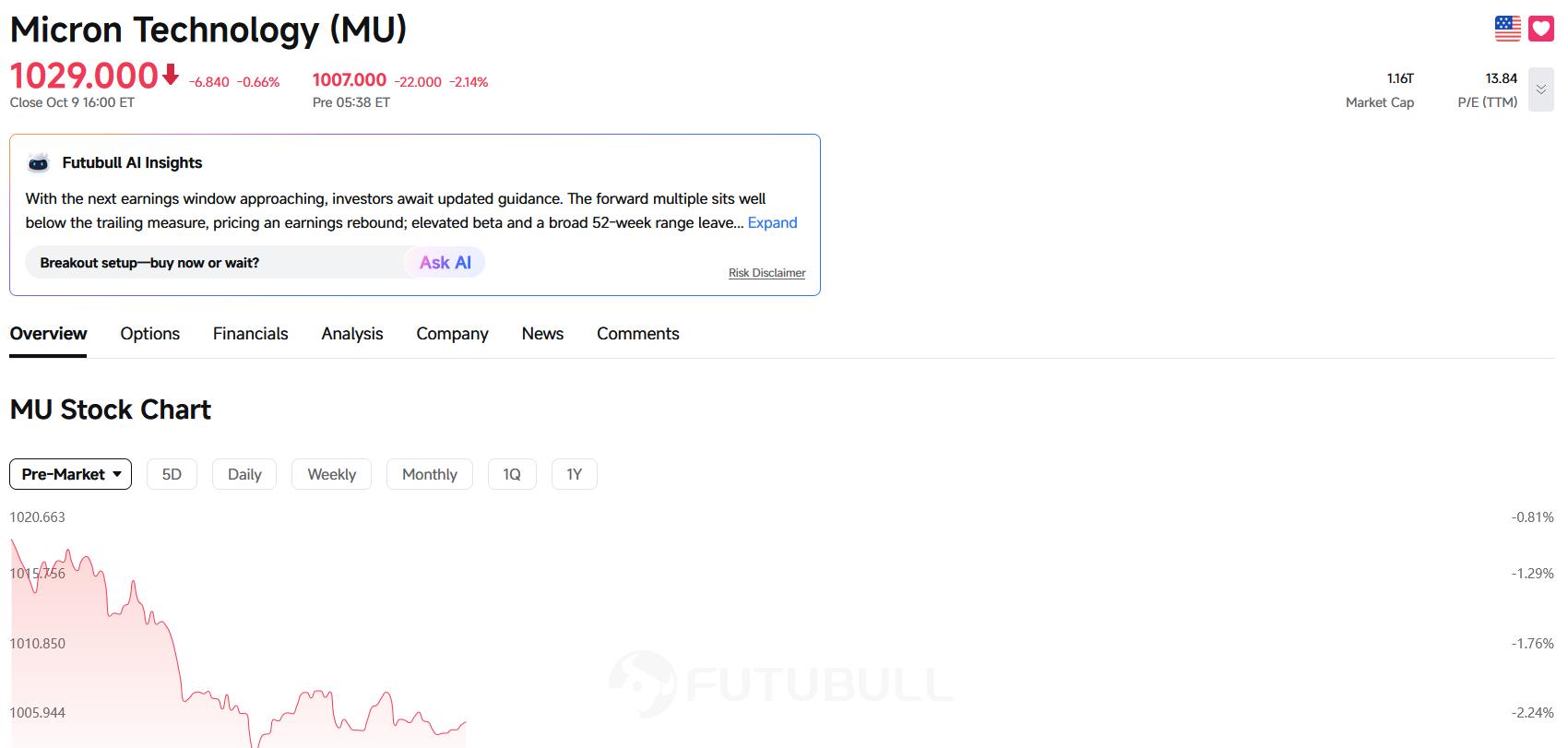
Micron pre-market stock price performance, Source: FUTUBULL
The pressure on the sector is linked to CXMT's latest technological developments. CXMT stated that it is advancing its next-generation 4F² DRAM memory cell architecture and plans to launch a new generation of DDR5 server memory products based on this technology by the end of 2026. Compared with the current mainstream 6F² structure, the 4F² design can further increase memory density per unit area. The company's fifth-generation DRAM manufacturing platform, G5, also entered mass production in September.
Volatility in memory stocks has increased noticeably recently. Last Friday, SanDisk closed down 1.72%, following a sharp 4.90% drop in the previous trading session, while Western Digital closed up 1.01% after earlier declines. Meanwhile, Samsung Electronics' latest preliminary quarterly results fell short of market expectations, which also temporarily weighed on global memory chip stocks.
However, demand from AI data centers for DRAM, NAND, and high-capacity hard drives remains high. The market focus is shifting from pure supply-demand tightness to the expansion pace of Chinese manufacturers, progress in advanced DRAM technology, and whether memory prices can stay elevated. This week's earnings reports from TSMC and ASML will also provide fresh signals on AI infrastructure demand, which may continue to influence the trajectory of the memory and semiconductor sectors.
Recommended Articles


