


Warren Buffett Passed on This Stock. Greg Abel May Not Wait Any Longer.
Key Points
Costco looks “Berkshire-worthy": It has strong customer loyalty, recurring membership revenue, a durable moat, and disciplined management.
Buffett has admitted that exiting Costco was probably a mistake, especially given how much the stock appreciated afterward.
Costco’s long-term compounding, digital growth, and loyal membership base indicate the kind of high-quality business that Berkshire Hathaway could still favor.
- 10 stocks we like better than Costco Wholesale ›
If I had to pick one stock worthy of Berkshire Hathaway (NYSE: BRKA) (NYSE: BRKB) that former CEO Warren Buffett walked away from but current leader Greg Abel might eventually revisit, it would be Costco Wholesale (NASDAQ: COST). It checks almost every box in the Berkshire playbook: a durable moat, recurring revenue, disciplined management, and the ability to compound value quietly over very long stretches.
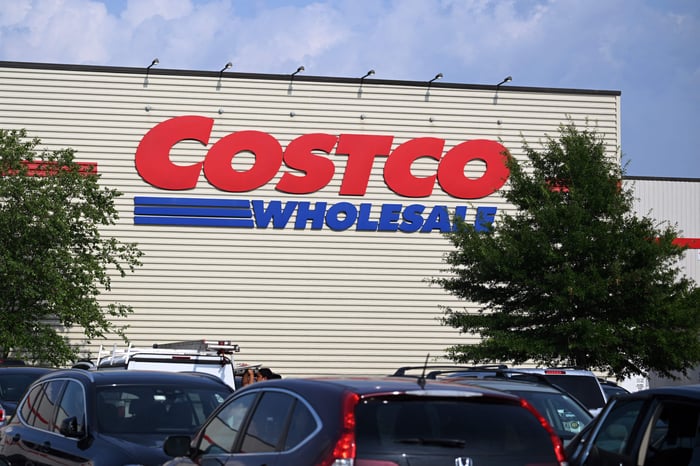
Image source: Getty Images.
Missed Nvidia in 2009? This Rare Signal Is Flashing Again. In 2009, a "Double Down" signal flashed for a little-known chipmaker called Nvidia. For the first time in years, that same "Total Conviction" signal is flashing for a company 1/100th the size of Nvidia. Continue »
Buffett's history with Costco is well known by now. Berkshire Hathaway owned shares for roughly two decades before selling out completely in 2020, a move vice chairman Charlie Munger openly disagreed with. In 2024 and 2025, Buffett admitted that dumping Costco was "probably a mistake," noting that the stock roughly doubled after Berkshire's exit and that he "used up" some of his good decisions between Costco and Apple. As of Berkshire's 13F filed March 31, Costco appears nowhere in its portfolio.
Costco has been on a tear
Costco's recent numbers look exactly like the kind of steady, member‑driven growth Berkshire tends to admire. For the third quarter of fiscal 2026, net sales rose 11.6% to $69.15 billion and total revenue, including membership fees, hit $70.53 billion. Net income climbed to $2.19 billion, or $4.93 per diluted share, up from $1.90 billion and $4.28 a year earlier.
That is not a one‑off spike. For the first 36 weeks of fiscal 2026, net sales were up 9.6% to $203.37 billion, while net income grew to $6.23 billion, or $14.01 per share, from $5.49 billion, or $12.34 per share.
The July 2026 sales update just reinforces the story. Costco reported net sales of $23.12 billion for the four weeks ending Aug. 2, up 10.7% year over year. Company‑wide comparable sales rose 8.9%, including 10.3% in the U.S., with digitally enabled sales up 17.7%. Excluding gasoline and foreign exchange, comps still rose 6.6% globally, with U.S. comps up 6.9% and digital up 18.2%. In other words, this is not just a gas‑price or currency story. It's about a business building traffic and ticket size across physical and online channels.
The real moat, of course, is membership. Costco recently disclosed renewal rates of 92.3% in the U.S. and Canada and 89.8% worldwide, meaning 9 out of 10 members keep paying their annual fees -- even after a fee increase took the standard Gold Star membership from $60 to $65 and the Executive membership from $120 to $130. That recurring, high‑margin membership income is exactly the kind of cash stream Buffett has always loved in insurance and other subscription businesses.
Berkshire is changing under Abel
So where does Greg Abel come in? Under Abel, Berkshire has been a bit more willing to lean into dominant consumer franchises and tech‑adjacent names when the economics are undeniable. Costco's current profile -- a global warehouse club with double‑digit sales growth, rising e‑commerce penetration, and near‑perfect renewal rates -- fits neatly into that framework. The model is simple to understand: offer a limited assortment of value‑priced goods, treat customers and employees well, and share economies of scale through low prices and modest membership-fee increases.
I don't think investors need to bet that Berkshire Hathaway will actually buy Costco shares again to see the opportunity. To me, the more useful lens is this: If you're trying to identify the kind of business that Abel might want to own for the next 20 years -- one with a wide moat, recurring cash, and management obsessed with value -- Costco Wholesale belongs near the top of the list. The fact that Buffett called selling it a mistake just strengthens the case that, this time around, Berkshire's new generation may be less inclined to let it get away.
Should you buy stock in Costco Wholesale right now?
Before you buy stock in Costco Wholesale, consider this:
The Motley Fool Stock Advisor analyst team just identified what they believe are the 10 best stocks for investors to buy now… and Costco Wholesale wasn’t one of them. The 10 stocks that made the cut could produce monster returns in the coming years.
Consider when Netflix made this list on December 17, 2004... if you invested $1,000 at the time of our recommendation, you’d have $411,427!* Or when Nvidia made this list on April 15, 2005... if you invested $1,000 at the time of our recommendation, you’d have $1,335,252!*
Now, it’s worth noting Stock Advisor’s total average return is 965% — a market-crushing outperformance compared to 215% for the S&P 500. Don't miss the latest top 10 list, available with Stock Advisor, and join an investing community built by individual investors for individual investors.
See the 10 stocks »
*Stock Advisor returns as of August 11, 2026.
Micah Zimmerman has no position in any of the stocks mentioned. The Motley Fool has positions in and recommends Apple, Berkshire Hathaway, and Costco Wholesale. The Motley Fool has a disclosure policy.
Recommended Articles


