


TradingKey Wall Street Weekly Report:Brent Crude Pulls Back to $84, Palantir and AMD Earnings Validate AI Demand, Dow Hits Record High as Markets Await CPI Data
Previous Week’s Market Review & Analysis
TradingKey - The macroeconomic landscape for the week of August 3 to August 9, 2026, was defined by a notable easing of geopolitical tensions in the Middle East, specifically involving diplomatic efforts to ensure maritime safety in the Strait of Hormuz. This shift led to a sharp correction in energy markets, with Brent crude prices falling significantly to approximately 83.77 dollars per barrel by August 3 Eastern Time. Domestically, the market continued to digest the policy stance of new Federal Reserve Chairman Kevin Warsh, who emphasized a data-dependent approach following the decision to maintain the federal funds rate between 3.50% and 3.75%. Additionally, coordinated currency intervention by the U.S. Treasury and Japanese authorities to support the Yen influenced global liquidity expectations throughout the week.
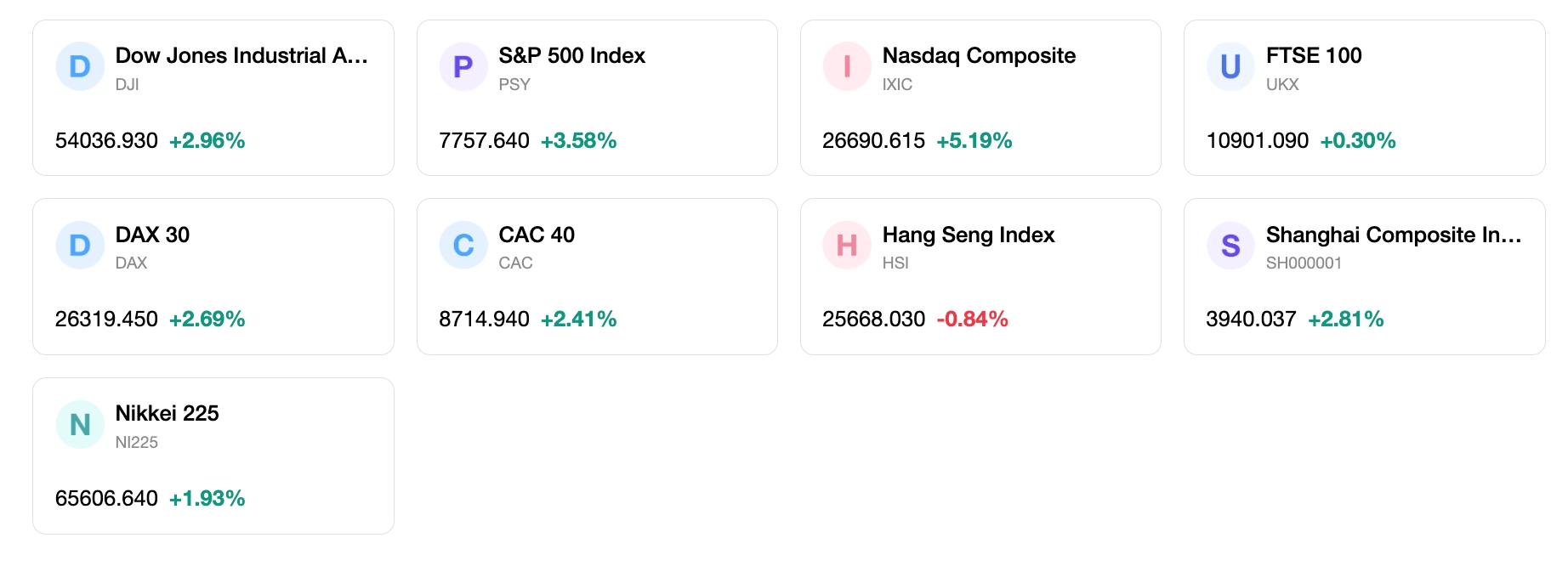
The U.S. equity market began the first week of August with a robust broad-based rally, characterized by the Dow Jones Industrial Average surging over 600 points on August 3 Eastern Time to reach a new all-time high of 53,178.41. While technology shares remained a primary driver of momentum, the rally showed signs of broadening as financials, industrials, and transportation sectors participated in the advance, fueled by the retreat in oil prices. The week saw a recovery from the volatility experienced in late July, with major indices rebounding as investors rotated back into growth and infrastructure-related equities following a period of technical consolidation.
Key events during the period included the continuation of a high-growth earnings season and the release of critical labor market data. On August 3 Eastern Time, Palantir Technologies reported results that served as a barometer for commercial AI adoption, while AMD’s subsequent report on August 4 Eastern Time provided further insights into semiconductor demand and the AI infrastructure cycle. The reporting period culminated in the release of the U.S. Employment Situation report on August 7 Eastern Time, which investors scrutinized for signs of labor market cooling and its potential impact on the Federal Reserve’s future interest rate path. Corporate sentiment was also influenced by reports of regulatory oversight regarding AI antitrust practices, which added a layer of complexity to tech-sector positioning.
Market flows and sentiment exhibited a transition from the defensive posture of the previous month toward a more constructive outlook as the forward 12-month P/E ratio for the S&P 500 stabilized near 20.0. Volatility indices moderated from recent peaks as the "fear premium" associated with Middle Eastern energy disruptions began to dissolve. However, the bond market remained a source of underlying tension, with the 10-year Treasury yield hovering near 4.74% on August 4 Eastern Time, reflecting persistent concerns that core inflation may remain above the central bank's long-term target despite the recent dip in headline energy costs.
The overall assessment of market behavior during this week indicates a phase of resilient cyclical recovery supported by extraordinary corporate earnings growth. The market logic has shifted from purely fearing higher-for-longer interest rates to rewarding companies that demonstrate repeatable and scalable AI-driven business models. While the geopolitical relief provided a significant tailwind, the current phase is best described as an earnings-led stabilization where equity markets are attempting to print new highs while navigating a transition in Federal Reserve leadership and evolving global trade dynamics.
Next Week's Key Market Drivers & Investment
Upcoming market drivers for the week of August 10, 2026, will be headlined by the release of the Consumer Price Index (CPI) on August 12 Eastern Time and the Producer Price Index (PPI) on August 13 Eastern Time. These reports will be critical in confirming whether the recent decline in energy prices has successfully trickled down into broader price stability. Investors will also monitor Retail Sales data on August 15 Eastern Time for evidence of consumer resilience, alongside the NFIB Small Business Optimism Index, which will provide a perspective on the domestic economic expansion's health beyond the mega-cap tech environment.
The market logic projection for the coming days suggests a period of heightened sensitivity to inflation-related data as the Federal Reserve enters a critical observation window ahead of its September meeting. Macro conditions are expected to remain influenced by the stability of the Japanese Yen and its impact on the carry trade, while micro-fundamental factors will focus on the sustainability of the current earnings surprise trend. We anticipate that the market will continue to reward sectors with high capital expenditure efficiency, particularly those involved in the nuclear power and infrastructure revival supporting data center demand.
Strategy and allocation recommendations favor a balanced approach with a core focus on quality growth and select value plays within the industrial and financial sectors. Given the recent strength in cloud-service providers and AI-focused software firms, investors should maintain exposure to these themes but consider partial profit-taking in names that have reached extreme technical extensions. Risk appetite remains supported by robust corporate cash flows, making a case for an overweight position in "quality" equities that can withstand a higher-for-longer interest rate environment if inflation proves sticky.
Risk alerts for the upcoming period include the potential for a hawkish surprise in the CPI data, which could lead to a bear-steepening of the yield curve and put renewed pressure on high-multiple growth stocks. Geopolitical risks, while currently receding, remain a "tail risk" that could cause a sudden reversal in energy prices if diplomatic progress in the Middle East falters. Additionally, investors should remain cautious of regulatory developments in the technology sector, as antitrust probes and evolving AI legislation could introduce idiosyncratic volatility into major tech components.
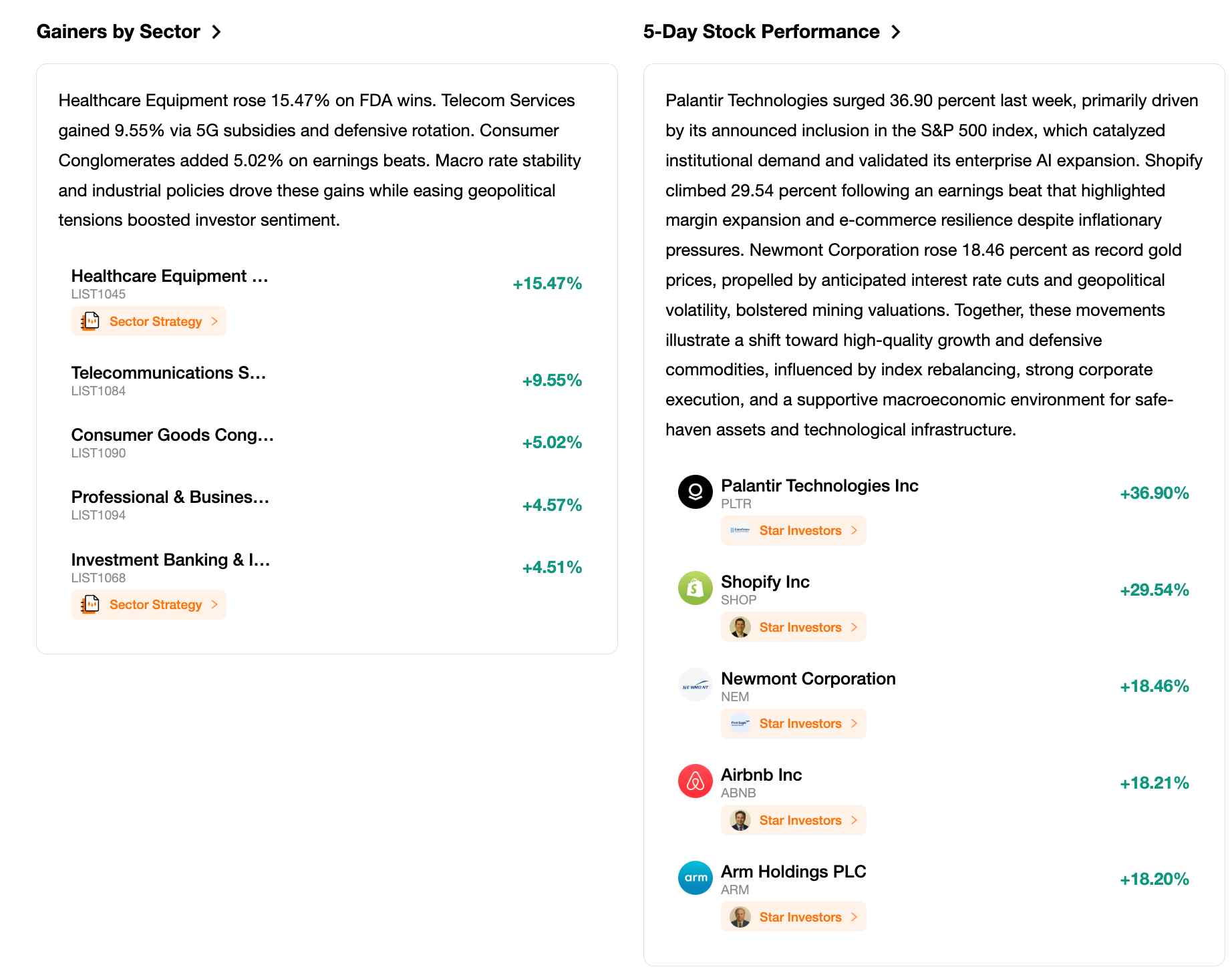
Markets Weekly
5-Day Index Performance
Recommended Articles


