


UK’s Burnham calls for global AI standards ahead of 2027 G20 presidency
In his first address at the United Nations (UN) General Assembly, Prime Minister Andy Burnham promoted the British capability of facilitating the establishment of a global rulebook on artificial intelligence. He said the UK is set to become a leader in this initiative and intends to focus on AI during its G20 presidency in 2027, as per Reuters report.
The initiative goes further than simply ensuring AI safety. The adoption of standards can influence the access to the market, costs of compliance, and investment decisions within the AI economy, which according to PwC will require an investment of USD 31.6 trillion in infrastructure by 2050. Burnham stated that decisions of this magnitude must fall on elected governments, not the corporations that develop the technology.
We’ve all heard the warnings, which we must heed. I know how worried people are. So we have to rise to this moment.
— Andy Burnham, via Reuters
An ‘honest broker’ bid to rebuild Britain’s standing
Burnham, who takes office as Britain’s seventh Prime Minister in a period of ten years, also used his speech to re-position his country in the diplomatic arena, defining it as the “honest broker” in its relations with the USA, the EU, China and India, according to Reuters.
He also accused Russian agencies of using bots, false websites, fake articles and forged branding of 28 UK organizations, which include the BBC and universities, adding that the UK has evidence that the Russian Federation had tried to interfere in the elections in 2019. Russia has refuted the claims.
According to Burnham, the UK’s AI Security Institute already collaborates with the US and big AI labs and looks forward to obtaining complete transparency in next-generation models. In addition, he stated the establishment of a National Centre for Information Defence to detect, attribute, and detain state-sponsored information attacks and track deepfake technology. His ultimate goal is a common set of global principles and standards that will cover aspects such as transparency, accessibility, and safety.
Standards as trade policy, not just safety
This approach aligns with the domestic strategy of the United Kingdom. Its Digital Standards Strategy for 2026 to 2030 connects technical standards with responsible innovation, economic value, national security, and international leadership. In other words, standards are seen not only as a means of achieving compliance but also as an instrument for growth and market access.
Burnham aims to apply this approach internationally. And the perfect opportunity has arisen for him with the upcoming presidency of the UK at G20 in 2027. There is already some base to begin with. The G20 statement adopted in September 2 includes “AI for standards and standards for AI” as one of its priorities.
From a wider viewpoint, the UN has been dealing with the same issue. In its 2024 report, Governing AI for Humanity, it suggested creating an AI standards exchange. At the same time, it cautioned that insufficient coordination is forcing countries to develop regulations in isolation.
A crowded and contradictory field
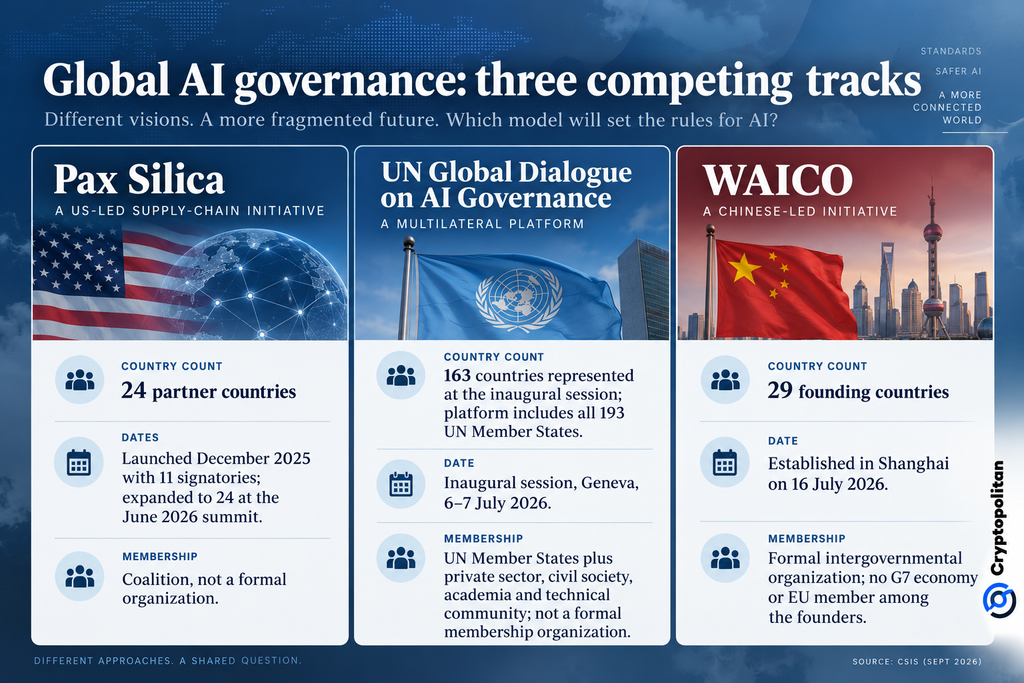
A report from CSIS published in September 21 pointed out three rival initiatives that progressed on their paths within a few weeks of each other – Pax Silica, a US-endorsed plan on AI and semiconductor supply chain cooperation involving 24 partners; the UN Global Dialogue on AI Governance, which conducted its first session in Geneva with the participation of 163 countries; and the China-led World Artificial Intelligence Cooperation Organization with 29 member countries and no G7 or EU member states being included.
The division in regulation can be seen even in neighboring markets. Whereas the European Union has enacted comprehensive AI regulations under the EU AI Act, the United Kingdom has elected not to pass a central AI regulation, but to regulate AI activity through existing sector-specific laws.
Hence, if AI is being regulated differently even between closely related economies, reaching consensus at the international level will be extremely difficult. To this day, no multilateral body has produced an enforceable global AI standard.
Why fragmentation carries a price tag
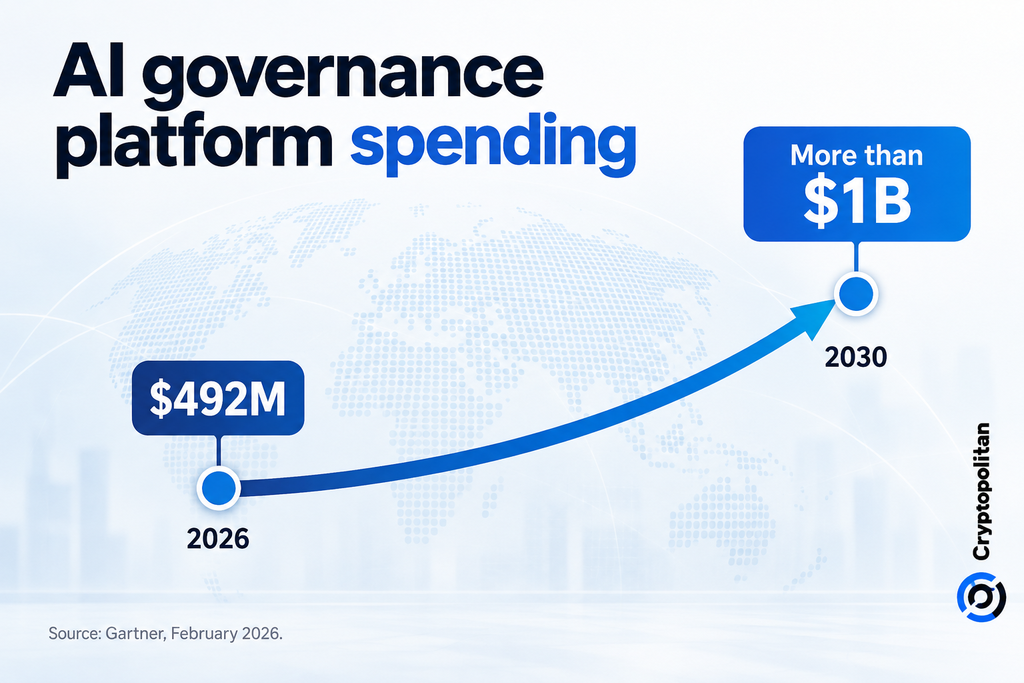
According to Gartner’s predictions, nearly 75% of the economies of the world may adopt separate regulations on AI by 2030. They estimate that spending on AI-governance platforms will increase from $492 million in 2026 to more than 1 billion dollars by that date. Interoperable standards may help to keep the compliance costs down and make cross-border deployment easier.
Nonetheless, there would be certain compromises that would have to be considered while opting for a common rulebook. According to the OECD, large fixed costs, economies of scale, and infrastructure concentration are already creating barriers for smaller businesses in some sectors of the AI market. The introduction of new standards on top of those expenses could reinforce that factor if complying with the rules turns out to be easier for big companies.
The concern becomes even more pronounced as the biggest companies in the AI industry are the ones shaping standards. It has been reported by Cryptopolitan that Anthropic, OpenAI, and Google have been in discussions with regard to establishing a common standards organization.
This takes the debate back to Burnham’s UN argument: who really should be the one to draw the lines— governments, industry, or some combination of both?
Don’t just read crypto news. Understand it. Subscribe to our newsletter. It's free.
Recommended Articles


