


Oracle Stock Has Lost 60% Since Its Last Investor Day. Is It a Buy Before Wednesday?
Key Points
At its October 2025 investor meeting, Oracle set a target of $225 billion in fiscal 2030 revenue.
Oracle now expects at least $90 billion in revenue this fiscal year, over the $85 billion it targeted at that meeting.
Oracle's borrowings grew around 37% over the year through Aug. 31, 2026, to about $125 billion.
- Motley Fool Issues Rare "Total Conviction" Buy Alert ›
Oracle (NYSE:ORCL) last took investors through its long-term plan on Oct. 16, 2025, at a financial analyst meeting during its Oracle AI World conference. Management targeted $225 billion of revenue in fiscal 2030, more than triple the $67 billion it expected for fiscal 2026, plus $21 of non-GAAP (adjusted) earnings per share.
Shares closed at $313 that day -- and dropped about 7% the next. As I write, they trade around $126, about 60% below that close. They're also almost 62% below the record they set in September 2025, when they closed at $328.33.
Missed AI’s "Act 1"? Act 2 Could Be 15x Bigger. Most investors think they missed the AI boat because they didn't buy Nvidia in 2005. But according to our analysts, we’re only at the end of "Act 1"—the R&D phase. "Act 2" is the global rollout. Continue »
Now Oracle is hosting another investor day at AI World on Wednesday, Oct. 28. It hasn't said what's on the agenda. But I don't think the revenue targets need the most attention.
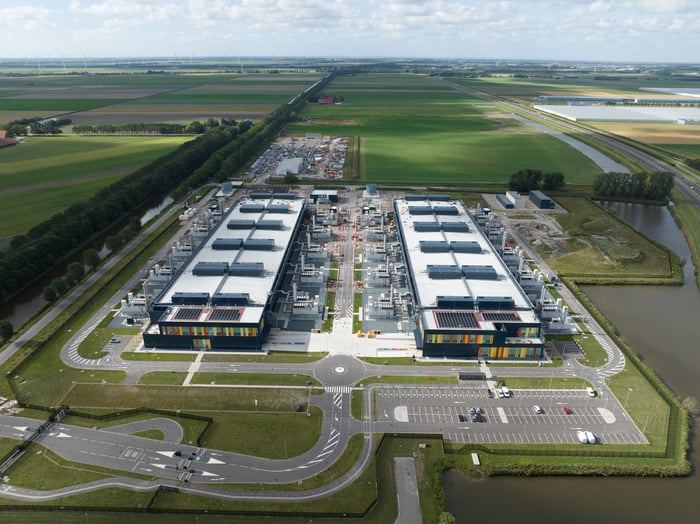
Image source: Getty Images.
The targets are holding up
Against that plan, Oracle has mostly delivered. Fiscal 2026 revenue (the company's fiscal year ended May 31, 2026) landed at $67.4 billion, right on plan. Without one-time investment gains, Oracle made $6.83 per share on an adjusted basis, about equal to the $6.85 it had planned. And for fiscal 2027, management now expects at least $90 billion of revenue and $8.10 of adjusted earnings per share, above the $85 billion and $8.00 it targeted in October 2025.
The backlog has kept rising too.
Remaining performance obligations (contracted revenue Oracle hasn't recognized yet) were $455 billion at the end of August 2025, right before the meeting. They reached $638 billion when fiscal 2026 ended and $664 billion after the first fiscal quarter of 2027 (the period ended Aug. 31, 2026).
Meanwhile, Oracle's GAAP earnings per share for the trailing 12 months climbed around 48% (boosted by one-time investment gains), from $4.32 ahead of the meeting to $6.38 through fiscal Q1. But the stock now trades at around 20 times earnings, down from about 72 times earnings a year ago. Put simply, investors pay much less for every dollar of profit, even while Oracle makes more of them.
Higher spending, more debt
What changed is the cost. In the 12 months through August 2026, Oracle spent around $76 billion on capital expenditures, mainly for artificial intelligence (AI) data centers. Operating cash flow covered about $47 billion of it, leaving free cash flow at negative $28.7 billion.
And the spending is still rising. Oracle spent $21.2 billion on capital expenditures in fiscal 2025 and $55.7 billion in fiscal 2026, and management expects $90 billion to $95 billion this fiscal year. Free cash flow fell from negative $394 million in fiscal 2025 to negative $23.7 billion in fiscal 2026.
Oracle has plugged the gap with outside money. Its borrowings grew around 37% over the year through August, to about $125 billion. It also sold about $5 billion of mandatory convertible preferred stock in fiscal 2026, then $20 billion of common stock in fiscal Q1 alone. That lifted its share count from 2.88 billion to 3.02 billion over three months.
Plus, S&P Global Ratings cut Oracle's credit rating to BBB- in July, a notch above junk.
The profit targets have held. But more of that future profit now goes to lenders and is spread over more shares, which is arguably what the market has been repricing.
What could change on Wednesday?
Oracle's announcement has just the time and place. Still, a few updates could matter more than any new revenue target.
One is funding for 2027. In June, Oracle said it expected to raise about $40 billion in fiscal 2027 from debt and equity, including the $20 billion of shares it's since sold. It didn't expect to issue more debt in calendar 2026, and it hasn't given details on the rest.
Another is how much of the build-out Oracle pays for itself. The prepaid and customer-supplied hardware portions of its big AI contracts came to $75 billion at the end of fiscal 2026. On the September earnings call, co-CEO Clay Magouyrk argued that the capital doesn't all have to come from Oracle.
"It does not have to be Oracle CapEx," he said.
Wednesday is a chance to put numbers on that. Management also hasn't said when free cash flow should go positive. Even a rough timeline could show how long the borrowing needs to last.
Sure, the stock looks cheap if Oracle meets its goals. At around $126, shares trade at about six times the $21 of adjusted earnings per share Oracle targeted for fiscal 2030. Still, the targets were never the main issue.
Is Oracle stock a buy before Wednesday? I don't think so, at least not yet. The company has kept its promises better than the stock suggests. But I'd want to learn more about how Oracle will pay for 2027 before buying shares.
Should you buy stock in Oracle right now?
Before you buy stock in Oracle, consider this:
The Motley Fool Stock Advisor analyst team just identified what they believe are the 10 best stocks for investors to buy now… and Oracle wasn’t one of them. The 10 stocks that made the cut could produce monster returns in the coming years.
Consider when Netflix made this list on December 17, 2004... if you invested $1,000 at the time of our recommendation, you’d have $355,124!* Or when Nvidia made this list on April 15, 2005... if you invested $1,000 at the time of our recommendation, you’d have $1,296,254!*
Now, it’s worth noting Stock Advisor’s total average return is 901% — a market-crushing outperformance compared to 210% for the S&P 500. Don't miss the latest top 10 list, available with Stock Advisor, and join an investing community built by individual investors for individual investors.
See the 10 stocks »
*Stock Advisor returns as of October 27, 2026.
Daniel Sparks and his clients do not have positions in any of the stocks mentioned. The Motley Fool has positions in and recommends Oracle. The Motley Fool has a disclosure policy.
Recommended Articles


