


Michael Burry Says SpaceX Isn't Worth $1 Trillion. Its AI Business Could Prove Him Wrong.
Key Points
SpaceX's new AI contracts make its computing business look far more substantial than Michael Burry assumed.
Recent signed agreements could generate $40.8 billion in annual revenue once fully served, but 90-day termination clauses weaken that backlog.
SpaceXAI still must prove it can reliably generate positive cash flows after spending $15.8 billion on AI infrastructure in one quarter.
- 10 stocks we like better than Space Exploration Technologies ›
Before Space Exploration Technologies (NASDAQ: SPCX) went public in the largest debut in history at $1.8 trillion, Michael Burry of "The Big Short" fame argued that nothing in its IPO filing justified even a $1 trillion valuation.
Weeks later, he called the company a combination of a small space business, a niche telecom business, a struggling social media platform, and "CoreWeave-light," referring to the heavily indebted but fast-growing neocloud operator.
Missed AI’s "Act 1"? Act 2 Could Be 15x Bigger. Most investors think they missed the AI boat because they didn't buy Nvidia in 2005. But according to our analysts, we’re only at the end of "Act 1"—the R&D phase. "Act 2" is the global rollout. Continue »
Burry's message was clear: SpaceX's businesses didn't come close to supporting its valuation.
New contracts start to change the math
Since Burry made those comments, SpaceX has produced some compelling evidence that its AI business may become more than he anticipated. After signing a string of major contracts, the division is looking less like "CoreWeave-light" and more like "Amazon Web Services-light."
Anthropic agreed to pay SpaceX $1.25 billion per month for computing power, while Alphabet's Google signed a deal worth $920 million monthly. Agreements with Reflection AI and a still-unidentified customer add another $150 million and $1.11 billion per month, respectively. Once all these customers are fully served, these contracts will bring in $3.4 billion per month -- or $40.8 billion annually.
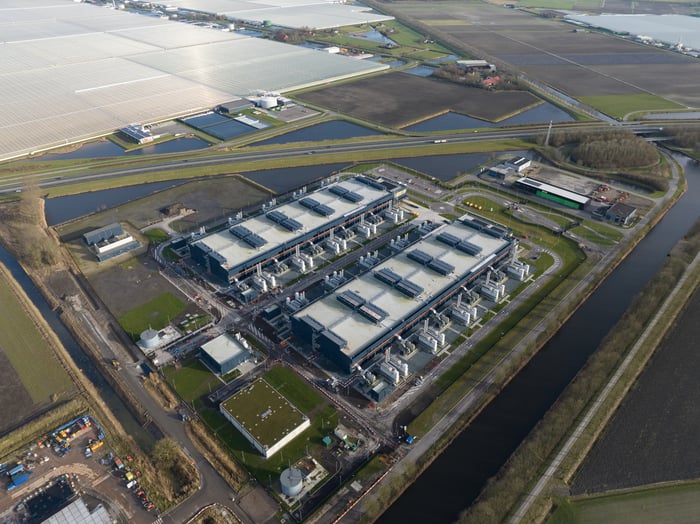
Image source: Getty Images.
Those contracts make SpaceXAI look more like a serious player in AI compute with major customers and major deals.
But the risks Burry flagged still stand
Still, I wouldn't dismiss Burry's comments.
SpaceX spent a whopping $15.8 billion on AI infrastructure during the second quarter alone, and the division remains unprofitable. And while the deals bring into focus a path to profitability and financial viability, their enormous headline values aren't a guarantee of seeing a long-term return on investment. The contracts contain unusually short termination provisions for leases -- 90 days -- that give its customers a relatively easy out if they can find compute elsewhere -- or find they need less of it.
Burry's larger argument around AI is that the technology will eventually become commoditized -- I tend to agree. In that future, compute providers may operate closer to a utility company than to a tech company: high, ongoing costs, intense competition, and lower margins.
The incredible demand for AI compute is creating a mad dash to build as much capacity as possible. It's more than possible that this leads to an overbuild, and the current dynamic of demand outpacing supply reverses.
SpaceX has a lot to live up to
So while SpaceX's new contracts vastly improve the economics of its AI division in the short term, I'm not sure Burry will be proven wrong in the long run. To justify its enormous valuation, SpaceX's AI efforts need to not just show incredible top-line growth but also prove to be seriously profitable.
And that's before we get to its space launch business and Starlink, both of which also need to be wildly successful to justify SpaceX's current $2 trillion price tag.
Should you buy stock in Space Exploration Technologies right now?
Before you buy stock in Space Exploration Technologies, consider this:
The Motley Fool Stock Advisor analyst team just identified what they believe are the 10 best stocks for investors to buy now… and Space Exploration Technologies wasn’t one of them. The 10 stocks that made the cut could produce monster returns in the coming years.
Consider when Netflix made this list on December 17, 2004... if you invested $1,000 at the time of our recommendation, you’d have $389,154!* Or when Nvidia made this list on April 15, 2005... if you invested $1,000 at the time of our recommendation, you’d have $1,406,303!*
Now, it’s worth noting Stock Advisor’s total average return is 949% — a market-crushing outperformance compared to 214% for the S&P 500. Don't miss the latest top 10 list, available with Stock Advisor, and join an investing community built by individual investors for individual investors.
See the 10 stocks »
*Stock Advisor returns as of September 23, 2026.
Johnny Rice has no position in any of the stocks mentioned. The Motley Fool has positions in and recommends Alphabet and Amazon. The Motley Fool has a disclosure policy.
Recommended Articles


