


Amazon Blocks Meta Muse From Proxy Buying on Its Platform: Is AMZN or META the Better Buy?
TradingKey - Amazon (AMZN) has restricted Meta's (META) AI assistant Muse from executing shopping and checkout operations via Amazon.com.
Amazon stated that Meta did not notify it in advance that Muse would access its platform, nor did Muse identify itself as an AI agent while browsing the site. Amazon thus determined that Muse's unauthorized access violated the platform's terms of use.
Amazon is concerned that Muse, operating under user instructions, could access account pages and order records, posing privacy and security risks. Meta previously stated that Muse cannot view user passwords or payment information; login credentials provided by users enter secure storage, called by the system but not displayed to the model.
The payment step generates a one-time card number via Stripe Link. As of the public reporting on September 22, Meta had not separately responded to Amazon's restrictions.
Why Is Amazon Restricting Muse Proxy Buying?
Muse launched on September 8 and can fill out forms, send emails, book services, and shop on behalf of users. When a website does not have an open API, Muse can complete operations via a browser.
External AI assistants could bypass Amazon's product search, personalized recommendations, and ad display stages. If such shopping methods expand, it could reduce the frequency of users directly browsing Amazon's search results, product recommendations, and sponsored ads.
In the second quarter of 2026, Amazon's advertising services revenue increased 26% year-over-year to $19.809 billion. The company has also launched its own shopping assistant, Alexa for Shopping, which provides features such as product search, comparison, price tracking, and automated replenishment.
Amazon attributed the restrictions to account security, AI agent identity disclosure, and platform usage rules. The move also helps the company maintain control over product search, recommendation, and checkout processes.
Unlike Amazon's restrictions, Shopify chose to partner with Meta and plans to support Muse checkout via Shop Pay, though the specific launch timeline has not been announced. Muse is currently integrated with Stripe Link, which provides payment and one-time virtual card services.
How AI Agent E-Commerce Competition Affects Stock Prices
Following its launch, Muse topped the US iPhone free app chart for three consecutive days. On September 21, Meta shares rose 11.4%, while Amazon gained about 1.9%. Muse's app store performance attracted market attention, while falling oil prices and a broad rally in tech stocks also supported the day's trading.
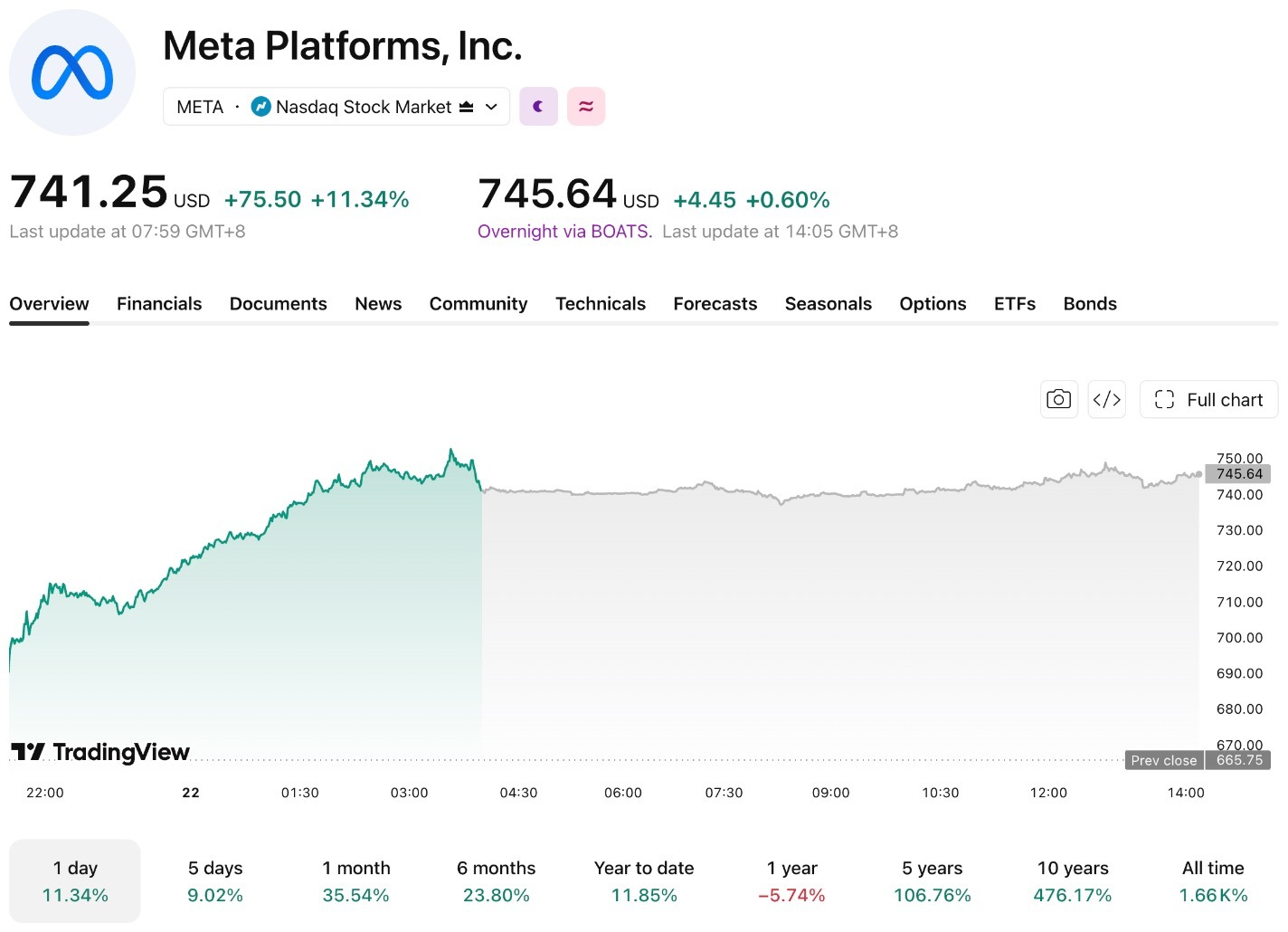
[Source: TradingView]
Amazon's restrictions temporarily prevent Muse from completing shopping operations on Amazon.com. Meta can still connect to more merchants via Shopify and use Stripe to process payments. User retention, paid conversion, and merchant coverage will determine Muse's future revenue scale.
For Amazon, the usage of Alexa for Shopping and transaction conversion rates will reflect the effectiveness of its proprietary AI shopping entry. If external AI assistants draw more shopping traffic, Amazon will need to choose among platform control, ad display, and incremental orders.
AMZN vs. META: Which Is the Better Buy?
Amazon's second-quarter revenue grew 20% year-over-year to $200.606 billion, while operating profit rose 43% to $27.461 billion. AWS revenue increased 37% to $42.232 billion, with operating profit reaching $16.621 billion, accounting for approximately 61% of the group's operating profit. E-commerce, advertising, and cloud computing all maintained growth, but profits were still primarily contributed by AWS.
During the same period, Meta's revenue grew 28% to $60.801 billion, while operating profit fell 8% to $18.775 billion. Expenses for the quarter included $2.4 billion in legal-related expenses and $1.18 billion in severance costs. The company expects capital expenditures for 2026 to be $130 billion to $145 billion, including principal payments on finance leases.
Amazon has a more diversified revenue stream, with faster growth in AWS and its advertising business; Meta boasts higher revenue growth and operating margin, but its revenue remains heavily dependent on advertising, and its investment in AI infrastructure has also increased significantly. If Muse develops stable revenue from subscriptions, advertising, or commercial partnerships, it will add a new growth source for Meta.
For those who value revenue structure and AWS growth, AMZN holds a relative advantage; for those optimistic about personal AI assistants becoming consumer gateways and willing to tolerate high capital expenditures and product commercialization risks, META offers greater growth potential.
Recommended Articles


