


The Bond Market Is Rattled, and History Says That Could Be a Warning Signal to Investors
Key Points
Bond yields rose as investors fretted about inflation, which eventually prompted a Fed rate increase.
Higher bond yields make stocks less attractive, but lofty inflation can lead to something even worse.
- 10 stocks we like better than JPMorgan Chase ›
The S&P 500 index (SNPINDEX: ^GSPC) is trading near all-time highs despite a worrying list of negatives. JPMorgan Chase (NYSE: JPM) CEO Jamie Dimon recently laid out some of his concerns, describing "geopolitical tensions and wars, sticky inflation, large global fiscal deficits and elevated asset prices" as "tectonic plates" that could collide. The CEO was clearly warning about the potential for a market "earthquake."
The bond market is clearly concerned, with yields rising. The Federal Reserve is also worried, noting it just increased interest rates. Stock investors shouldn't ignore these concerns, as they warn about what could be in store for Wall Street and Main Street.
Missed Nvidia in 2009? This Rare Signal Is Flashing Again. In 2009, a "Double Down" signal flashed for a little-known chipmaker called Nvidia. For the first time in years, that same "Total Conviction" signal is flashing for a company 1/100th the size of Nvidia. Continue »

Image source: Getty Images.
Bonds are getting more attractive
One of the first things that equity investors need to note is that bond yields are increasingly attractive. That's notable because bonds are considered safer than stocks. Higher yields can lead investors to shift from equities to bonds. That, in turn, can put downward pressure on stock prices.
It's really just a simple risk/reward comparison. If an investor can lock in a 5% or higher yield on a bond while the S&P 500 index offers just 1%, why take on the risk that stocks near all-time highs will fall in value? Sure, bonds don't offer growth, as a company's business does, but if an investor is worried that too much good news is priced into stocks and not enough bad news, safety can become more important than growth.
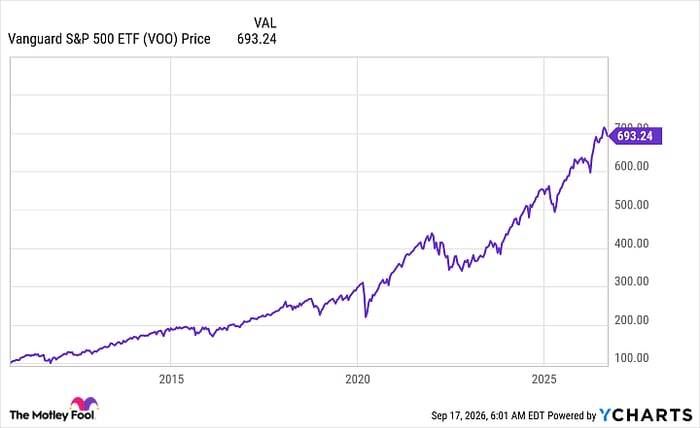
VOO data by YCharts
Why is the Fed raising rates?
The next big concern is that the Federal Reserve just increased rates, with hints that more rate hikes are on the way. Bond yields rose ahead of that rate increase, but the bigger-picture concern should be inflation. That's what the Fed is attempting to fight right now. Inflation is bad for companies because it increases costs and pressures profits. While rising interest rates can tame inflation, they can also lead to a recession. Bear markets often accompany recessions. Few sectors are spared during a bear market.
That said, the inflation today is at least partly related to geopolitical conflicts, which are outside of the Fed's control. So there could be a complex interplay among all the tectonic plates Jamie Dimon warned about. Dimon was clear that there was no way to predict what might happen when these tectonic plates collide. Which is likely what is worrying the bond market and should probably worry equity investors, too.
Should you buy stock in JPMorgan Chase right now?
Before you buy stock in JPMorgan Chase, consider this:
The Motley Fool Stock Advisor analyst team just identified what they believe are the 10 best stocks for investors to buy now… and JPMorgan Chase wasn’t one of them. The 10 stocks that made the cut could produce monster returns in the coming years.
Consider when Netflix made this list on December 17, 2004... if you invested $1,000 at the time of our recommendation, you’d have $387,158!* Or when Nvidia made this list on April 15, 2005... if you invested $1,000 at the time of our recommendation, you’d have $1,365,749!*
Now, it’s worth noting Stock Advisor’s total average return is 932% — a market-crushing outperformance compared to 211% for the S&P 500. Don't miss the latest top 10 list, available with Stock Advisor, and join an investing community built by individual investors for individual investors.
See the 10 stocks »
*Stock Advisor returns as of September 20, 2026.
JPMorgan Chase is an advertising partner of Motley Fool Money. Reuben Gregg Brewer has no position in any of the stocks mentioned. The Motley Fool has positions in and recommends JPMorgan Chase. The Motley Fool has a disclosure policy.
Recommended Articles


