


Better Artificial Intelligence (AI) Stock Pick for 2027: Nvidia versus Micron
Key Points
Micron may hold the short-term advantage, but Nvidia is better over the long haul.
Both stocks are slated for monster upside next year.
- 10 stocks we like better than Nvidia ›
Nvidia (NASDAQ: NVDA) and Micron Technology (NASDAQ: MU) are two of the biggest companies in the world. Nvidia holds the top spot, sitting at a $5.3 trillion valuation. Micron currently sits at 13th place worldwide, with a $1.1 trillion valuation. These companies are also two of the biggest beneficiaries of the artificial intelligence (AI) build-out, and with that expected to ramp up again in 2027, these two are in a prime position to benefit.
But which stock stands to benefit more? Let's take a look at these two and see which stock makes the most sense for your investment dollars.
Missed AI’s "Act 1"? Act 2 Could Be 15x Bigger. Most investors think they missed the AI boat because they didn't buy Nvidia in 2005. But according to our analysts, we’re only at the end of "Act 1"—the R&D phase. "Act 2" is the global rollout. Continue »

Image source: Getty Images.
Nvidia is a Micron client
Nvidia and Micron are partners in the AI arms race. Micron makes memory chips, including DRAM memory that's utilized inside Nvidia GPUs. Micron's DRAM chips are also utilized in several other competitors' products, and demand for these products continues to rise.
Nvidia forecasts that the big five AI hyperscalers will spend nearly $800 billion on data center capital expenditures during 2026. Next year, that figure is projected to rise to $1.3 trillion. That's a lot of GPUs from Nvidia, filled with memory chips from Micron. There is huge demand for each company's product, but there is a stark difference in the long-term demand curve for each.
Part of the reason Micron is among the best-performing stocks in the market this year is the supply state of the memory chip industry. Currently, demand outpaces supply, which is causing a price crunch in the memory chip market. This is causing Micron's downstream clients to pay more for the product, while Micron makes a fortune on higher prices. This effect will last until more supply is available or demand falls. With demand continuing to rise, the only logical path is for supply to increase, and Micron is doing so by building more production facilities, which are likely to come online sometime in mid-2027 and throughout 2028. However, Micron's management team has told investors that they shouldn't expect the tightness in the memory chip market to subside until 2028.
That places Micron in the driver's seat through 2027, giving it the edge over Nvidia.
Winner: Micron
Nvidia and Micron both expect huge growth next year
During Nvidia's latest conference call, it made the bombshell announcement that it expects 70% revenue growth next year, far exceeding analyst expectations. Micron hasn't given any forward guidance, but with the memory chip market still constrained, it's likely to be another banner year. Wall Street analysts estimate Micron will put up 88% growth, edging out Nvidia.
Both are expected to grow at a strong pace next year, although Micron still has the edge here.
Winner: Micron
Micron is far cheaper than Nvidia
Micron and Nvidia operate on separate fiscal calendars. Micron's fiscal year begins in September, while Nvidia's starts in February. That makes it a bit hard to directly compare valuations, but there's enough information here to give investors a general picture. Micron trades at a dirt cheap 6.25 times fiscal year 2027 earnings.
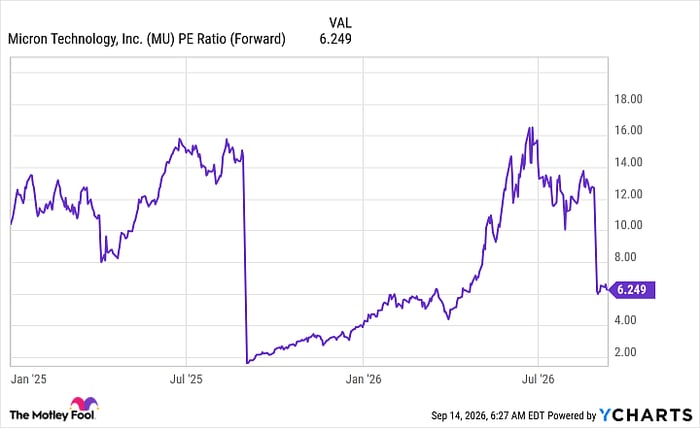
MU PE Ratio (Forward) data by YCharts
Nvidia trades at an also-cheap 14 times fiscal 2028 earnings (ending January 2028), giving Micron the edge in this category, too.
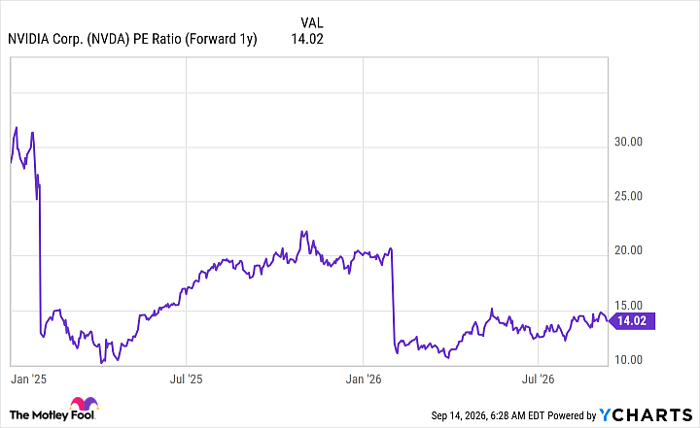
NVDA PE Ratio (Forward 1y) data by YCharts
So, Micron is cheaper, growing faster, and its industry is expected to boom in 2027 more than Nvidia's. That should make Micron a no-brainer over Nvidia, right?
I think the key here is 2027 versus the next three years. In 2027, I fully expect Micron to be a better stock to own than Nvidia, although they are both fantastic investments. However, once the memory chip supply crunch is sorted out, Nvidia's high demand will remain while Micron's may falter or take a step back.
So, if you're looking for immediate upside, Micron is the best bet. If you're looking for better performance over the next three to five years, then I think Nvidia is the better pick.
Should you buy stock in Nvidia right now?
Before you buy stock in Nvidia, consider this:
The Motley Fool Stock Advisor analyst team just identified what they believe are the 10 best stocks for investors to buy now… and Nvidia wasn’t one of them. The 10 stocks that made the cut could produce monster returns in the coming years.
Consider when Netflix made this list on December 17, 2004... if you invested $1,000 at the time of our recommendation, you’d have $387,158!* Or when Nvidia made this list on April 15, 2005... if you invested $1,000 at the time of our recommendation, you’d have $1,365,749!*
Now, it’s worth noting Stock Advisor’s total average return is 932% — a market-crushing outperformance compared to 211% for the S&P 500. Don't miss the latest top 10 list, available with Stock Advisor, and join an investing community built by individual investors for individual investors.
See the 10 stocks »
*Stock Advisor returns as of September 19, 2026.
Keithen Drury has positions in Nvidia. The Motley Fool has positions in and recommends Micron Technology and Nvidia. The Motley Fool has a disclosure policy.
Recommended Articles


