


Don't Let Inflation Steal Your Retirement Dreams: Here's How to Fight Back
Key Points
It's possible to turn too far away from stocks.
Stocks have a history of faster recovery following bear markets.
When it comes to inflation-proof investments, you have options.
- These 10 stocks could mint the next wave of millionaires ›
There's no controlling inflation, but you can take control of how deeply it cuts into your retirement plans. Whether you're planning for retirement or you're already there, it's vital to create a strategy to battle inflation. Here's where you can begin:
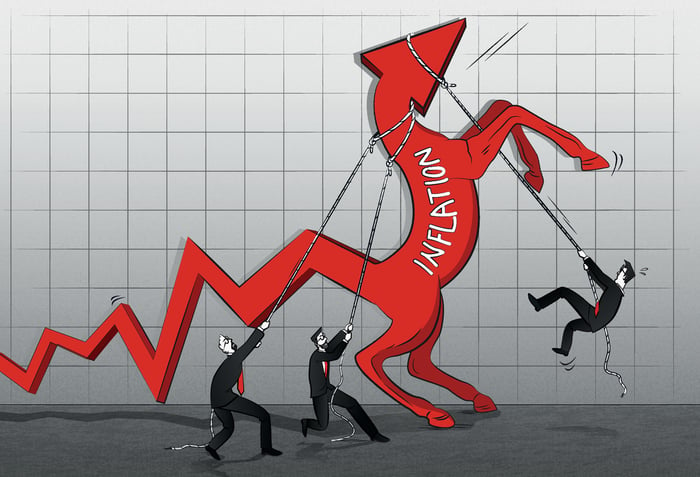
Image source: Getty Images.
Missed Nvidia in 2009? This Rare Signal Is Flashing Again. In 2009, a "Double Down" signal flashed for a little-known chipmaker called Nvidia. For the first time in years, that same "Total Conviction" signal is flashing for a company 1/100th the size of Nvidia. Continue »
Don't stray too far from stocks
As you age, it's natural to pivot to a more conservative portfolio to protect your assets. The problem is that you can become too conservative. Keeping funds in cash and bonds is great, but when your portfolio leans too heavily in that direction, you may not hold the assets you need to offset inflation.
You will hear recommendations to keep up to 50% or even 60% of your holdings in stocks. The good news is that stocks don't have to be an "all or nothing" proposition. It's possible to invest in quality stocks -- or many quality stocks through an ETF like the Schwab U.S. Dividend Equity ETF (NYSEMKT: SCHD) -- that provide both growth and regular dividends.
How stocks have held up
If you're not quite sure a higher percentage of stocks is right for you, consider this: The tech bubble crash of 2000 lasted 2 1/2 years, the housing bubble burst of 2007 lasted 1 1/2 years, but full recovery took up to five years for each. However, investors with balanced portfolios composed of 60% stocks and 40% bonds recovered from those two bear markets within two years.
While past performance doesn't guarantee future market behavior, these two market downturns remind us that stock returns can often outpace inflation.
Inflation-protect your investments
Nothing can entirely protect you from inflation, but some investments are better designed to withstand inflation's eroding power. For example:
TIPS and TIPS ETFs
Treasury Inflation-Protected Securities (TIPS) are U.S. government bonds whose principal value adjusts directly with the Consumer Price Index, meaning both your principal and interest payments rise with inflation. While they are ideal for preserving purchasing power without taking on market volatility, there is a trade-off. Yields are typically low, returns may lag other assets, and tax implications may apply.
REITs
Typically, property values and rents rise in step with inflation, primarily because replacement costs rise with prices. Real Estate Investment Trusts (REITs) let you own slices of real estate with all the benefits of being a property owner. However, they come with none of the financing costs, maintenance, or insurance concerns associated with owning brick-and-mortar buildings. REITs work best as a long-term inflation hedge rather than a short-term fix.
Series I bonds
The return on a Series I bond is directly linked to inflation. As inflation rises, the combined rate also increases. The combined rate blends a fixed rate that remains constant for the bond's life, with an inflation rate that adjusts every six months based on the Consumer Price Index. While there's a $10,000 maximum annual purchase limit, they're low-risk and backed by the U.S. government.
Commodities
Commodities, such as gold, oil, and agricultural goods, tend to rise in value during inflationary periods. That's because inflation often stems from the rising costs of raw materials and energy. Gold, in particular, has a history of keeping its value as currencies weaken. Broad commodity exposure, whether via funds or futures, can act as a hedge against inflation.
Inflation risk is not a one-time problem, so schedule regular portfolio reviews to ensure you have the balance between stocks and bonds that fits both your long-term goals and risk tolerance.
Where to invest $1,000 right now
When our analyst team has a stock tip, it can pay to listen. After all, Stock Advisor’s total average return is 950%* — a market-crushing outperformance compared to 212% for the S&P 500.
They just revealed what they believe are the 10 best stocks for investors to buy right now, available when you join Stock Advisor.
See the stocks »
*Stock Advisor returns as of September 14, 2026.
Dana George has no position in any of the stocks mentioned. The Motley Fool has no position in any of the stocks mentioned. The Motley Fool has a disclosure policy.
Recommended Articles


