


Warren Buffett Cut Off Donations to the Gates Foundation, but His Influence Is Evident in the Nonprofit's Top Holdings
Key Points
Buffett decided to stop donating to the Gates Foundation after 20 years of contributions.
The nonprofit's portfolio is full of the types of stocks Buffett would buy himself.
- 10 stocks we like better than Berkshire Hathaway ›
Warren Buffett has donated over $47 billion worth of Berkshire Hathaway (NYSE: BRKA) (NYSE: BRKB) stock to the Gates Foundation since 2006, but he's decided to cut ties with the foundation this year. The decision came following Buffett's review of the Epstein files, which revealed Bill Gates had associated with the sex offender. That said, Buffett says he remains in contact with Gates, with whom he's been friends for 35 years.
Despite Buffett's decision to suspend his annual donation to the Gates Foundation, his influence is extremely evident in the nonprofit's trust portfolio. Its top four holdings, which account for approximately 79% of the trust's $34 billion stock portfolio based on its most recent disclosures, are exactly the kinds of stocks Buffett would buy and hold for decades.
Where to invest $1,000 right now? Our analyst team just revealed what they believe are the 10 best stocks to buy right now, when you join Stock Advisor. See the stocks »
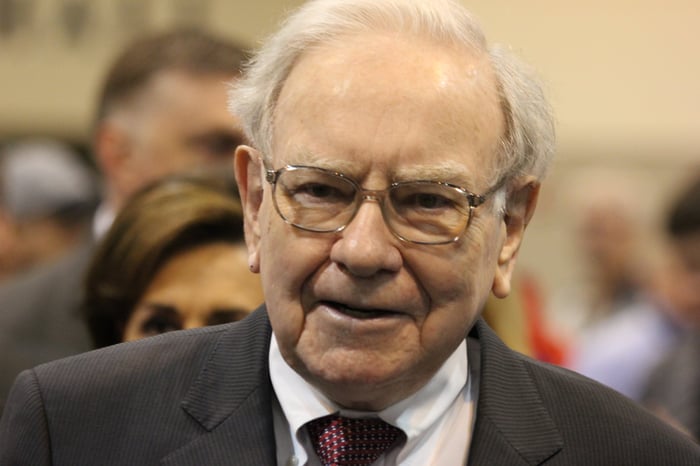
Image source: The Motley Fool.
The Gates Foundation's top holding
Berkshire Hathaway remains the largest holding in the Gates Foundation's equity portfolio, according to the most recent portfolio disclosure at the end of the first quarter. While the foundation is required to deploy the full value of Buffett's annual donation, plus 5% of its other assets, the portfolio managers have kept a large number of shares, selling only a small portion each quarter.
Whether the portfolio managers adjust their plans following Buffett's decision to stop his donations remains to be seen. The stock hasn't kept pace with the rest of the market since Buffett announced his resignation as CEO, with Greg Abel to replace him starting in 2026. But Berkshire is no stranger to divergent performance. Value stocks typically outperform in periods of volatility and downward pressure on stocks.
Greg Abel's Berkshire is certainly well-positioned to weather a market pullback better than most companies. It maintained a massive cash position of about $380 billion that it could deploy into new investments or to buy back its own shares as of the end of the first quarter. And while Abel's made several multibillion-dollar purchases since taking over as CEO, they've yet to truly move the needle for Berkshire. (Give it time.)
Buffett's influence is no doubt found within Berkshire, but the other top holdings also show his impact on Gates' investment style.
Two industrial giants at the top of the foundation's portfolio
Two of the next-largest positions in the portfolio are WM (NYSE: WM), formerly known as Waste Management, and Caterpillar (NYSE: CAT). The two companies are the kinds of boring businesses Buffett would buy.
WM is the largest waste hauler in the United States. That position is cemented by its landfill portfolio, which is practically impossible to replicate due to regulatory restrictions.
As a result, WM provides key facilities for smaller competitors while benefiting from vertical integration. Its core waste-hauling business delivers an excellent operating margin, enabling it to expand horizontally into new businesses. Most recently, it acquired Stericycle, rebranding it as WM Healthcare Solutions to expand the business.
Caterpillar makes the iconic yellow construction and mining equipment found on worksites for decades. The company has recently seen earnings boom amid massive spending from hyperscalers for AI data center build-outs. Management has moved to capitalize on that trend in the long term by focusing on recurring services for its equipment, which could help reduce the cyclicality of large-scale infrastructure projects. The excitement over the current earnings cycle has pushed the stock price significantly higher over the last few quarters, making it a much larger portion of the Gates Foundation portfolio.
A railroad business
One of Buffett's biggest investments ever was the purchase of Burlington Northern Santa Fe. The railroad business is one Buffett understands, with its clear returns on capital. The Gates Foundation holds a stake in its competitor, Canadian National Railway (NYSE: CNI), Canada's largest railway. The current investment is worth about $6.6 billion.
The railroad industry, Canadian National in particular, is very attractive for several reasons. First, there's a high barrier to entry. Laying down or acquiring track is very capital-intensive. Canadian National has a tri-coastal network that spans East to West in Canada and runs South through the Midwest United States to the Gulf of Mexico.
The railroads also benefit from economies of scale, which have been amplified by industrywide consolidation. Trains with more cars don't cost much more to run. Moreover, the industry is more recession-resistant than trucking and other freight-hauling modes.
Canadian National is executing well on its goal of reducing capital expenditures to boost free cash flow and returning that cash to shareholders. The market has recently pushed the stock price higher, but when it traded at an enterprise value-to-EBITDA (earnings before interest, taxes, depreciation, and amortization) ratio closer to 12 at the start of the year, Buffett would surely approve of management's activity to buy back shares at an attractive price.
Should you buy stock in Berkshire Hathaway right now?
Before you buy stock in Berkshire Hathaway, consider this:
The Motley Fool Stock Advisor analyst team just identified what they believe are the 10 best stocks for investors to buy now… and Berkshire Hathaway wasn’t one of them. The 10 stocks that made the cut could produce monster returns in the coming years.
Consider when Netflix made this list on December 17, 2004... if you invested $1,000 at the time of our recommendation, you’d have $370,332!* Or when Nvidia made this list on April 15, 2005... if you invested $1,000 at the time of our recommendation, you’d have $1,272,280!*
Now, it’s worth noting Stock Advisor’s total average return is 904% — a market-crushing outperformance compared to 208% for the S&P 500. Don't miss the latest top 10 list, available with Stock Advisor, and join an investing community built by individual investors for individual investors.
See the 10 stocks »
*Stock Advisor returns as of July 22, 2026.
Adam Levy has no position in any of the stocks mentioned. The Motley Fool has positions in and recommends Berkshire Hathaway and Caterpillar. The Motley Fool recommends Canadian National Railway and WM. The Motley Fool has a disclosure policy.
Recommended Articles


