


Japan and South Korea Stocks See 'Drop Before Rally.' SoftBank Plunges 5%, SK Hynix Defies Trend to Lose Only 1%
TradingKey - KOSPI and Nikkei 225 stage a "drop followed by rally", SoftBank plunges over 5%, Samsung Electronics and Kioxia fall about 4%, and SK Hynix slips around 1%.
During the Asian trading session on June 29, Japanese and South Korean stock markets experienced a highly volatile day, continuing to sell off in the morning before gradually rebounding in the afternoon. Specifically, the KOSPI index slumped over 3% in the morning but eventually narrowed its losses to 0.02%, closing at 8,394.66 points, while the Nikkei 225 Index similarly staged a reversal from earlier losses to close up 0.15% at 69,467.89 points.
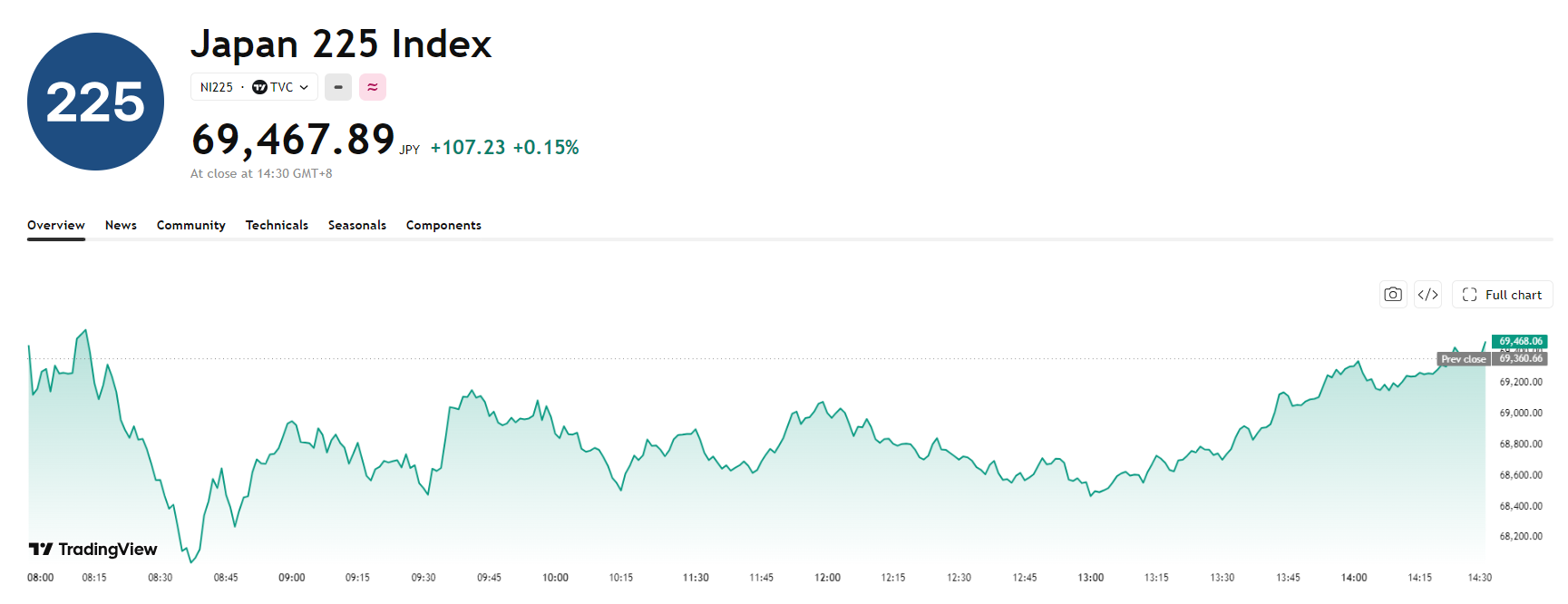 Nikkei 225 Index chart, Source: TradingView
In terms of individual stocks, Samsung Electronics fell 4.86% to close at 323,000 won; SK Hynix declined 1.68% to close at 2,628,000 won; SoftBank dropped 5.33% to close at 5,894 yen; and Kioxia fell 4.05% to close at 88,450 yen.
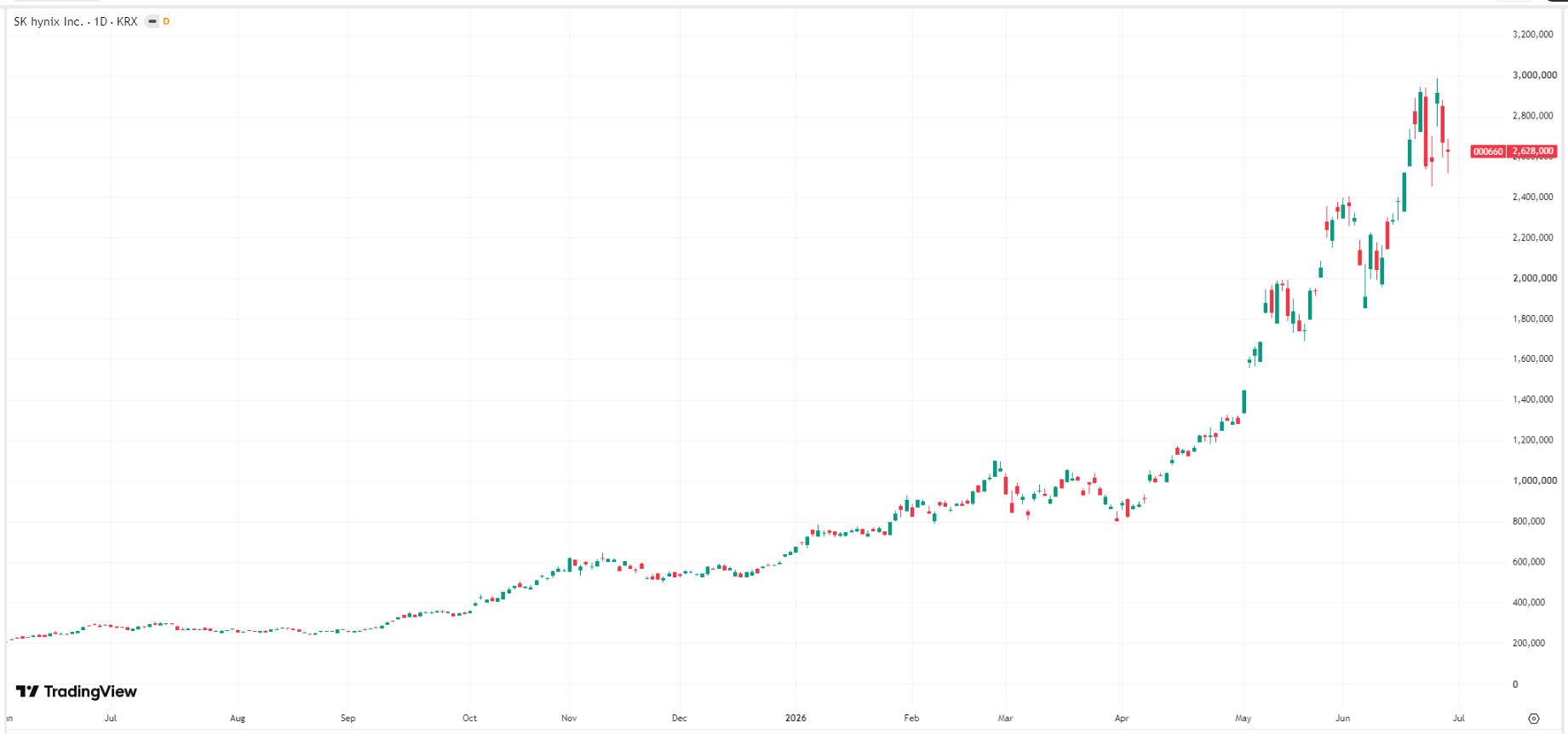 SK Hynix price chart, Source: TradingView
Japanese and South Korean stock markets went through a highly dramatic, volatile session characterized by a "panic plunge followed by a bottom-fishing rebound," primarily driven by two major pieces of news. South Korea's Financial Supervisory Service recently made a sudden announcement to "indefinitely postpone" the launch of weekly options derivatives for blue-chip stocks—including Samsung Electronics, SK Hynix, Hyundai Motor, and LG Energy Solution—which were originally scheduled to debut on June 29. This poured cold water on short-term market euphoria, triggering a stampede of leveraged long positions during morning trading.
However, the South Korean government announced today that it will build four chip plants in the southwestern region, investing approximately 800 trillion won, and expects to double DRAM production capacity within five years, as the global memory market is projected to quadruple over the same period. After the midday break, market capital realized that this government-led "super cluster"—fully supported by tax incentives and power grid guarantees—represents a vital national strategic need, prompting investors to buy back and cover their positions.
Recommended Articles


