


2 Sneaky Ways Fed Chair Kevin Warsh and the FOMC Can Raise Interest Rates Without Adjusting the Federal Funds Rate
Key Points
The Trump-led Iran war pushed the U.S. inflation rate to a three-year high in May, setting the stage for the Federal Open Market Committee (FOMC) to act.
Fed Chair Warsh wants to significantly deleverage the central bank's $6.74 trillion balance sheet -- but doing so comes with unintended consequences.
Furthermore, Warsh's deliberate reduction in sharing forward-looking guidance can influence the bond market.
- 10 stocks we like better than S&P 500 Index ›
The last two months have been packed with memorable moments on Wall Street. We've watched the Dow Jones Industrial Average (DJINDICES: ^DJI), S&P 500 (SNPINDEX: ^GSPC), and Nasdaq Composite (NASDAQINDEX: ^IXIC) launch to record highs, borne witness to the world's largest initial public offering, and observed a rare change in power at the Federal Reserve.
May 15 marked the final day of Jerome Powell's second term as Fed chair, while May 22 was the official swearing-in day for his successor, Kevin Warsh. Since the central bank's inception more than 122 years ago, it's only had 17 Fed chairs, including Warsh.
Where to invest $1,000 right now? Our analyst team just revealed what they believe are the 10 best stocks to buy right now, when you join Stock Advisor. See the stocks »
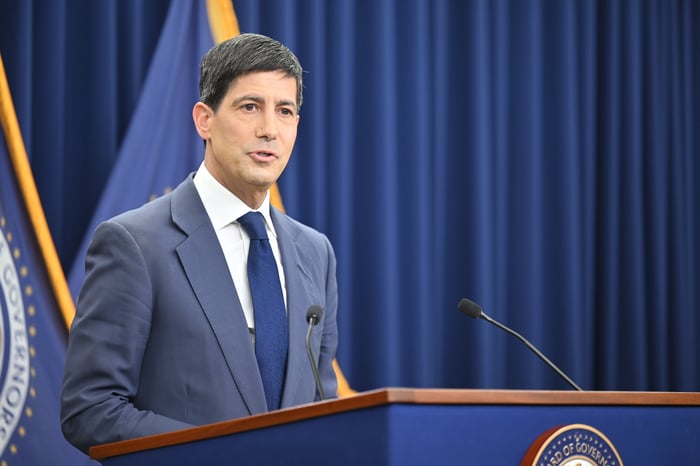
Fed Chair Kevin Warsh intends to lead a reform-oriented central bank. Image source: Official Federal Reserve Photo.
Warsh's ascension comes at a particularly precarious time for the U.S. economy and Wall Street. The U.S. inflation rate is soaring, and speculation is mounting as to whether he and the other Federal Open Market Committee (FOMC) members will raise interest rates. The FOMC is the 12-person body responsible for setting the nation's monetary policy.
However, you might be surprised to learn that Warsh and the FOMC don't have to directly adjust the federal funds target rate to raise interest rates.
President Trump's Iran war sets the stage for the FOMC to act
In February, trailing 12-month (TTM) inflation was a modest 2.4%. With Powell and the FOMC undertaking six rate cuts between September 2024 and December 2025 and maintaining the easing bias statement, there was no reason to believe that additional rate cuts weren't on the way.
Then, the Trump-led Iran war changed everything. Iran's closure of the Strait of Hormuz shortly after military operations began on Feb. 28 created the largest energy supply disruption in modern history. Approximately 20% of the world's crude oil supply was halted by the Iran war, sending energy prices through the roof.
With TTM inflation reaching a three-year high of 4.2% in May, the FOMC's entire approach has shifted toward stabilizing prices.
BREAKING: May CPI inflation rises to 4.2%, the highest level since April 2023.
-- The Kobeissi Letter (@KobeissiLetter) June 10, 2026
Core CPI inflation also rises to 2.9%, the highest since September 2025.
Inflation in the US is officially back above 4% and more than double the Fed's target.
Odds of Fed rate hikes are rising.
In Warsh's first FOMC meeting as Fed chair in mid-June, the easing bias statement was missing. While the Federal Reserve didn't officially signal the end of its rate-cutting cycle, the absence of the easing bias makes rate hikes just as likely as cuts.
Moreover, the quarterly filed Summary of Economic Projections, more commonly known as the dot plot, shows that several FOMC members expect interest rates to rise before the end of 2026. Out of the 18 members (not all of whom vote) who offered forward-looking projections, nine foresaw a higher federal funds target rate before this year ends. Warsh abstained from offering any guidance.
While adjusting the federal funds target rate would be the most direct way for Warsh and the FOMC to make borrowing costlier and pressure rapidly rising prices, there are two sneaky alternative ways to raise interest rates.

Image source: Getty Images.
Warsh and the FOMC can subtly raise interest rates through nontraditional means
Before being confirmed as Jerome Powell's successor, Kevin Warsh laid out extensive reform plans for the central bank. Arguably, the biggest proposed change was to deleverage the Fed's bloated balance sheet.
Prior to the height of the financial crisis, the Federal Reserve held less than $900 billion in assets (primarily long-term U.S. Treasury bonds and mortgage-backed securities). Less than 14 years later, in April 2022, the central bank's balance sheet had expanded to almost $9 trillion.
Although a rate-hiking cycle and a period of quantitative tightening helped reduce the Fed's balance sheet by more than $2 trillion, the central bank is still lugging around approximately $6.74 trillion in assets, as of June 24.
Kevin Warsh has made it crystal clear that he wants the Federal Reserve out of the fiscal business. This would entail selling a significant portion of the central bank's long-term Treasury bonds and mortgage-backed securities.
Kevin Warsh Nomination: one reason why market players are interpreting it as a hawkish pick- I agree-is because of his views on the need for a radical balance sheet reduction.
-- Joseph Brusuelas (@joebrusuelas) January 30, 2026
The $31 trillion-dollar American economy demands liquidity & financing needs that are larger than what... pic.twitter.com/zYunGAItV8
Here's where things get interesting. One of Wall Street's fundamental principles is that bond prices and yields are inversely related. If Warsh and the FOMC undertake open-market operations to divest trillions of dollars in long-term T-bonds, we would expect T-bond prices to fall. Conversely, long-term Treasury yields would rise, which can also increase borrowing costs.
By simply ridding the Fed of its bloated balance sheet and making the central bank a passive market participant, Warsh and the FOMC can lift interest rates.
But this isn't the only sneaky way that the new Fed chair can subtly raise interest rates without officially increasing the federal funds target rate.
Another reform Kevin Warsh has implemented, alluded to earlier, is the deliberate reduction in sharing forward-looking guidance. Powell's successor prefers to just share the facts and let equity and bond markets react to economic data.
BREAKING: Fed Chair Kevin Warsh announces that the Fed has "dropped" forward guidance.
-- The Kobeissi Letter (@KobeissiLetter) June 17, 2026
"Forward guidance is not the business we should be in," he says.
However, there are potentially significant consequences to reversing years of central bank transparency and predictability. The possible elimination of the dot plot, coupled with far more concise FOMC meeting statements that are virtually devoid of forward-looking guidance, threatens to increase volatility in the bond market.
While increased bond market volatility can work in both directions, this lack of transparency and predictability, with U.S. inflation at a three-year high, may prompt bond traders to push Treasury yields higher and modestly increase lending rates, all without an official change in the federal funds target rate from policymakers.
Even if Kevin Warsh and the FOMC don't officially raise the federal funds rate, they have other sneaky tools at their disposal to effect price stability.
Should you buy stock in S&P 500 Index right now?
Before you buy stock in S&P 500 Index, consider this:
The Motley Fool Stock Advisor analyst team just identified what they believe are the 10 best stocks for investors to buy now… and S&P 500 Index wasn’t one of them. The 10 stocks that made the cut could produce monster returns in the coming years.
Consider when Netflix made this list on December 17, 2004... if you invested $1,000 at the time of our recommendation, you’d have $398,052!* Or when Nvidia made this list on April 15, 2005... if you invested $1,000 at the time of our recommendation, you’d have $1,181,688!*
Now, it’s worth noting Stock Advisor’s total average return is 892% — a market-crushing outperformance compared to 205% for the S&P 500. Don't miss the latest top 10 list, available with Stock Advisor, and join an investing community built by individual investors for individual investors.
See the 10 stocks »
*Stock Advisor returns as of June 28, 2026.
Sean Williams has no position in any of the stocks mentioned. The Motley Fool has no position in any of the stocks mentioned. The Motley Fool has a disclosure policy.
Recommended Articles


