


1 Surprising Revelation From SpaceX's Recent IPO
Key Points
SpaceX successfully completed its IPO on June 12.
Investors should understand one critical result of the IPO.
- 10 stocks we like better than Space Exploration Technologies ›
The record-breaking Space Exploration Technologies (NASDAQ: SPCX) initial public offering (IPO) is now behind us. Before the public sale, experts weren't entirely sure how the IPO would fare. Many Wall Street experts were extremely bullish. Others, however, believed investors should skip the IPO and wait for the price to drop before jumping in.
Morningstar, for example, valued the company doing business as SpaceX at just $780 billion. The research firm told investors that "the company has been significantly overvalued and investors will have opportunities to buy the stock at more attractive levels after the IPO."
Where to invest $1,000 right now? Our analyst team just revealed what they believe are the 10 best stocks to buy right now, when you join Stock Advisor. See the stocks »
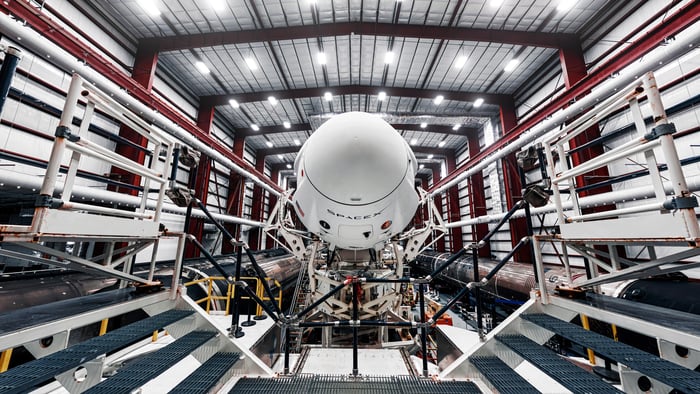
Image source: Getty Images.
SpaceX initially went public at a $1.77 trillion market cap. Today, the market cap is closer to $2.4 trillion. Clearly, bearish analysts were wrong in the short term. But that doesn't mean SpaceX shares won't eventually slide below its IPO price in the weeks and months to come.
Regardless of where SpaceX stock goes in the future, one thing is certain: The company met its fundraising goal. Early reports speculated that SpaceX was targeting a capital raise between $50 billion and $75 billion. As the IPO approached, however, the top end of that range -- $75 billion -- became the official target.
But here's the thing: SpaceX actually ended up raising more than its original goal thanks to one underappreciated factor.
Here's how much SpaceX actually raised during its IPO
When going public, IPO stocks typically target a specific amount of capital to raise. This requires setting a projected share price and the number of shares intended for sale. There's no guarantee, however, that all of the shares will be sold at the intended price. This often leads to a "busted" IPO, in which the price of the IPO stock plunges after the initial sale.
SpaceX, of course, was able to sell all of the shares it had allocated for sale at its intended price. So, the company was able to raise $75 billion in new funding. The final amount raised, however, was actually $85.7 billion. That's due to a feature called an underwriters' allotment, or a "greenshoe" option.
During an IPO, companies retain investment banks that are in charge of the sale. Part of a bank's underwriting fee often includes an option to sell additional stock -- more than the company initially targeted -- should the share price exceed expectations. Demand for the SpaceX IPO turned out to be well above the initial supply of publicly available float. The stock price, therefore, surged after opening. That triggered options for many of the investment banks involved.
"Demand significantly outstripped the initial supply," one expert told Reuters. "Retail interest was high, but several major funds submitted massive orders, so underwriters wanted to tap the overallotment to satisfy these massive positions."
In the end, SpaceX will now have even more capital at its disposal than previous headlines indicated.
Should you buy stock in Space Exploration Technologies right now?
Before you buy stock in Space Exploration Technologies, consider this:
The Motley Fool Stock Advisor analyst team just identified what they believe are the 10 best stocks for investors to buy now… and Space Exploration Technologies wasn’t one of them. The 10 stocks that made the cut could produce monster returns in the coming years.
Consider when Netflix made this list on December 17, 2004... if you invested $1,000 at the time of our recommendation, you’d have $417,305!* Or when Nvidia made this list on April 15, 2005... if you invested $1,000 at the time of our recommendation, you’d have $1,293,148!*
Now, it’s worth noting Stock Advisor’s total average return is 936% — a market-crushing outperformance compared to 207% for the S&P 500. Don't miss the latest top 10 list, available with Stock Advisor, and join an investing community built by individual investors for individual investors.
See the 10 stocks »
*Stock Advisor returns as of June 20, 2026.
Ryan Vanzo has no position in any of the stocks mentioned. The Motley Fool has no position in any of the stocks mentioned. The Motley Fool has a disclosure policy.
Recommended Articles


