


Japanese and South Korean Stocks Open Lower; Samsung, SoftBank Both Fall Over 3%
TradingKey - During the Asian trading session on June 17, Japanese and South Korean stock markets opened lower across the board. Japan's Nikkei 225 Index slipped slightly due to profit-taking pressure after hitting a record high intraday yesterday, while South Korea's KOSPI Index underwent a technical correction following a two-day rally.
[Source: TradingView]
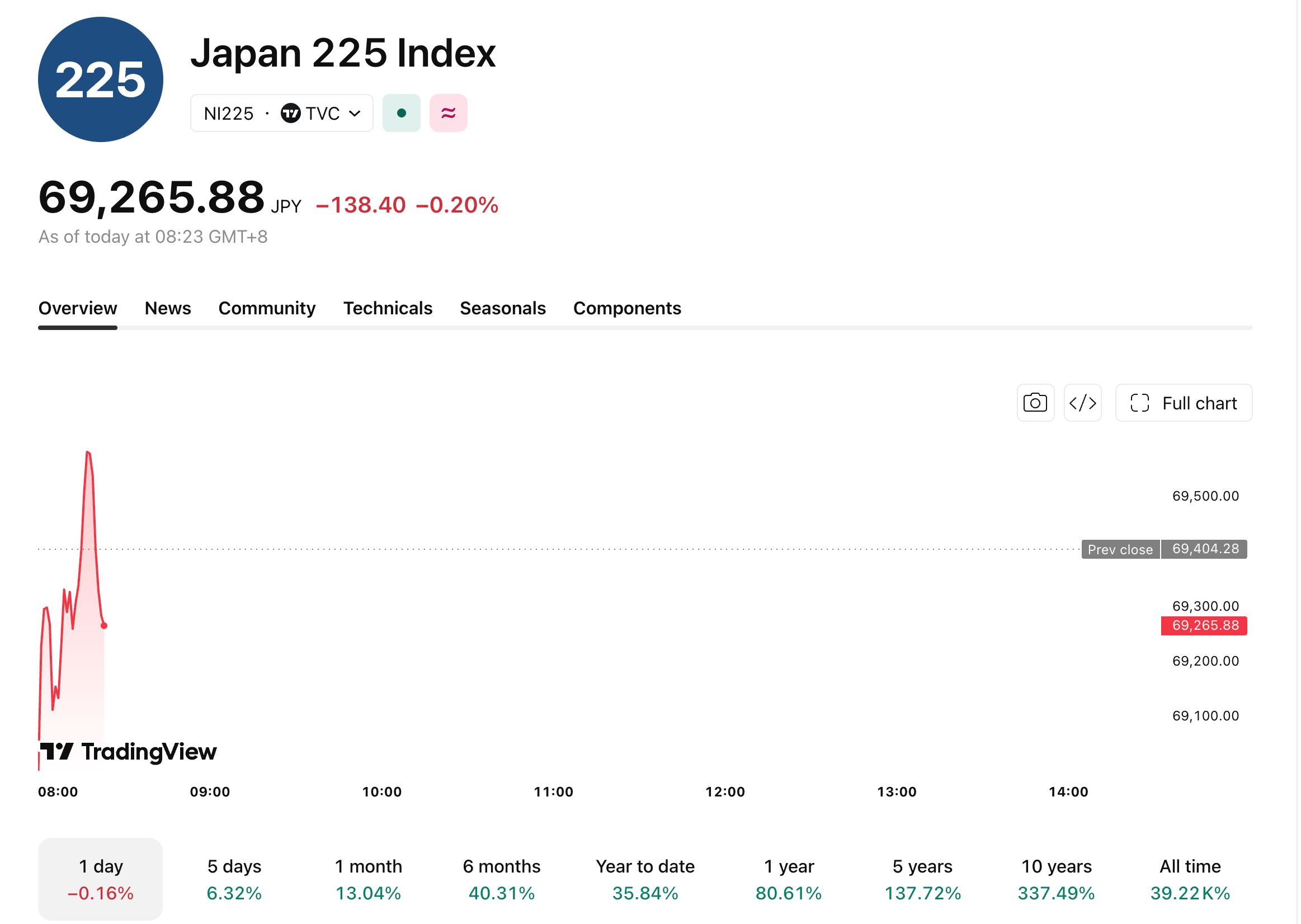
In the Japanese stock market, the Nikkei 225 Index opened today at 69,005.88, down 398.62 points, or 0.57%, from yesterday's close of 69,404.50. Yesterday, the index briefly touched 70,011.25 intraday, crossing the 70,000-point psychological milestone for the first time in history, though its gains narrowed by the close.
After the opening this morning, heavyweight stocks generally edged lower, with SoftBank Group falling about 3% and Kioxia dropping 1%. Market analysts noted that short-term profit-taking pressure surged after the Nikkei Index broke through its all-time high.
[Source: TradingView]
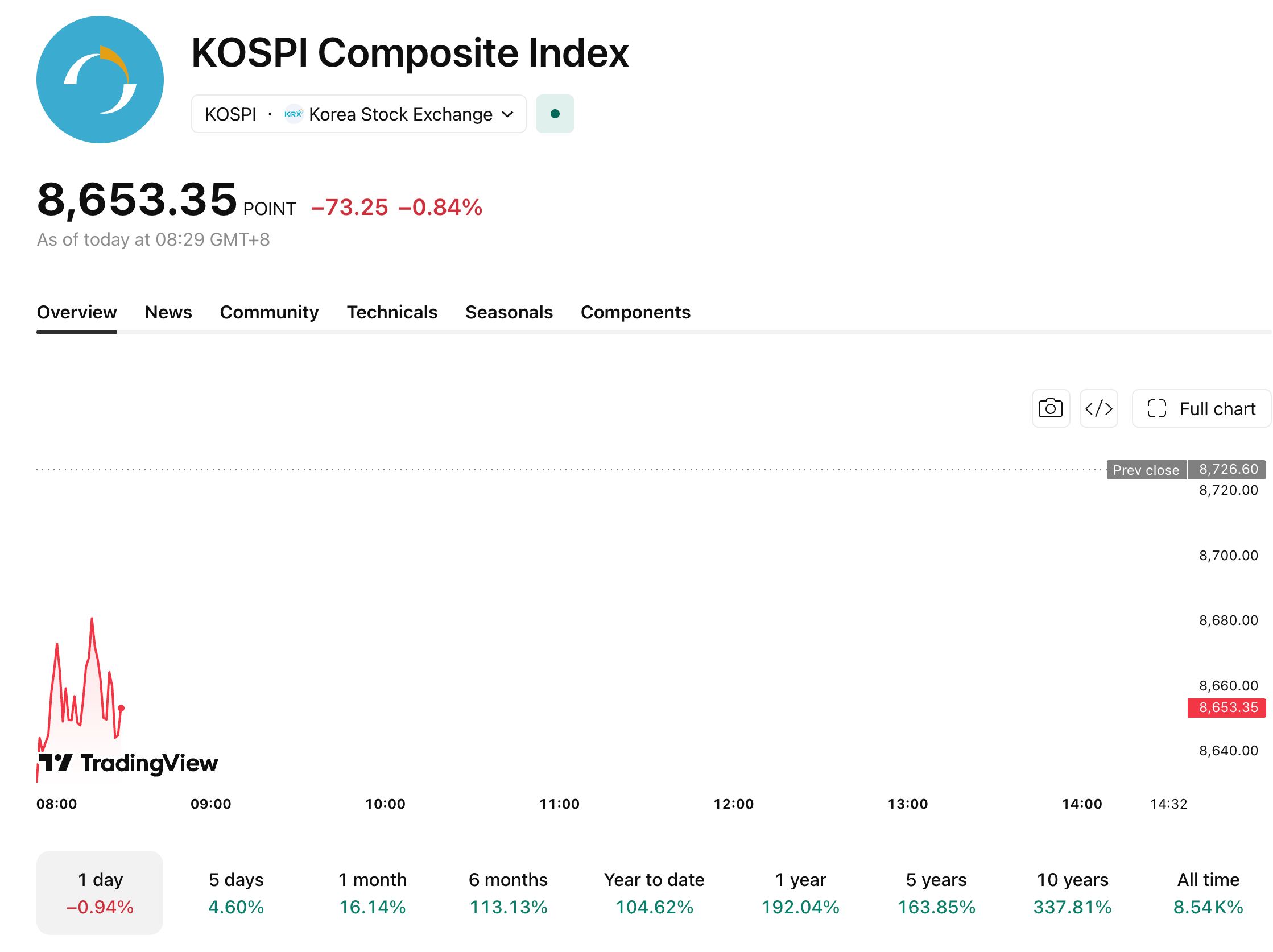
In the South Korean stock market, the KOSPI Index opened at 8,622.13, down 104.47 points, or 1.2%, from yesterday's close of 8,726.60. Over the previous two trading sessions, boosted by expectations of a U.S.-Iran reconciliation, the index rose more than 3% cumulatively, closing yesterday at a recent high with a 2.11% gain. Following today's opening, heavyweight stocks pulled back across the board, with Samsung Electronics opening down over 3% and SK Hynix opening more than 1% lower at 2.335 million won.
As for external markets, the three major U.S. stock indexes closed mixed overnight; the Dow Jones Industrial Average edged up 0.64%, while the Nasdaq Composite fell 1.15%, dragged down by technology stocks, which put some pressure on risk appetite in Asian markets.
Overall, both the Japanese and South Korean markets opened in a weak consolidation pattern today, following strong cumulative gains in the previous period, which led to a concentrated release of short-term profit-taking. As of press time, the Nikkei 225's losses have narrowed slightly, while the KOSPI continues to hover at lows. Subsequent market direction will depend on intraday buying support and the performance of heavyweight stocks.
Recommended Articles


