


SpaceX Stock and IPO Investor Guide
TradingKey - SpaceX is set to list on the Nasdaq on June 12 under the ticker symbol SPCX. The offering price is set at $135 per share with a fundraising target of $75 billion, representing an overall company valuation of as much as $1.77 trillion. This would be the largest IPO in global history.
What kind of company is SpaceX?
SpaceX's business can be divided into three segments: rocket launches, satellite internet (Starlink), and artificial intelligence (AI).
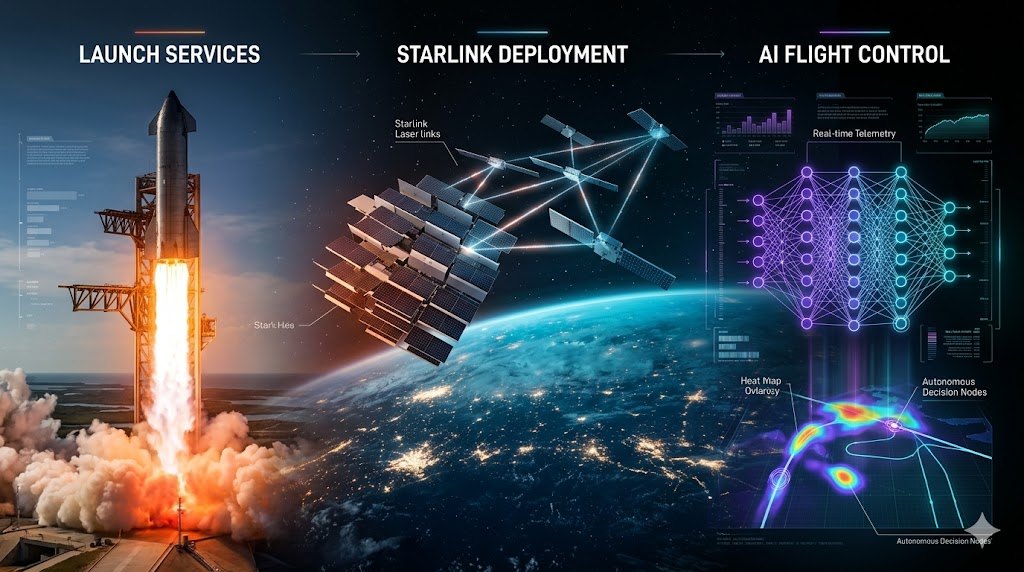
Starlink is the primary source of profit. As of the first quarter of 2026, Starlink has reached 10.3 million subscribers, with quarterly revenue of $3.26 billion, accounting for approximately 69% of SpaceX's total revenue. It is the only profitable business segment, with an operating profit of $1.19 billion. For the full year 2025, Starlink recorded revenue of $11.39 billion and an operating profit of $4.42 billion.
The rocket business is "burning cash." The aerospace segment (primarily rocket launches) generated quarterly revenue of only $620 million, while posting an operating loss of $660 million. The company has invested over $15 billion in the development of the next-generation "Starship" rocket—far exceeding its original budget—and has yet to achieve profitability.
The AI business is the biggest drag on performance. SpaceX acquired Elon Musk's xAI in early 2026; following the integration, the AI segment's first-quarter operating loss reached $2.47 billion. For the full year 2025, the AI segment recorded a cumulative loss of $6.36 billion.
Overall, SpaceX's total revenue for the full year 2025 was $18.67 billion, but it reported a net loss of $4.94 billion. Essentially, it is a company that uses profits from Starlink to subsidize its rocket and AI ventures.
Can investors participate in this IPO?
Yes, and it is significantly easier than previous IPOs.
First, there are traditional brokerage channels. U.S. brokerage giant Fidelity has sharply lowered the barrier for IPO subscriptions; accounts with over $2,000 in assets can submit an indication of interest, with a minimum of 1 share and a maximum of 1 million shares. Platforms such as Robinhood and SoFi offer even lower entry requirements. Fidelity noted that SpaceX has reserved up to 30% of the offering for retail investors, far above the typical 5% to 10% range.
Second, there are crypto platform channels. Several crypto exchanges have introduced tokenized IPO services, allowing users to subscribe to tokenized certificates representing SpaceX equity. The registration and subscription period is set for June 7 to 11, with trading expected to begin on June 12.
However, investors must note that submitting an indication of interest does not guarantee a successful purchase. Due to overwhelming demand, brokerages typically use a lottery system for allocation, making the outcome and size of the allocation random. Some brokerages restrict the short-term sale of allocated shares; selling within the first 15 trading days of listing may affect eligibility for future IPO participation.
It is important to remain vigilant as tokenized instruments on crypto platforms are an emerging investment route. They differ from direct equity ownership in terms of rights and protections, necessitating a careful review of product disclosures.
Previously, a TradingKey article, "Is Buying a SpaceX ETF Worth the Risk?—And What's the Best Investment Pre-SpaceX IPO?" pointed to buying ETFs that hold SpaceX shares, such as ERShares XOVR (with a 23% to 40% position in SpaceX) and Tema Space Innovators ETF NASA (approximately 10%).
Buying ETFs through the secondary market avoids the uncertainty of IPO subscriptions, but ETF prices may reflect a premium, and SpaceX only accounts for a portion of the total holdings.
What is the outlook for SpaceX following its IPO?
During the initial listing phase, the low public float (approximately 4.2%) combined with high retail investor enthusiasm may push the stock price higher in the short term; however, several authoritative institutions have explicitly warned of overvaluation.
Morningstar believes SpaceX's fair valuation is only about $780 billion, less than half of its IPO target. Morningstar pointed out that the commercialization prospects for its AI business, Grok, are unclear, and long-term projects like Starship and space computing centers have lengthy monetization cycles. Furthermore, Elon Musk holds over 82% of the voting power, leaving minority shareholders' interests without adequate protection.
NYU valuation expert Aswath Damodaran also estimates the true valuation at approximately $1.3 trillion, suggesting that SpaceX’s assumptions regarding the addressable market for its AI business are overly optimistic. A Danish pension fund has even placed SpaceX on an investment blacklist, asserting that its fair valuation should not exceed $1 trillion.
Another risk that cannot be ignored is that in the months following the IPO, early insiders and private investors may sell their holdings as lock-up periods expire, creating significant selling pressure. While retail participation is high, it could also exacerbate intense stock price volatility.
SpaceX Index Inclusion Issues
Another key variable following SpaceX's IPO is the pace and scale of its inclusion into major indices.
Nasdaq has tailored a fast-track inclusion mechanism for SpaceX. In March 2026, Nasdaq passed new "fast-track inclusion" rules, shortening the post-listing waiting period from three months to 15 trading days, which took effect on May 1.
Meanwhile, addressing SpaceX's ultra-low public float of only about 3% to 7% post-listing, Nasdaq simultaneously adjusted its weighting calculation method; companies with a free float below 33.33% will have their index weights discounted proportionally, yet SpaceX's massive size will still ensure it commands a significant weight in the index.
Index inclusion will trigger mechanical passive inflows. Bloomberg Intelligence estimates that SpaceX's weight in the Nasdaq 100 could reach 0.47% to 0.7%, meaning approximately $600 billion in global passive capital tracking the index will automatically allocate to SpaceX shares. Furthermore, funds benchmarked against the Russell 1000 Index may purchase an additional 5.5% of the float within weeks of the listing.
However, not all index providers have chosen to "green-light" SpaceX.
On June 5, S&P Dow Jones Indices explicitly refused to adjust its rules, meaning SpaceX will be excluded from the S&P 500 for at least 12 months post-listing and must meet GAAP profitability requirements—a hurdle difficult to clear in the short term given the company's $4.94 billion net loss in 2025. MSCI is maintaining its standard rules for SpaceX, which could force trackers to wait for years.
Notably, the issue of index inclusion has sparked significant controversy on Wall Street. "The Big Short" investor Michael Burry publicly criticized the arrangement, arguing that Nasdaq's green-lighting of SpaceX will ultimately harm investor interests. The act of index providers modifying rules for a single company could erode the credibility of indices as fair market benchmarks.
Meanwhile, the Danish pension fund AkademikerPension announced it would blacklist SpaceX from its investments, citing a severely inflated valuation and "catastrophic" governance structure issues.
For investors, inclusion in the Nasdaq 100 will generate certain passive buying power, providing short-term support for the stock price. However, the absence of S&P 500 inclusion means the largest pools of passive capital must still wait. This represents both a guaranteed source of short-term liquidity and a potential structural risk within index construction rules.
Summary
For novice investors, focus can be placed on three areas: subscription participation. If you have an account on a platform supporting SpaceX subscriptions and your assets meet the criteria, you can attempt to submit an expression of interest; however, understand that a subscription does not guarantee success, as final allocations are highly random, and you should not chase highs.
Morningstar analysts have explicitly stated that long-term investors eager to participate in SpaceX will surely encounter buying opportunities with a better margin of safety than the IPO in the future, so there is no need to blindly chase highs during the initial public offering. Furthermore, manage your position sizing; even if you participate, it should only be a small portion of your portfolio, and you should avoid making heavy bets.
SpaceX is undoubtedly a great company with long-term potential, but its IPO pricing already factors in extremely high expectations. For new investors, the most important thing is not whether they can buy shares, but what entry price is reasonable. Waiting for an entry window with a better margin of safety—patience—is often the most underestimated advantage for novice investors.
Recommended Articles


