


SoftBank’s $6 Billion OpenAI Margin Loan Said to Face Snag, Shares Drop Over 9%
TradingKey - During the Asian session on June 10, sources familiar with the matter revealed that SoftBank Group's negotiations to secure a margin loan of at least $6 billion, using its stake in OpenAI as collateral, have failed to make progress. This comes just weeks after the company lowered its initial $10 billion target by 40%. SoftBank declined to comment. According to the sources, SoftBank is still considering various financing options and may restart negotiations in the future.
The primary reason for the stalled loan lies in the fact that OpenAI's valuation lacks a basis convincing enough for banks.
On one hand, OpenAI confidentially filed for an IPO with the U.S. Securities and Exchange Commission on June 8 and is working with Goldman Sachs and Morgan Stanley for a potential listing as early as this autumn. Following the news, some potential creditors have begun to view the loan more positively; once public, OpenAI will have a fair market value, which is expected to significantly alleviate banks' concerns regarding the valuation of unlisted equity.
On the other hand, negative factors persist: the valuation of competitor Anthropic is rising rapidly, leading to market concerns about the erosion of OpenAI's market share. Combined with the inherent illiquidity of private assets, banks remain cautious about the quality of the collateral. The interplay of positive news and lingering doubts has led to a stalemate in the loan negotiations.
Violent fluctuations in the stock price have further amplified market concerns. On June 1, SoftBank's market capitalization surpassed Toyota's, making it Japan's most valuable company. Just three days later, its share price plunged by over 11%, with more than 5 trillion yen in market value wiped out in a single day. On June 10, as news of the financing stagnation spread widely, SoftBank's share price decline widened to 9% at the time of writing, dragging down Japanese chip-related stocks as well.
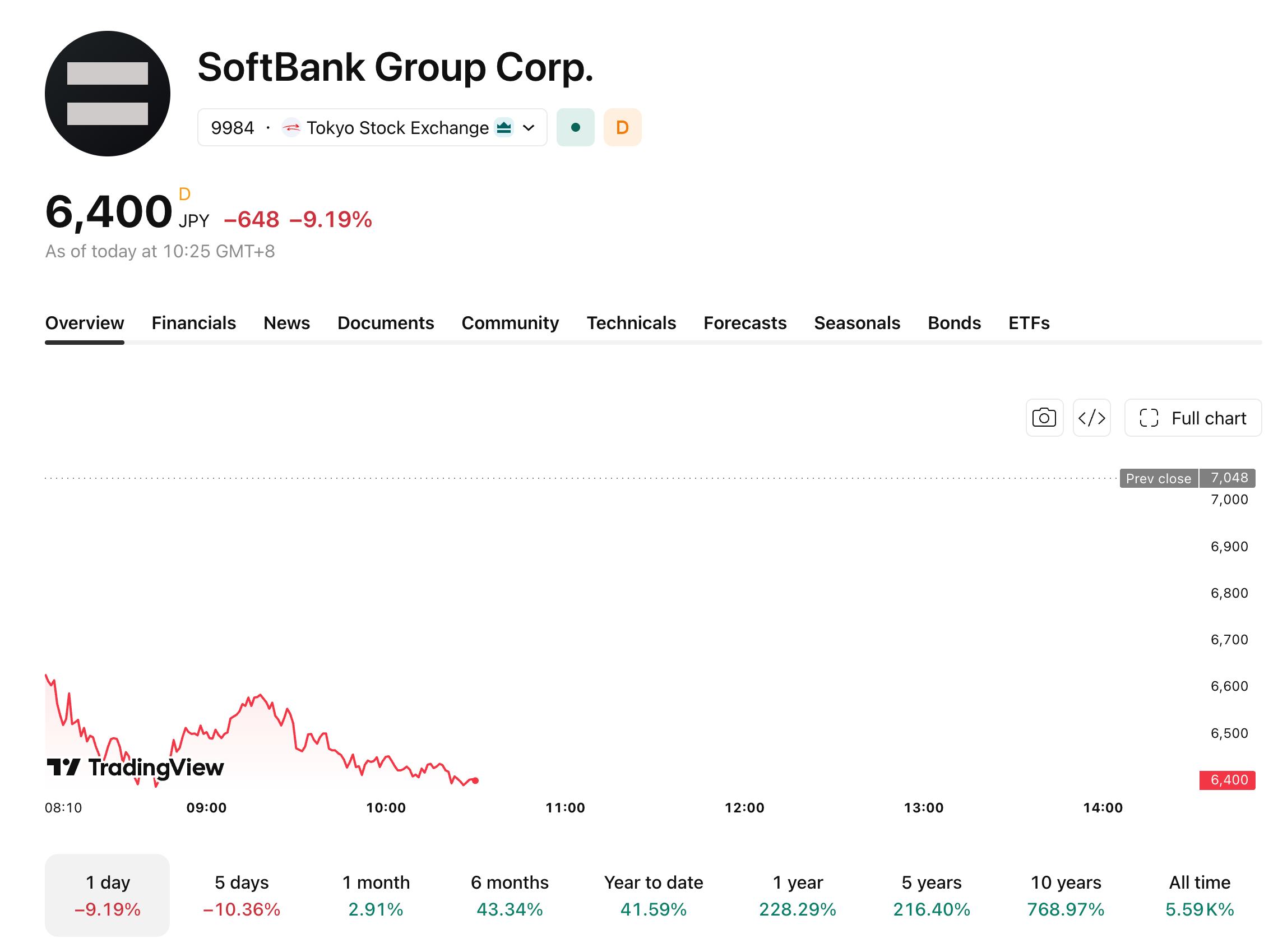
[Source: TradingView]
The core of the market's concern lies in SoftBank's high leverage risk. To date, SoftBank's cumulative investment in OpenAI has exceeded $60 billion, with interest-bearing debt on a standalone basis totaling approximately $104 billion. On the positive side, the company's stake in the star performer Arm ( ARM) and Intel ( INTC) has nearly doubled year-to-date, and Credit Default Swap (CDS) spreads have narrowed recently, indicating some improvement in solvency. However, the hurdle facing the $6 billion loan has reignited investor doubts about SoftBank's liquidity management capabilities.
Furthermore, even more problematic than the $6 billion loan is SoftBank's $40 billion unsecured bridge loan. This loan was arranged by JPMorgan ( JPM ), Goldman Sachs ( GS ), and three major Japanese banks, and is set to mature in March 2027. SoftBank previously stated it would repay the debt "by utilizing existing assets and other financing measures." With the $6 billion pledged loan now stalled, how to repay this massive debt maturing within two years has become a pressing issue for SoftBank.
Recommended Articles


