


Want Nothing to Do With SpaceX? Buy This Ultra-Low-Cost Dividend Growth ETF in June.
Key Points
Some investors may prefer to take a wait-and-see approach to SpaceX instead of buying it at the IPO.
Index funds and growth-focused ETFs could be buying a lot of SpaceX in the coming months.
Companies that steadily grow their earnings and dividends will appeal to balanced investors.
- 10 stocks we like better than Vanguard Dividend Appreciation ETF ›
SpaceX is expected to hit public markets on June 12, raising $75 billion at a $1.77 trillion valuation. With a smaller initial public offering (IPO), investors can simply ignore the news and not buy the stock. But SpaceX is so large that it is transforming the way indexes respond to megacap IPOs.
While the S&P 500 (SNPINDEX: ^GSPC) will not be adding SpaceX any time soon, the Nasdaq-100 -- the 100 largest non-financial stocks listed on the Nasdaq Composite -- is rewriting its index methodology to fast-track the inclusion of megacap companies like SpaceX, Anthropic, and OpenAI to give index fund investors quicker access to these companies.
Will AI create the world's first trillionaire? Our team just released a report on the one little-known company, called an "Indispensable Monopoly" providing the critical technology Nvidia and Intel both need. Continue »
While the fast-track rules are great news for investors who want a piece of these companies through their index fund holdings, it can be unsettling for folks who believe these companies are going public at sky-high valuations and could drag down the major indexes. What's more, many growth-focused exchange-traded funds (ETFs) will likely be buying SpaceX once it gets added to the indexes, which puts investors who want to buy growth stocks, just not SpaceX, in a difficult spot.
Fortunately, there's a low-cost ETF that balances growth, income, and value, which won't be buying SpaceX when it IPOs. Here's why the Vanguard Dividend Appreciation ETF (NYSEMKT: VIG) is a great buy now.
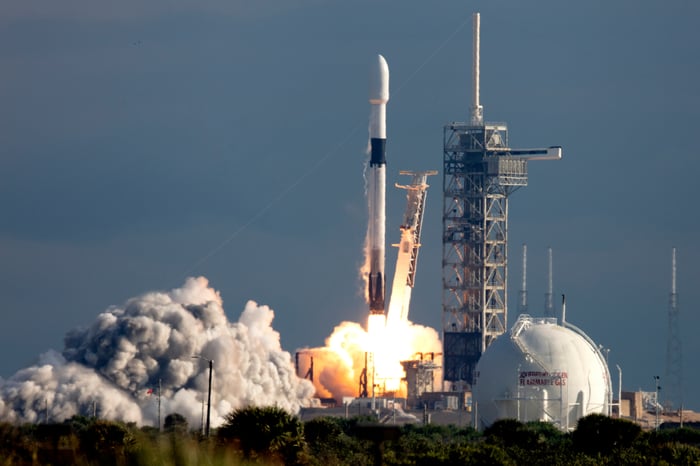
Image source: Getty Images.
Earnings-fueled dividend growth
The Vanguard Dividend Appreciation ETF is unique because it focuses on companies that consistently grow their earnings in lockstep with their dividends. Many income funds instead focus more on yield than on earnings growth quality. And some growth funds have very low yields because they hold few dividend-paying companies.
SpaceX, Anthropic, and OpenAI are unlikely to be in the Vanguard Dividend Appreciation ETF because they don't have a track record of consistently raising dividends. And there's no indication these companies will pay dividends at all.
The 10 largest holdings in the Vanguard Dividend Appreciation ETF provide a good sample of the fund's composition.
|
Company |
Vanguard Dividend Appreciation ETF Weight |
Dividend Yield |
|---|---|---|
|
Broadcom (NASDAQ: AVGO) |
5.2% |
0.6% |
|
Apple (NASDAQ: AAPL) |
4.1% |
0.3% |
|
Microsoft (NASDAQ: MSFT) |
4% |
0.8% |
|
JPMorgan Chase (NYSE: JPM) |
3.6% |
1.9% |
|
Eli Lilly (NYSE: LLY) |
3.3% |
0.6% |
|
ExxonMobil (NYSE: XOM) |
2.9% |
2.7% |
|
Walmart (NASDAQ: WMT) |
2.6% |
0.8% |
|
Johnson & Johnson (NYSE: JNJ) |
2.5% |
2.3% |
|
Visa (NYSE: V) |
2.3% |
0.8% |
|
Costco Wholesale (NASDAQ: COST) |
2% |
0.6% |
Data source: Vanguard, YCharts.
Broadcom, Apple, and Microsoft are tech giants with low yields because their stock prices have increased faster than their dividend growth rates. But all three companies have raised their dividends for over 15 consecutive years.
Similarly, JPMorgan Chase and Visa regularly repurchase stock and raise dividends.
Eli Lilly is by far the most valuable healthcare company in the world. And while it's normally seen as a growth stock, it also has an extensive track record of boosting its payout.
Walmart and Johnson & Johnson are Dividend Kings, companies that have paid and raised their dividends for at least 50 consecutive years.
Costco Wholesale has a track record of boosting its payout and paying special dividends every three to four years once its surplus cash gets high enough to return to shareholders.
Despite operating in the volatile oil and gas industry, ExxonMobil has paid and raised its dividend for an impressive 43 consecutive years -- a testament to its financial health and operational efficiency.
An ETF for investors looking for mature businesses
With a mere 0.04% expense ratio, the Vanguard Dividend Appreciation ETF has virtually the same fee structure as the Vanguard S&P 500 ETF (NYSEMKT: VOO), which has a 0.03% expense ratio, while providing a superior 1.5% dividend yield compared to 1% for the index.
The ETF is a great buy for investors who value a stock's total return (dividends plus capital gains) more than passive income alone. It's also a good fit for investors who like companies that balance their capital allocation by returning capital to shareholders through buybacks and dividends rather than pouring it all into long-term growth (like Amazon and Tesla).
SpaceX, Anthropic, and OpenAI are in the capital-raising stage of growth and will most likely dilute shareholders rather than reduce the share count through buybacks or return profits through dividends. This makes the Vanguard Dividend Appreciation ETF the perfect fit for investors who prefer seasoned, industry-leading companies and want to avoid exposure to high-profile IPOs.
Should you buy stock in Vanguard Dividend Appreciation ETF right now?
Before you buy stock in Vanguard Dividend Appreciation ETF, consider this:
The Motley Fool Stock Advisor analyst team just identified what they believe are the 10 best stocks for investors to buy now… and Vanguard Dividend Appreciation ETF wasn’t one of them. The 10 stocks that made the cut could produce monster returns in the coming years.
Consider when Netflix made this list on December 17, 2004... if you invested $1,000 at the time of our recommendation, you’d have $443,191!* Or when Nvidia made this list on April 15, 2005... if you invested $1,000 at the time of our recommendation, you’d have $1,258,838!*
Now, it’s worth noting Stock Advisor’s total average return is 941% — a market-crushing outperformance compared to 206% for the S&P 500. Don't miss the latest top 10 list, available with Stock Advisor, and join an investing community built by individual investors for individual investors.
See the 10 stocks »
*Stock Advisor returns as of June 7, 2026.
JPMorgan Chase is an advertising partner of Motley Fool Money. Daniel Foelber has no position in any of the stocks mentioned. The Motley Fool has positions in and recommends Amazon, Apple, Broadcom, Costco Wholesale, Eli Lilly, JPMorgan Chase, Microsoft, Tesla, Vanguard Dividend Appreciation ETF, Vanguard S&P 500 ETF, Visa, and Walmart. The Motley Fool recommends Johnson & Johnson. The Motley Fool has a disclosure policy.
Recommended Articles


