

Nvidia Just Made a $2 Billion Game-Changing Move. Here's Why.

Source The Motley Fool

Key Points

  • Nvidia is joining forces with Marvell to bolster its GPU and CPU architecture.

  • Marvell plays a big role in fueling the AI infrastructure supercycle.

  • With Marvell in its ecosystem, Nvidia moves closer toward building a complete stack.

  • 10 stocks we like better than Nvidia ›

Nvidia's (NASDAQ: NVDA) recent $2 billion investment in Marvell Technology (NASDAQ: MRVL) carries more strategic upside than investors likely realize. This move is a decisive step in Nvidia's quiet evolution from GPU powerhouse to a complete architect of artificial intelligence (AI) systems.

While Wall Street still views Nvidia as a company selling compute engines, the company's investment in Marvell reveals a deeper blueprint: Nvidia is bringing the entire assembly line for AI factories -- compute, data pathways, and orchestration -- under one roof.

Will AI create the world's first trillionaire? Our team just released a report on the one little-known company, called an "Indispensable Monopoly" providing the critical technology Nvidia and Intel both need. Continue »

Marvell represents the missing nervous system that connects isolated GPU clusters into living, breathing AI infrastructure. The result is a vertically integrated platform no chip rival is replicating at the same speed of scale as Nvidia.
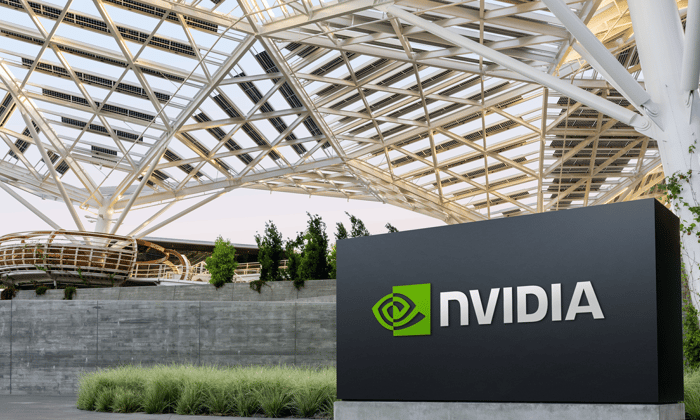
Nvidia headquarters with a black Nvidia sign out front.

Image source: Nvidia.

Marvell is the invisible backbone supporting Nvidia's GPU clusters

GPUs do the heavy lifting inside AI training and inference clusters. While this architecture works, it's also limited by factors beyond visible hardware. Data workloads must move between chipsets at low latencies, storage must feed models without forming a bottleneck, and power supply must be managed at rack scale.

Marvell specializes in these invisible layers. The company's ecosystem features high-speed Ethernet fabrics, advanced signal integrity, and intelligent storage controllers. By integrating Marvell's technology with Nvidia's reference designs, every Blackwell or future Rubin system can ship with pre-optimized networking and storage already speaking fluent CUDA.

Developers are no longer forced to cobble disparate components together and hope they all align. Taken together, Nvidia and Marvell make coherence the new performance multiplier within AI infrastructure.

Nvidia + Marvell = The next layer of custom silicon

Some AI applications are better suited for domain-specific silicon. However, designing every possible ASIC in-house would slow Nvidia's focus on versatile, general-purpose GPUs.

Marvell's expertise in custom silicon -- particularly in networking ASICs and high-bandwidth memory interfaces -- provides Nvidia with a partner that already knows the language of parallel workloads.

Nvidia and Marvell are essentially co-designing accelerators that exist natively alongside GPUs: specialized inference engines, low-power edge nodes, and memory fabric chips that treat HBM as a programmable resource.

Since Nvidia actually invested in Marvell, and therefore owns equity in the company, the GPU king effectively secures priority access and intellectual property (IP) alignment that generic suppliers can't match. Nvidia isn't outsourcing its custom silicon ambitions. Rather, the company is aggressively deploying capital to control co-creation processes.

The payoff from Marvell comes in building an end-to-end AI operating system

Hyperscalers and nations building AI infrastructure no longer need to stitch together systems from competing vendors. With Marvell now part of the equation, Nvidia removes a key variable in turning its vision of making AI factories into a single, sovereign platform a reality.

Customers can deploy Nvidia-Marvell stacks that are pre-validated, energy-optimized, and ready to scale from a single rack to an exascale campus. In an era in which governments and enterprises want to own their intelligence stacks, Nvidia is now the only company that delivers a full blueprint.

Marvell did not just receive a cash windfall from Nvidia. The $2 billion investment is a down payment on an impenetrable moat built from silicon upward. Marvell just became a core pillar turning Nvidia's GPUs into an operating system designed for the inference era.

That's the real game changer Nvidia just unlocked. The company can stop selling data center components and start selling measurable outcomes -- dependable compute, reliable latency, and a total cost of infrastructure ownership that competitors can't touch.

Should you buy stock in Nvidia right now?

Before you buy stock in Nvidia, consider this:

The Motley Fool Stock Advisor analyst team just identified what they believe are the 10 best stocks for investors to buy now… and Nvidia wasn’t one of them. The 10 stocks that made the cut could produce monster returns in the coming years.

Consider when Netflix made this list on December 17, 2004... if you invested $1,000 at the time of our recommendation, you’d have $555,526!* Or when Nvidia made this list on April 15, 2005... if you invested $1,000 at the time of our recommendation, you’d have $1,156,403!*

Now, it’s worth noting Stock Advisor’s total average return is 968% — a market-crushing outperformance compared to 191% for the S&P 500. Don't miss the latest top 10 list, available with Stock Advisor, and join an investing community built by individual investors for individual investors.

See the 10 stocks »

*Stock Advisor returns as of April 13, 2026.

Adam Spatacco has positions in Nvidia. The Motley Fool has positions in and recommends Marvell Technology and Nvidia. The Motley Fool has a disclosure policy.

Disclaimer: For information purposes only. Past performance is not indicative of future results.
placeholder
Bitcoin CME gaps at $35,000, $27,000 and $21,000, which one gets filled first?Prioritize filling the $27,000 gap and even try higher.
Author  FXStreet
Aug 22, 2023
Prioritize filling the $27,000 gap and even try higher.
placeholder
Pinduoduo Earnings Incoming: Morgan Stanley Sees Long-Term Profit Potential​Insights – On November 21, Chinese e-commerce giant Pinduoduo (PDD) will release its Q3 2024 earnings.
Author  Mitrade
Nov 20, 2024
​Insights – On November 21, Chinese e-commerce giant Pinduoduo (PDD) will release its Q3 2024 earnings.
placeholder
Elon Musk’s xAI and Neuralink Launch New Funding Rounds​Billionaire Elon Musk recently raised funds for his two high-profile tech companies, xAI and Neuralink.
Author  Insights
Jun 03, 2025
​Billionaire Elon Musk recently raised funds for his two high-profile tech companies, xAI and Neuralink.
placeholder
Bitcoin briefly loses 2025 gains as crypto plunges over the weekend.Bitcoin experienced a sharp decline this weekend, briefly erasing its 2025 gains and dipping below its year-opening value of $93,507. The cryptocurrency fell to a low of $93,029 on Sunday, representing a 25% drop from its all-time high in October. Although it has rebounded slightly to around $94,209, the pressures on the market remain significant. The downturn occurred despite the reopening of the U.S. government on Thursday, which many had hoped would provide essential support for crypto markets. This year initially appeared promising for cryptocurrencies, particularly after the inauguration of President Donald Trump, who has established the most pro-crypto administration thus far. However, ongoing political tensions—including Trump's tariff strategies and the recent government shutdown, lasting a historic 43 days—have contributed to several rapid price pullbacks for Bitcoin throughout the year. Market dynamics are also being influenced by Bitcoin whales—investors holding large amounts of Bitcoin—who have been offloading portions of their assets, consequently stalling price rallies even as positive regulatory developments emerge. Despite these sell-offs, analysts from Glassnode argue that this behavior aligns with typical patterns seen among long-term investors during the concluding stages of bull markets, suggesting it is not indicative of a mass exodus. Notably, Bitcoin is not alone in its struggles, as Ethereum and Solana have also recorded declines of 7.95% and 28.3%, respectively, since the start of the year, while numerous altcoins have faced even steeper losses. Looking ahead, questions linger regarding the viability of the four-year cycle thesis, particularly given the increasing institutional support and regulatory frameworks now in place in the crypto landscape. Matt Hougan, chief investment officer at Bitwise, remains optimistic, suggesting a potential Bitcoin resurgence in 2026 driven by the “debasement trade” thesis and a broader trend toward increased adoption of stablecoins, tokenization, and decentralized finance. Hougan emphasized the soundness of the underlying fundamentals, pointing to a positive outlook for the sector in the longer term.
Author  Mitrade
Nov 17, 2025
Bitcoin experienced a sharp decline this weekend, briefly erasing its 2025 gains and dipping below its year-opening value of $93,507. The cryptocurrency fell to a low of $93,029 on Sunday, representing a 25% drop from its all-time high in October. Although it has rebounded slightly to around $94,209, the pressures on the market remain significant. The downturn occurred despite the reopening of the U.S. government on Thursday, which many had hoped would provide essential support for crypto markets. This year initially appeared promising for cryptocurrencies, particularly after the inauguration of President Donald Trump, who has established the most pro-crypto administration thus far. However, ongoing political tensions—including Trump's tariff strategies and the recent government shutdown, lasting a historic 43 days—have contributed to several rapid price pullbacks for Bitcoin throughout the year. Market dynamics are also being influenced by Bitcoin whales—investors holding large amounts of Bitcoin—who have been offloading portions of their assets, consequently stalling price rallies even as positive regulatory developments emerge. Despite these sell-offs, analysts from Glassnode argue that this behavior aligns with typical patterns seen among long-term investors during the concluding stages of bull markets, suggesting it is not indicative of a mass exodus. Notably, Bitcoin is not alone in its struggles, as Ethereum and Solana have also recorded declines of 7.95% and 28.3%, respectively, since the start of the year, while numerous altcoins have faced even steeper losses. Looking ahead, questions linger regarding the viability of the four-year cycle thesis, particularly given the increasing institutional support and regulatory frameworks now in place in the crypto landscape. Matt Hougan, chief investment officer at Bitwise, remains optimistic, suggesting a potential Bitcoin resurgence in 2026 driven by the “debasement trade” thesis and a broader trend toward increased adoption of stablecoins, tokenization, and decentralized finance. Hougan emphasized the soundness of the underlying fundamentals, pointing to a positive outlook for the sector in the longer term.
placeholder
Gold edges lower below $4,750 amid fragile Middle East ceasefire Gold price (XAU/USD) trades in negative territory around $4,705 during the early Asian session on Thursday. The precious metal edges lower amid a temporary two-week ceasefire between the US and Iran.   
Author  FXStreet
Apr 09, Thu
Gold price (XAU/USD) trades in negative territory around $4,705 during the early Asian session on Thursday. The precious metal edges lower amid a temporary two-week ceasefire between the US and Iran.   
goTop
quote