


Goldman Sachs Liquidates XRP and SOL ETFs, Is the 'Doomsday' of Altcoins Coming?
Which altcoin ETFs did Goldman Sachs liquidate?
TradingKey - According to the American investment bank Goldman Sachs ( GS )'s first-quarter 13F filing submitted to the U.S. SEC, the institution did not report any ETF holdings related to Ripple ( XRP) or Solana ( SOL ). However, in the previous quarter, Goldman Sachs still held XRP and SOL ETFs issued by institutions such as Bitwise, Franklin Templeton, and Grayscale, totaling approximately $154 million.
Currently, the latest filing shows no ETFs linked to XRP or SOL, meaning holdings have dropped to zero, suggesting the institution liquidated these positions in the first quarter. During this period, XRP fluctuated between $1.1 and $2.4, down 33%-69% from its 2025 peak of $3.6; meanwhile, SOL was priced at $70-$150, a decline of 50%-76% from its 2025 peak of $300.
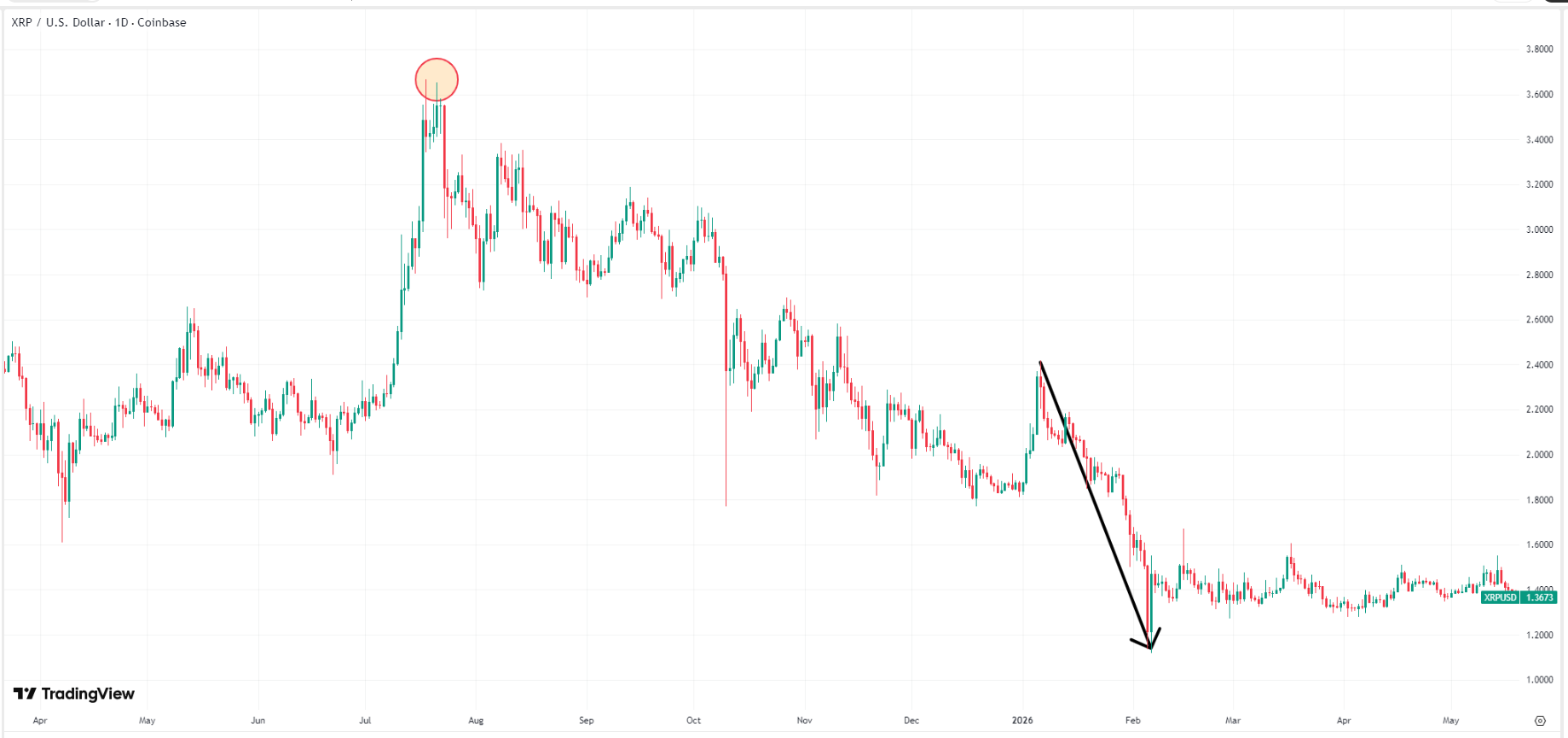
XRP price chart, source: TradingView
Why did Goldman Sachs liquidate its Altcoin ETFs?
There are two primary reasons why Goldman Sachs cleared out its holdings of altcoin ETFs such as XRP and SOL: sluggish market activity and geopolitical conflicts. At the end of 2025, following a wave of spot XRP and Solana ETF listings, Goldman Sachs held substantial positions in these products to provide liquidity for institutional clients—a typical market-making activity for a trading desk. However, as market enthusiasm cooled in the first quarter and client demand was met, the trading desk naturally 'zeroed out' its inventory.
Furthermore, with tensions in Iran escalating this year and global macroeconomic uncertainty reaching extreme levels, the primary reaction of institutions has been to slash 'secondary assets' with the highest beta and volatility. Goldman Sachs was also forced to sell XRP and SOL, retreating to cash flows with the strongest defensive capabilities.
While Goldman's sell-off has impacted the altcoin market, it does not mean that altcoins will go to zero or face an 'end-of-days' scenario. Historical experience shows that many small-cap altcoins do indeed go to zero during bear markets, but SOL and XRP are relatively high-quality assets for which such extreme events are highly unlikely, especially given they have successfully weathered bear markets in the past.
What are altcoins?
In the world of cryptocurrency, the definition of an altcoin is blunt and straightforward, referring to all cryptocurrencies other than Bitcoin. Around 2011, many new coins like Litecoin and Dogecoin emerged in the market, the vast majority of which were direct copies of Bitcoin's open-source code with minimal modifications; at the time, "altcoin" was a satirical label for such practices.
However, with the evolution of blockchain technology, many cryptocurrency projects are no longer simple "copy-pastes" of Bitcoin, the most prominent example being Ethereum ( ETH) and Solana, which feature entirely independent technical architectures and vast application ecosystems. This has surpassed Bitcoin in some regards, meaning "altcoin" no longer carries its original satirical connotation.
Recommended Articles


