


Spot Gold Rebounds Over 2% to Reclaim $3,600 as Fed Rate Hike Expectations Cool
TradingKey - International gold prices rebounded after a sharp selloff. On November 23, spot gold (XAUUSD) rose as much as about 2.3%, recovering to around $3,604 per ounce and retaking the $3,600 mark. In the previous week, gold prices dropped roughly 9% cumulatively, logging their largest single-week decline in eight months and briefly touching a 14-month low of around $3,503. Measured from its year-to-date high near $5,595, gold's maximum pullback has exceeded 37%.
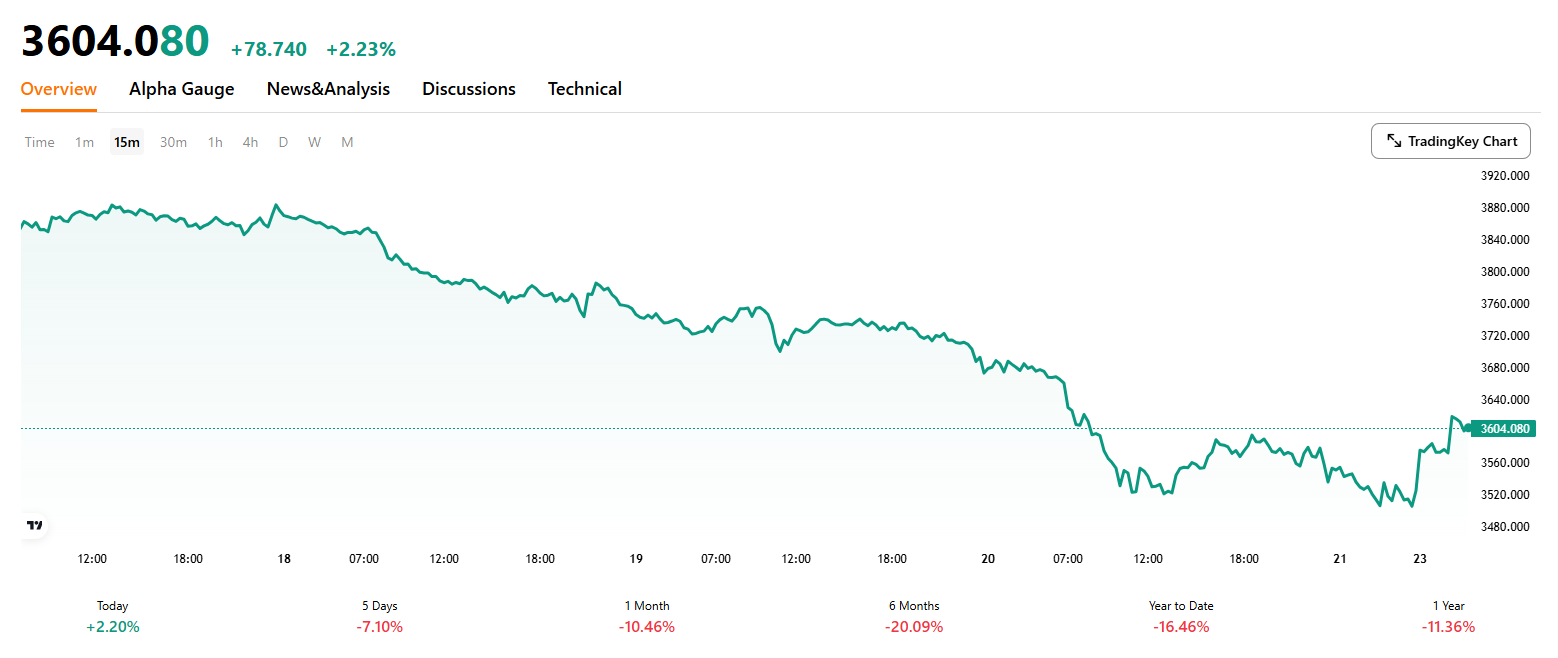
Source: TradingKey
Market expectations that the Federal Reserve will continue aggressively tightening monetary policy in the near term have cooled. Last Friday, U.S. Treasury yields broadly fell, with the policy-sensitive two-year Treasury yield dropping by about 12 basis points. Easing borrowing cost expectations lowered the opportunity cost of holding non-yielding gold, while also driving a recovery across the precious metals market, which had previously suffered heavy selloffs.
Markets still believe the Fed could hike rates again in December, but their outlook on the scale and duration of subsequent tightening has grown more cautious. Concerns surrounding AI investment returns, tech company financing structures, and the scale of capital expenditures have continued to mount recently, triggering a sharp correction in U.S. tech stocks. As financial market volatility intensified, traders began to worry that if the Fed continues to raise rates rapidly, it could further exacerbate asset price declines and amplify pressures on credit markets.
U.S. Treasury Secretary Scott Bessent also warned against over-tightening policy. He believes that if the Federal Reserve continues to ramp up tightening based solely on the latest inflation data, it could deal an unnecessary shock to the U.S. economy. Bessent had previously called for lower long-term borrowing costs, and his remarks had briefly pushed U.S. Treasury yields lower, providing short-term support for gold.
Since the outbreak of the U.S.-Iran conflict in late February, rising energy costs have intensified global inflationary pressures, prompting multiple central banks to resume monetary tightening. The U.S. dollar and bond yields climbed in response, causing gold to steadily retreat from its highs of the year. Since falling below $4,000 per ounce on November 11, gold prices have been unable to reclaim this level.
In the near term, investors will focus on U.S. October PCE inflation data, the latest remarks from Federal Reserve officials, and movements in U.S. Treasury yields. If inflationary pressures ease and drive interest rate expectations even lower, gold's rebound could extend further.
Recommended Articles


