


US Military Strikes on Iran Boost Crude Risk Premium as WTI Stabilizes Above $70.
TradingKey - Following a new round of offensive strikes launched by the US military against Iran, the international crude oil market reacted swiftly, with both WTI ( USOIL) and Brent crude rising. According to the US Central Command, the operation was a response to Iran's recent attacks on commercial vessels in the Strait of Hormuz. The targets struck included Iranian air defense systems, command and control networks, coastal radar, and anti-ship missile capabilities, with several Iranian Revolutionary Guard Corps small boats also destroyed in the relevant waters.
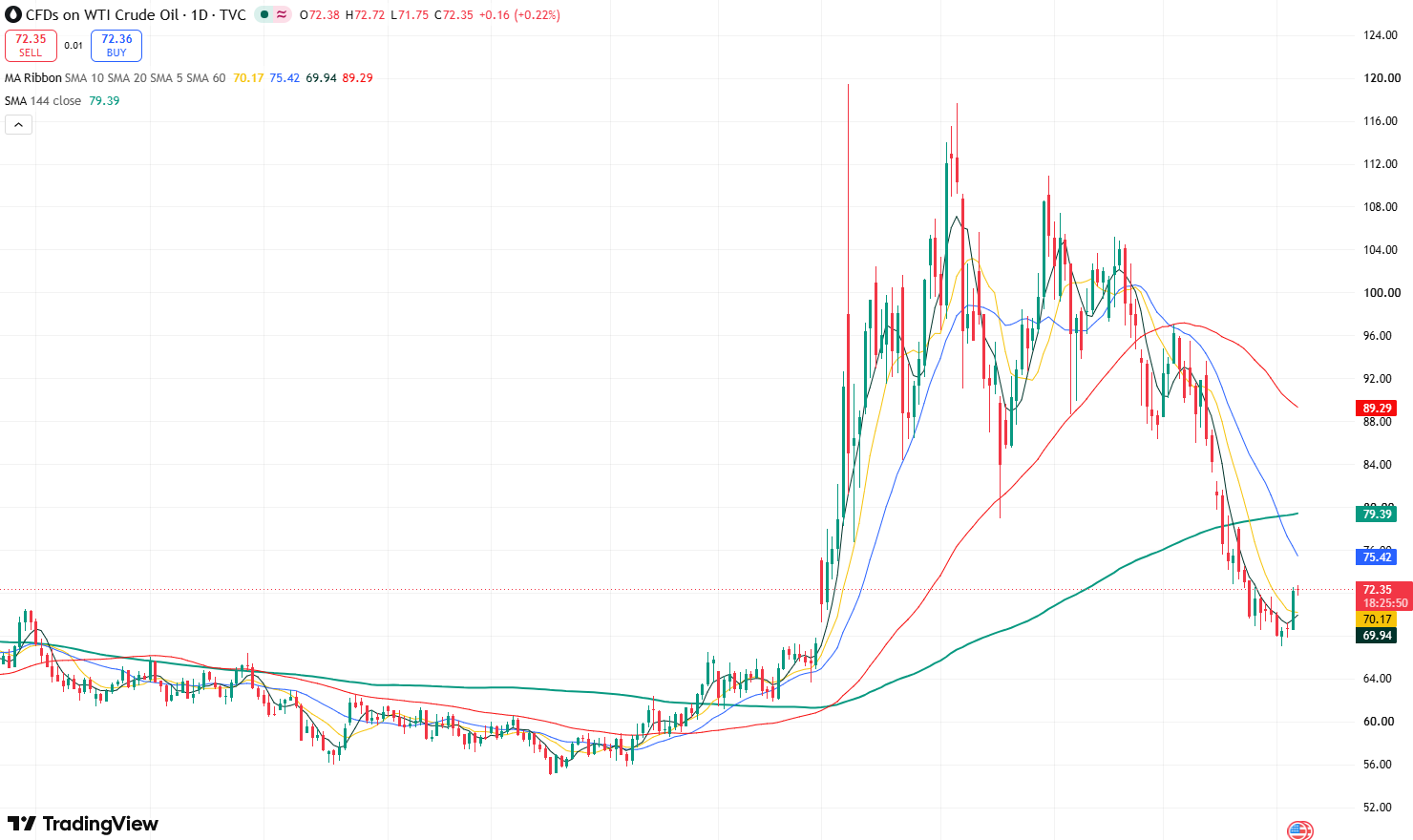
WTI Crude Oil Price Daily Chart, Source: TradingView
Following the announcement, the crude oil market maintained its upward momentum. As of press time, Brent crude rose above $75, while WTI crude firmly re-established itself above $70, trading at $72.20 after hitting an intra-day high of $71.75, both rebounding significantly from their previous lows. The market believes that the rise in oil prices is not merely a reaction to a single military action, but more importantly, it reflects investors pricing back in the risk of supply disruptions in the Strait of Hormuz. The Strait of Hormuz is a critical passage for global crude oil and liquefied natural gas transportation; once shipping safety in this region deteriorates, the risk premium in the crude oil market will quickly escalate.
Prior to this, crude oil prices had been suppressed by OPEC+ production increases, Saudi Arabia lowering its official selling prices for Asia, and market concerns over slowing demand, with the trading logic gradually shifting from geopolitics to supply and demand fundamentals. However, the US military strikes have reminded the market that the situation in the Middle East could still interrupt the downward trend of oil prices at any time. Especially after multiple commercial vessels were attacked, rising shipping insurance costs, the risk of tankers rerouting, and energy transportation uncertainties could all push crude oil prices back up.
In the short term, the trajectory of oil prices will depend on two factors: first, whether shipping in the Strait of Hormuz continues to face disruptions, and second, whether Iran makes further responses to the US strikes. If attacks on commercial vessels or military operations continue to escalate, Brent and WTI crude may still maintain their strength; however, if both sides return to a negotiation framework, the upside for oil prices could be limited by expectations of OPEC+ production increases and slowing demand.
Recommended Articles


