


Middle East on High Alert as Oil Prices Surge; Bitcoin and Gold Both Weaken in Volatile Trading.
TradingKey - US airstrikes on Iran triggered a surge in oil prices, while gold and Bitcoin did not rise as expected, but instead fluctuated and weakened.
During the Asian trading session on July 8, swept by the negative impact of a sudden escalation in the Middle East geopolitical crisis, global capital markets experienced significant volatility this morning. WTI crude oil ( USOIL) surged over 6%, briefly breaking through $72/barrel, and is temporarily trading at $71.88/barrel, with Brent crude oil strengthening and rallying in tandem.
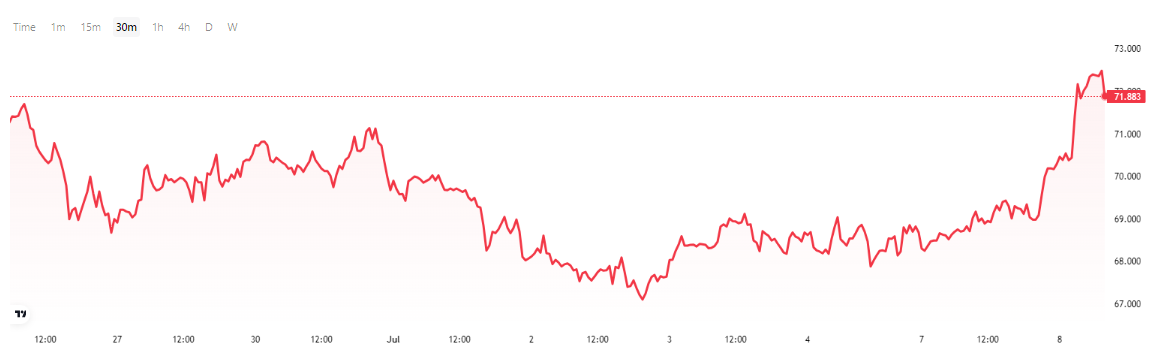 WTI Crude Oil Price Chart, Source: TradingView
Meanwhile, gold and Bitcoin prices fluctuated and weakened. Among them, spot gold ( XAUUSD ) fell below the $4,200 mark, currently trading at $4,114.27/ounce; Bitcoin fell 0.7%, dropping below $64,000, and is temporarily trading at $63,550.
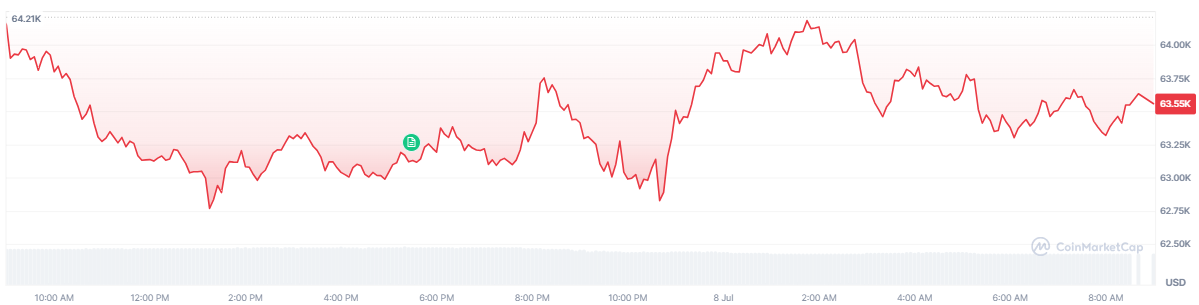 Bitcoin Price Chart, Source: TradingView
On July 7, local time, the US military launched a new round of intense airstrikes against Iran. Meanwhile, the US Department of the Treasury quickly revoked the oil sanctions waiver issued just on June 22, declaring the fragile ceasefire agreement newly established between the two sides broken. According to a US official, "The US airstrikes on Iran were not a proportional response, but a response to Iran's recent attacks on cargo ships near the Strait of Hormuz."
In response to the airstrikes, the Iranian Foreign Ministry issued a statement early this morning to condemn them, stating that the US should be held responsible for the relevant consequences, and warning that it would take necessary actions in this regard. If Iran retaliates, it will inevitably trigger a vicious cycle of military actions, and rising oil prices will cause the newly cooled global inflation embers to be reignited once again.
Recommended Articles


