




Top Australian Trading Platforms: Check These 8 Best ASIC Regulated CFD Brokers

Contracts for Difference (CFDs) arrived in Australia in 2002. They allow users to speculate on financial assets easily via highly user-friendly trading platforms and give them access to leverage to boost the size of their positions.
The Australian Securities and Investments Commission (ASIC) is the agency in charge of overseeing CFD brokers in the country. Its goal is to ensure that all players in the industry play by the rules and protect users from scams and other similar schemes.
As trading continues to grow in popularity in the country, the number of companies providing access to these financial derivatives has increased in the past few years.
In this article, we give you a list of the 8 best ASIC-regulated CFD brokers so you can make an informed decision on who you work with if you plan to get started in your trading journey soon.
What are Contracts for Difference (CFDs)?
Contracts for difference (CFDs) are a financial derivative that allows traders to speculate with financial assets. They offer exposure to the underlying instrument, which could be a share, index, commodity, cryptocurrency, or some other asset, without holding it directly.
CFDs are settled based on the difference between the entry and exit prices of the position. For a long position, if the closing price is higher than the entry price, then the trader makes a profit.
These derivatives are commonly used for day trading and scalping. However, swing traders could also keep their positions open overnight by paying a financing fee.
One of their biggest advantage is leverage, which involves borrowing money from the broker to boost the size of the trading position. Although leverage increases the risk of a margin call, it also allows account holders with small balances to generate higher gains without adding more equity.
“Trade CFDs with an ASIC-regulated broker. Fast AUD funding via PayID. ”
Quick Comparison – Best ASIC Regulated CFD Brokers (2026)
| Broker | Supported Platforms | Top Features | Primary Fee Structure |
|---|---|---|---|
| Mitrade | Proprietary (Web/App) | Highly beginner-friendly; Negative balance protection. | Spread-only (No commission); $100 min deposit. |
| CMC Markets | NextGen, MT4, TradingView | 12,000+ assets; Pattern recognition scanner. | Tiered: $0 for small ASX buys; FX Active has raw spreads + commission. |
| IC Markets | MT4, MT5, cTrader, TradingView | Institutional liquidity; 20+ liquidity providers; Free VPS for algorithmic traders. | Raw Account: ~$7 USD round-turn; $200 min deposit. |
| Vantage | MT4, MT5, Proprietary App | Fast onboarding (<5 mins); High-volume "Pro ECN" tier. | ECN: $3-$6 round-turn; $50 min deposit ($20k for Pro). |
| Fusion Markets | MT4, MT5, cTrader, TradingView | Lowest FX commissions in Australia; No inactivity or withdrawal fees. | Zero Account: ~$4.50 AUD round-turn; $0 min deposit. |
| eToro | Proprietary Web/App | World-class Copy Trading tool; Massive social community. | Stock/ETF: $2 USD commission; FX: Spread-based (avg. 1.0 pip). |
| IG | Proprietary, MT4, TradingView | 24/7 trading on indices; Guaranteed Stop-Loss (GSLO); Premium research. | Premium Pricing: ~$0 commissions for most shares; Higher FX spreads. |
| Pepperstone | MT4, MT5, cTrader, TradingView | No internal deposit/withdrawal fees; Exceptional TradingView integration. | Razor: ~$6-$7 USD round-turn; $0 min deposit. |
8 Best ASIC Regulated CFD Brokers
#1 – Mitrade
Overview
Mitrade is an Australian CFD trading platform registered with ASIC under the license AFSL 398528 that allows it to provide financial services in the country.
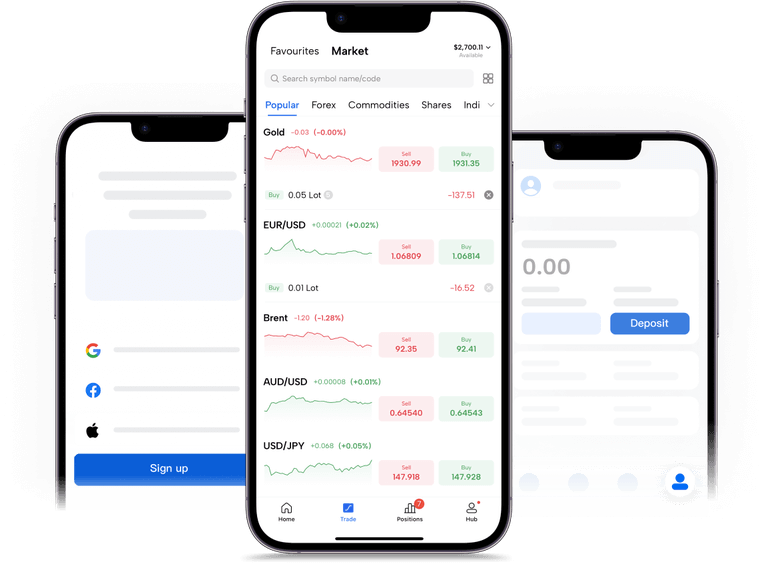
This broker offers access to a long list of financial assets, including Australian and international shares, commodities, indexes, and forex. Mitrade developed a highly user-friendly proprietary trading platform to give new users a better experience if they are unfamiliar with more sophisticated systems like MT4, MT5, or cTrade.
Top Features
Low minimum deposit to open an account.
Multi-currency accounts for international users.
Hundreds of available trading assets, including popular and exotic forex pairs, indexes, and commodities.
Its proprietary trading platform is accessible via mobile, desktop, and web interfaces.
Exceptional charting tools featuring sophisticated indicators supported by TradingView’s popular interface.
Top tools for market research, including an economic calendar, real-time news, sentiment indicators, and more.
Pros
Mitrade is an ASIC-regulated CFD broker with years of experience in the Australian market.
Its proprietary trading platforms make it easy for beginners to execute their trades and keep track of their account’s performance.
Trading costs are competitive and embedded in the instrument’s price via the bid/ask spread.
It only takes a few minutes to open an account.
No fees are applied to deposits or withdrawals.
Cons
Mitrae does not support algorithmic trading.

 Enjoy simple and fast trading Flexible leverage options available Follow real-time trading strategies Demo account with $50,000 virtual funds

#2 – CMC Markets
Overview
CMC Markets has a strong international footprint and a solid presence in Australia since it opened its office in Sidney in 2022. This is an ASIC-regulated CFD broker as well, operating under the license number AFSL 246381, and a member of the Australian Securities Exchange and the Sidney Stock Exchange.
Its CFD trading platform gives residents access to the international markets and supports over 1,200 different instruments, ranging from commodities to indexes to forex. CMC Markets caters to more than 1 million clients globally and supports trading via its proprietary trading platform and third-party software, including MetaTrader 4 and TradingView webhooks.
Top Features
This provider does not require a minimum deposit to open an account.
Its platform has received a 4-star rating on Trustpilot after 3,000 reviews.
CMC Markets’ parent company is listed on the London Stock Exchange, and the firm is regulated by agencies in multiple top-notch jurisdictions.
CMC’s proprietary platform features a pattern recognition scanner that makes it easier for traders to identify technical setups.
Bid/ask spreads on the most popular trading instruments like gold, EUR/USD, and the S&P500 index are highly competitive.
Pros
Highly regulated CFD broker with a solid reputation in the Australian market.
Thousands of available trading assets, including traditional and exotic forex pairs, domestic and international shares, and more.
Intuitive and user-friendly mobile app with an integrated chart analysis tool.
Supports third-party trading systems like MT4 and TradingView.
Its premium program, called CMC Alpha, offers fee discounts for high-volume traders.
Round-the-clock customer support for crypto traders.
Cons
CMC’s proprietary platform can be a bit difficult to use for absolute beginners.
#3 – IC Markets
Overview
IC Markets was founded in Australia in 2007 after receiving a license to legally operate in the country as a CFD broker.
The platform has secured key partnerships with top companies like TradingView to make it easier for their users to execute trades from within their charts.
This allowed IC Markets to scale its business rapidly, turning it into a top player in the Australian markets after just a few years. The platform offers round-the-clock assistance to its users, supports third-party interfaces only including MT4, MT5, and TradingView, and offers multiple account types to suit users’ different needs.
Top Features
Long list of over 1,800 available trading assets.
IC Markets is authorized to operate in the Australian market under ASIC’s ASF license.
This provider supports most third-party trading platforms, including MetaTrader, cTrader, and TradingView.
Under the Raw account, some instruments can be traded with zero spreads and very low fixed commissions.
Demo accounts are available for new users who want to give this broker a test drive before depositing any money.
Algorithmic trading is supported via MetaTrader’s Expert Advisors tool.
Pros
Local CFD trading platform with decades of experience in the market.
Low spreads for popular instruments and competitive commissions on micro lots.
Low minimum deposit of $200 required to open an account.
Useful integration with TradingView via webhooks to execute trades from within this popular trading tool.
Cons
No proprietary trading platform.
MetaTrader and cTrader can be difficult to use for beginners.
#4 – Vantage Markets
Overview
Founded in 2009, Vantage is also an Australian trading platform licensed by ASIC to act as a CFD broker in the country (AFSL 428901). It currently caters to over 5 million users globally, offering access to the international markets via these derivatives.
The platform rose to popularity due to its recent deal with the Ferrari F1 Team. It supports trading via its proprietary web-based solution and mobile app and through third-party systems, including MT4, MT5, and TradingView.
Top Features
Four types of accounts are available to traders: Standard, RAW Classic, RAW Premium, and Perpetual.
Vantage does not charge any deposit or withdrawal fees but requires a minimum deposit of $50 to activate a Standard account.
This CFD broker offers access to thousands of trading assets, including shares, forex, commodities, cryptocurrencies, and indexes.
Its commissions for most forex pairs start at USD 2, while spreads start at 0.14 pips.
Traders get access to the maximum leverage ratio permitted in Australia (30:1).
Pros
Australian broker with more than two decades of positive track record in the country.
Top-notch proprietary trading platform, powerful research tools, an economic calendar, live news feed, and sentiment tracker.
Vantage created a robust library of educational and research materials available to users from within its proprietary interface.
Competitive spreads for the most popular instruments like EUR/USD and the S&P 500 index.
Low minimum deposit compared to some of its competitors.
No deposit or withdrawal fees.
Cons
Smaller selection of forex pairs compared to some of its competitors.
#5 – Fusion Markets
Overview
Fusion Markets is a CFD broker specializing in forex. The company was founded in 2017 by industry veterans and has progressively established its footprint in the global markets by offering industry-leading execution times, copy trading features, and transparent low fees starting at $2.25 per side.
The company holds an AFS license (385620) to operate legally in the country and has subsidiaries in other jurisdictions to serve international customers as well. Fusion Markets supports all of the most popular third-party trading interfaces, including both versions of MetaTrader, cMarkets, and TradingView.
Top Features
Two account types (Zero and Classic) are available for traders depending on their needs and trading volumes.
Fusion Markets claims to be 36% cheaper than other CFD forex brokers.
The platform charges flat commissions of $4.5 per lot for most instruments and zero spreads.
This broker does not require a minimum deposit to activate an account.
Zero fees on deposits or withdrawals.
The Fusion+ program gives traders access to a sophisticated copy trading tool.
Pros
Fusion Markets supports algorithmic trading via MetaTrade’s EA feature.
Ample selection of CFD products, including forex, commodities, indexes, shares, and cryptocurrencies.
Users can trade assets from within TradingView with this provider via its existing webhook.
A demo account is available for beginners to test this broker’s services before depositing money.
Fusion Markets’ platforms support top tools, including a live news feed, an economic calendar, a sponsored VPS (for algorithmic trading), and more.
Cons
This CFD broker does not offer a proprietary trading platform. Some of the systems it supports can be difficult to use for beginners.
#6 – eToro
Overview
eToro officially entered the Australian market in 2016 after obtaining its AFS license (491139). However, this top CFD trading platform has been around for nearly two decades, offering its 40 million global customers access to the financial markets.
The company supports trading only via its proprietary platform and is well-known for its highly user-friendly copy trader program, which allows beginners to rely on the wisdom of other traders to get started in the markets.
Top Features
Well-reputed CFD broker with a presence in 75 countries and heavily regulated in multiple top-tier jurisdictions, including the United Kingdom, Singapore, and the United States.
Advanced proprietary trading interface featuring a top-notch charting tool, advanced research tools like screeners, calendars, and a live news feed, and more.
Extensive portfolio of more than 7,000 CFDs, including trading instruments like domestic and international shares, commodities, forex, and cryptocurrencies.
Its award-winning copy trading platform makes it easy for new users to execute their first trades.
Users get access to top-notch educational materials via the eToro Academy.
No fees on deposits or withdrawals for most payment methods.
Pros
Advanced copy trading tool.
Extensive portfolio of available trading assets.
User-friendly proprietary platform featuring advanced charting tools with dozens of indicators.
Low minimum deposit of $50 required to activate a new account.
Cons
eToro does not support third-party trading systems like MetaTrader or cTrader.
This CFD broker does not support algorithmic trading.
#7 – IG
Overview
IG was one of two companies that first launched CFDs in Australia. They obtained their AFS license (515106) in 2022 and started to build their presence in the country as a leading CFD provider from the get-go.
Nowadays, they cater to more than 300,000 users around the globe and offer competitive spreads on multiple trading assets, including precious metals, forex, indexes, shares, and more.
They support trading via their award-winning proprietary web-based and mobile platform primarily, but also allow users to rely on third-party systems like MetaTrader and TradingView to execute their transactions.
Top Features
Long-dated footprint in the Australian market dating back to 2002, back when CFDs just made their appearance.
IG supports 24/7 trading on major forex pairs and indexes.
Long list of available trading instruments, including more than 80 forex pairs, 35 commodities, and 36 global indexes.
This provider supports MetaTrader 4 and TradingView webhooks, along with offering a proprietary platform for users.
Competitive trading costs embedded in each instrument’s bid/ask spread.
IG’s platform offers protection from price slippage via a feature called “guaranteed stop loss”.
Pros
Extended trading sessions for a selected number of instruments.
IG provides access to CFDs on options and futures.
A demo account is available for new users who want to give the platform a test drive.
No minimum deposit required to activate an account.
Ample library of educational materials via the IG Academy program, along with top-notch research tools like a client sentiment tracker and a stock screener.
Cons
Trading costs are higher than the average compared to other providers in this list.
#8 – Pepperstone
Overview
Founded 16 years ago, Pepperstone caters to more than 800,000 traders across the globe. This ASIC-regulated broker knows its way around the local market but has established its presence in over 130 countries and has processed AUD $1 trillion in trades since its trading platform was launched.
Apart from its web-based and mobile trading platforms, this CFD broker supports MetaTrader 4 and 5 and TradingView webhooks that allow users to execute transactions from within this popular tool.
Top Features
Pepperstone offers tight spreads for thousands of instruments, including 90 forex pairs, 1,100 global shares, 20 stock indexes, and 40 commodities.
The Razor CFD account offers a flat commission of $3.50 per lot for most instruments and zero spreads.
Pepperstone offers higher leverage ratios for selected instruments of 200:1 – higher than the industry’s average in Australia.
This CFD broker supports copy trading through a proprietary list of signal providers. Trades can be executed via MT4 and MT5.
No minimum deposit required to activate an account.
Pros
Tightly-regulated CFD broker with a native footprint in the Australian market.
Hundreds of different trading assets available via CFDs.
Zero spreads and fixed commissions on the Razor account.
Pepperstone offers attractive premium accounts for high-volume traders.
No deposit or withdrawal fees.
Support for third-party trading systems, along with access to a top-notch proprietary platform.
Cons
Limited library of educational materials.
How to Start Trading with an ASIC-Regulated CFD Broker
Choose a Broker: Select an ASIC-regulated CFD broker with an AFS license number (e.g., Mitrade).
Register: Complete their online application by providing personal details and tax information.
Pass the Assessment: Complete the mandatory suitability test. This aims to confirm that the user understands the risks of using leverage and margin to trade.
ID Verification: Upload a Passport or Driver’s License to comply with KYC verifications.
Install a Trading Platform: Download the broker’s available trading software, whether that is a proprietary platform or third-party applications like MT5 or cTrader.
Practice: Use a Demo Account to test strategies with virtual funds before depositing money into a real account.
Fund the Account: Deposit capital via OSKO, BPAY, or credit card (minimums vary by broker).
Execute a First Trade: Select an asset, select the number of lots that will be bought or sold (short selling), and set a stop-loss order to mitigate risks.
1. What is the role of ASIC in Australian CFD trading?
ASIC is the government body that regulates brokers to ensure market transparency and protect traders from fraudulent schemes. It enforces strict rules, such as capping leverage at 30:1 for retail clients, to help manage the high risks associated with derivative trading.
2. Do I own the underlying asset when trading CFDs?
No, CFDs are strictly price-speculation contracts where you never take legal ownership of the underlying asset. You are simply trading the price difference between the time you open the position and the time you close it.
3. What is the difference between a Standard and a Raw account?
A Standard account typically has no commission fees but includes a wider spread, making it simpler for beginners to calculate costs. A Raw account offers near-zero spreads but charges a fixed commission per trade, which is generally more cost-effective for high-frequency scalpers.
Disclaimer: The content presented above, whether from a third party or not, is considered as general advice only. CFD trading involves significant risk of loss. Past performance does not guarantee future results. This article serves informational purposes only and does not constitute financial advice. Consider your risk tolerance before trading.


