




Best Short Selling Brokers Australia (2026): Top 7 Platforms to Short Stocks & CFDs

Short selling has become an increasingly popular strategy among Australian traders, especially during periods of market volatility. While many investors focus solely on buying assets in the hope that prices will rise, short selling allows traders to potentially profit when markets move in the opposite direction.
With global markets experiencing frequent swings driven by interest rate decisions, inflation data and geopolitical events, the ability to trade both rising and falling markets has become an essential part of many traders' strategies. This is one reason why CFD trading has grown rapidly in Australia, offering investors a simple way to open short positions without borrowing physical shares.
However, choosing the right broker is just as important as choosing the right trading strategy. The best short selling brokers should offer competitive spreads or commissions, access to a wide range of markets, reliable trading platforms, fast order execution and strong regulatory protection under the Australian Securities and Investments Commission (ASIC).
In this guide, we've compared the best short selling brokers in Australia for 2026, including:
Mitrade – Best Overall for CFD Short Selling
Pepperstone – Best for Low Spreads
IG Markets – Best for Global Market Access
CMC Markets – Best for Advanced Trading Tools
FP Markets – Best MetaTrader Broker
Eightcap – Best for Forex & Crypto CFDs
Interactive Brokers – Best for Direct Share Short Selling
What Is Short Selling?
Short selling is a trading strategy that aims to profit from a decline in the price of a financial asset. Instead of buying first and selling later, traders sell first and buy back later, hoping the asset's price falls so they can close the position at a lower price and keep the difference as profit.
For example:
You believe an ASX-listed stock currently trading at A$100 is likely to decline.
You open a short position at A$100.
The share price falls to A$85.
You close the trade by buying back at A$85.
Your gross profit is A$15 per share, excluding spreads, commissions and overnight financing costs.
If the market moves against your prediction and the price rises instead, you'll incur a loss. Unlike traditional investing, where the maximum loss is generally limited to your initial investment, losses from short selling can increase significantly if prices continue rising, making risk management essential.
Traditional Short Selling vs CFD Short Selling
Australian investors can generally short the market in two ways:
For most retail investors, CFDs (Contracts for Difference) provide a much simpler way to short the market. Since CFDs are derivative products, traders don't need to borrow shares or locate stock inventory before opening a short position. Instead, they can simply choose "Sell" on their trading platform and potentially benefit if the market falls.
This flexibility explains why many Australian traders use CFD brokers like Mitrade, to short not only Australian and US shares, but also stock indices, gold, oil, forex pairs and cryptocurrencies—all from a single trading account.
*Tip: Short selling is a high-risk strategy because market losses can escalate quickly if prices rise unexpectedly. Before opening any short position, traders should always use stop-loss orders, manage leverage carefully and ensure they fully understand the risks involved.
“Short Selling with an ASIC-regulated broker. Fast AUD funding via PayID. ”
Comparison Table: Best Short Selling Brokers Australia (2026)
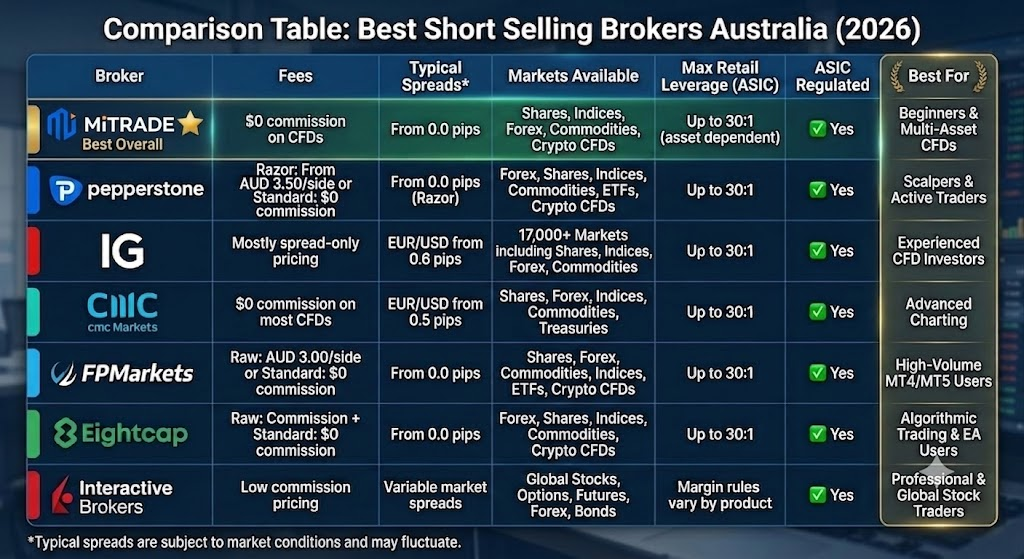
*Note: Under ASIC regulations, the maximum leverage available to Australian retail traders is 30:1 for major forex pairs, 20:1 for major indices and gold, 5:1 for share CFDs, and 2:1 for crypto CFDs. These limits apply across all ASIC-regulated CFD brokers.
Best Short Selling Brokers Australia (Top 7)
1. Mitrade
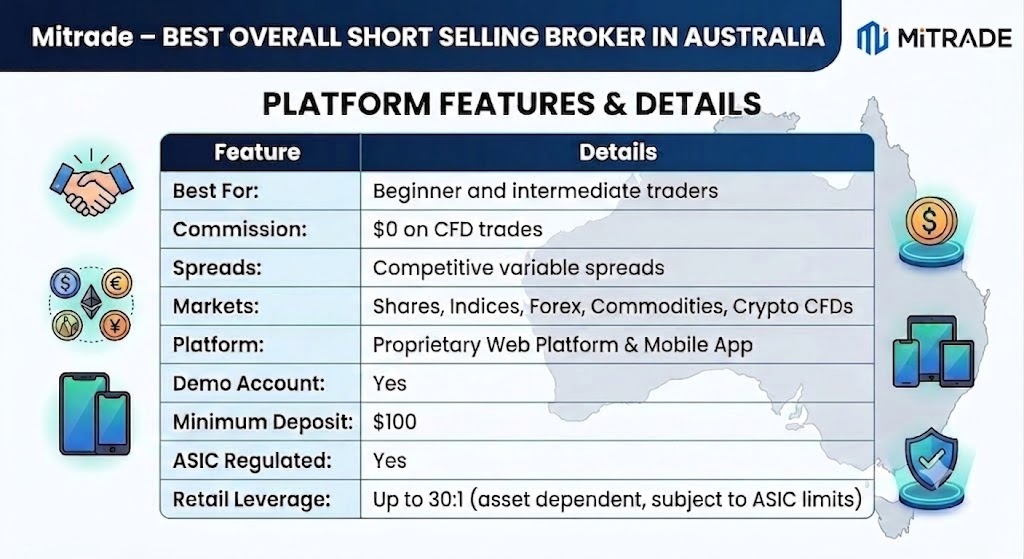
If you're looking for a simple, low-cost way to short sell stocks and other financial markets, Mitrade is our top choice for Australian traders in 2026. Regulated by ASIC, Mitrade offers commission-free CFD trading across thousands of global markets, allowing traders to take both long and short positions with just a few clicks.
Unlike traditional share short selling—which often requires borrowing shares and maintaining a margin account—Mitrade lets you short sell through CFDs. This means you can speculate on falling prices without owning the underlying asset, making it an accessible option for beginners and experienced traders alike.
One of Mitrade's biggest advantages is its intuitive trading platform. Opening a short position is straightforward: simply select the asset you want to trade, choose "Sell", set your trade size, and manage your risk using built-in stop-loss and take-profit orders. This streamlined experience makes Mitrade particularly appealing for traders who want to react quickly to market opportunities.
Australian traders can short a wide range of CFD markets, including:
Australian and US share CFDs
Major global stock indices (ASX 200, US500, NASDAQ 100, Germany 40 and more)
Forex pairs
Gold, silver and crude oil
Cryptocurrency CFDs
Because Mitrade charges zero commission on CFD trades, trading costs are primarily built into the spread. This transparent pricing structure makes it easier for traders to calculate potential profits and losses before entering a position.
“Short Selling with an ASIC-regulated broker. Fast AUD funding via PayID. ”
2. Pepperstone
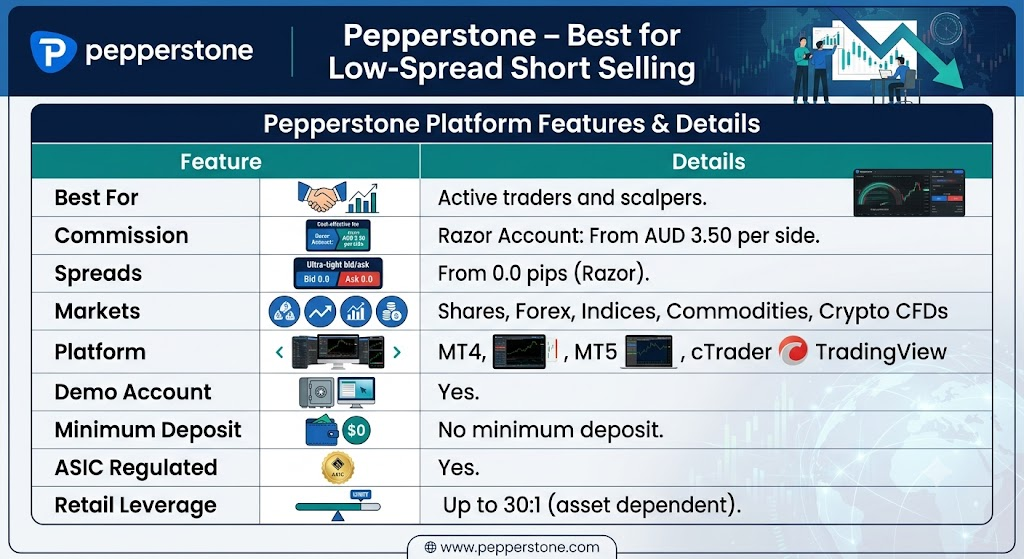
Pepperstone is one of Australia's most recognised CFD brokers and is particularly popular among active traders looking to short markets with minimal trading costs. Regulated by ASIC, the broker provides access to thousands of CFD instruments, including shares, indices, forex, commodities and cryptocurrencies.
One of Pepperstone's biggest strengths is its Razor Account, which offers raw spreads from 0.0 pips with a low commission, making it an excellent choice for scalpers and high-frequency traders. Traders can also choose between MetaTrader 4, MetaTrader 5, cTrader and TradingView, providing plenty of flexibility for different trading styles.
Whether you're looking to short ASX stocks, US equities or major stock indices during periods of market weakness, Pepperstone offers fast execution and professional-grade trading tools.
3. IG
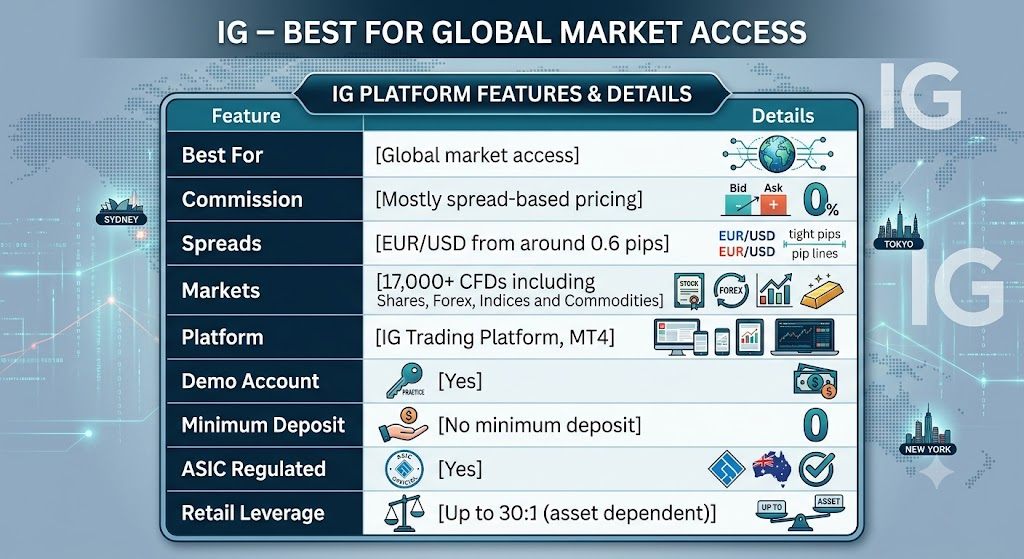
IG is one of the world's largest CFD providers and offers Australian traders access to more than 17,000 global markets. If you're interested in short selling international stocks or diversifying beyond the Australian market, IG provides one of the broadest product selections available.
Through CFDs, traders can short Australian shares, US stocks, European equities, indices, commodities, forex and more from a single account. IG also offers powerful research tools, market news, economic calendars and educational resources, making it suitable for both beginners and experienced investors.
Its proprietary web platform is highly intuitive, while MetaTrader 4 is available for traders who prefer automated strategies.
4. CMC Markets
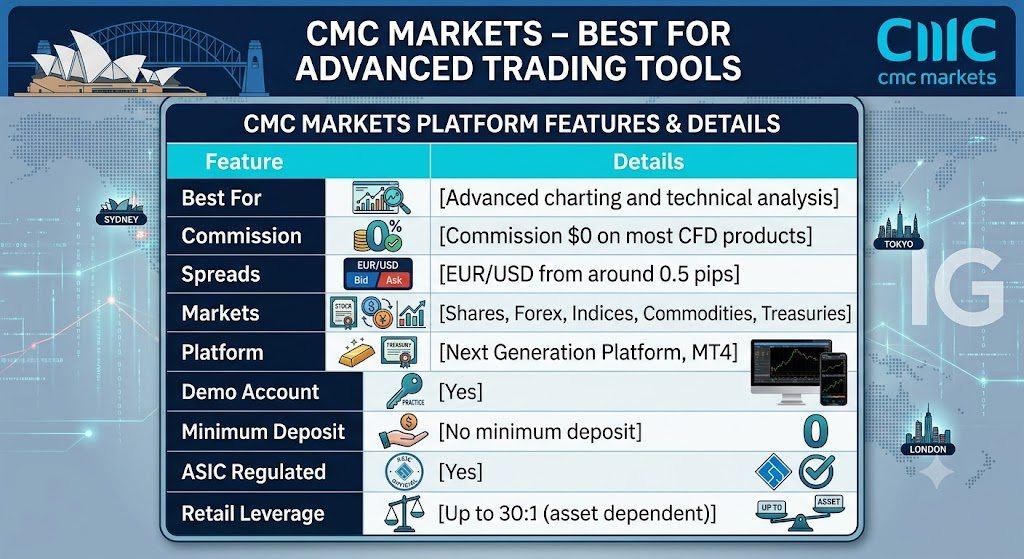
CMC Markets is well known for its feature-rich Next Generation trading platform, offering advanced charting, technical indicators and sophisticated order management. For traders who rely heavily on technical analysis when identifying short-selling opportunities, CMC Markets is one of the strongest options available.
The broker offers thousands of CFD products, including Australian and international shares, forex, commodities, indices and treasury instruments. Commission-free CFD trading on many products and competitive spreads help keep overall trading costs relatively low.
5. FP Markets
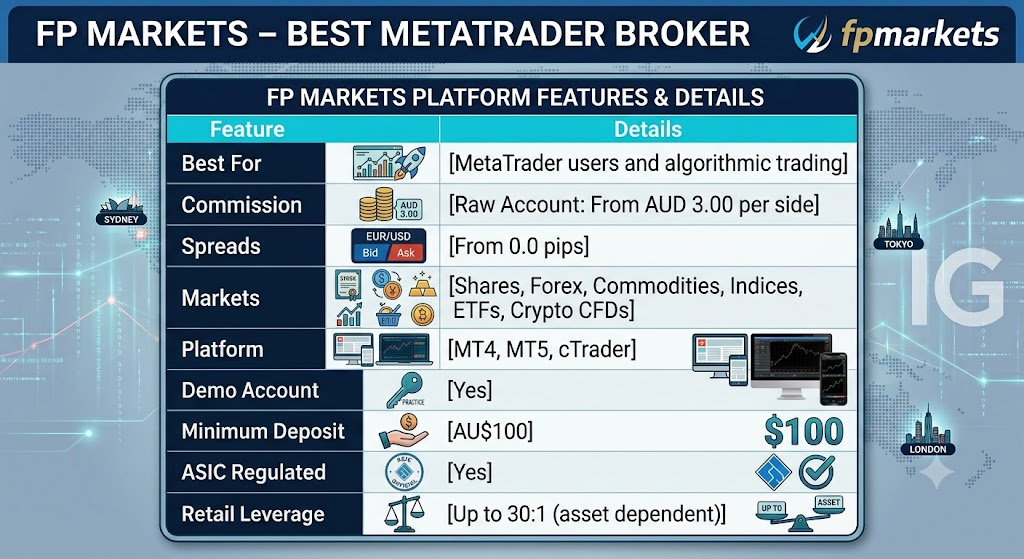
FP Markets is an Australian broker that has built a strong reputation among MetaTrader users. It provides competitive spreads, low commissions and supports both MT4 and MT5, making it attractive to traders who use Expert Advisors (EAs) or algorithmic trading strategies.
Australian traders can short thousands of CFD instruments, including global shares, forex pairs, commodities, indices and ETFs. FP Markets also offers flexible account types, allowing traders to choose between commission-free Standard accounts or Raw accounts with institutional-style spreads.
6. Eightcap
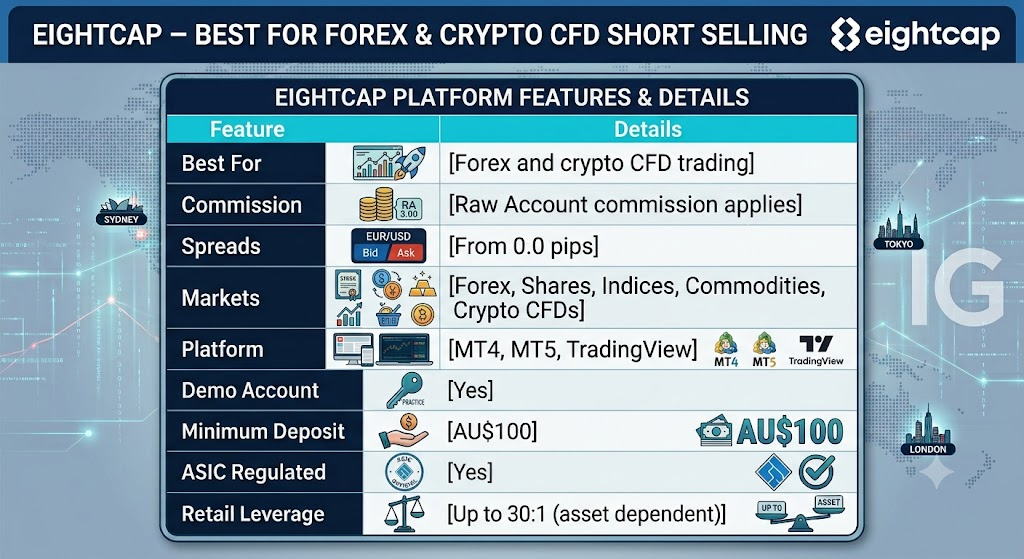
Eightcap has become increasingly popular among Australian CFD traders thanks to its competitive pricing and strong selection of forex and cryptocurrency CFDs. The broker supports both MetaTrader 4 and MetaTrader 5 and provides access to TradingView integration for advanced charting.
In addition to traditional markets such as shares, indices and commodities, Eightcap offers one of the wider selections of crypto CFDs available to Australian traders, making it attractive for those looking to short highly volatile digital assets.
7. Interactive Brokers
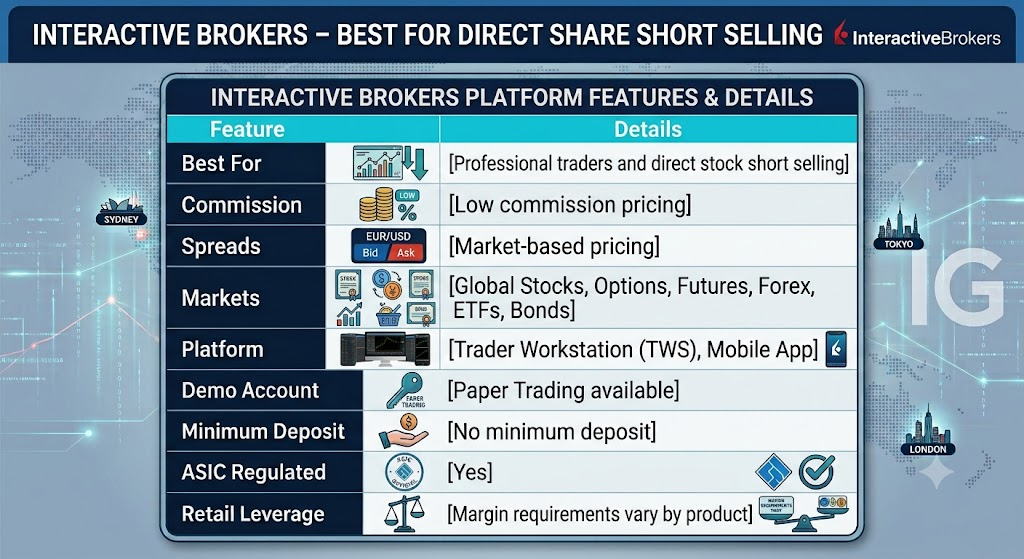
Unlike most brokers on this list that primarily focus on CFDs, Interactive Brokers offers access to direct global share trading alongside margin lending and stock borrowing facilities. This makes it one of the preferred brokers for professional and sophisticated investors interested in traditional share short selling.
Clients can access more than 150 global exchanges and trade stocks, options, futures, forex, bonds and ETFs through the highly regarded Trader Workstation (TWS) platform. Although the platform has a steeper learning curve than many CFD brokers, it offers institutional-grade execution and competitive financing rates.
Why Many Australian Traders Prefer CFDs for Short Selling
While traditional short selling has long been used by professional investors, many Australian retail traders now prefer Contracts for Difference (CFDs) because they offer a simpler and more flexible way to profit from falling markets.
With traditional share short selling, investors typically need a margin account, access to borrowed shares, and must meet additional borrowing requirements. By contrast, CFD trading allows you to speculate on price movements without owning or borrowing the underlying asset. Opening a short position is often as simple as selecting "Sell" on your trading platform.
Here are the main reasons CFDs have become the preferred choice for many Australian traders:
1. Short Sell Without Borrowing Shares
One of the biggest advantages of CFDs is convenience. You don't need to locate or borrow shares before opening a short trade. The broker handles the CFD transaction, allowing you to enter and exit positions quickly as market conditions change.
2. Access Multiple Global Markets
CFD brokers allow traders to short far more than just Australian shares. From a single account, you can trade:
ASX-listed stocks
US stocks
Global stock indices
Forex pairs
Gold and silver
Oil
Cryptocurrency CFDs
This gives traders more opportunities to benefit from bearish market trends across different asset classes.
3. Lower Capital Requirements
CFDs are traded on margin, meaning you only need to deposit a percentage of the total trade value. While leverage increases both potential profits and losses, it enables traders to access larger market exposure with less upfront capital.
For example, under ASIC regulations, retail clients can trade share CFDs with leverage of up to 5:1, while major forex pairs can be traded with leverage of up to 30:1.
4. Hedge Existing Investments
Many investors use CFD short positions as a hedging tool. Instead of selling their long-term share portfolio during periods of uncertainty, they may open a short CFD position to help offset potential losses if markets decline.
5. Fast Execution During Volatile Markets
Market conditions can change rapidly after company earnings, central bank announcements or major economic data releases. CFD platforms enable traders to react quickly by opening short positions almost instantly, helping them take advantage of short-term price movements.
How to Open Your First Short Position
Opening a short position with a CFD broker is much easier than many beginners expect. The process usually takes only a few minutes.
Step 1: Choose an ASIC-Regulated Broker: Select a trusted broker that offers competitive spreads, reliable execution and access to the markets you want to trade.
For beginners, Mitrade is an excellent option thanks to its commission-free CFD trading, intuitive platform and wide range of global markets.
“Short Selling with an ASIC-regulated broker. Fast AUD funding via PayID. ”
Step 2: Open and Verify Your Account: Complete the online application, verify your identity and fund your trading account.
Many traders also start with a free demo account to practise short selling using virtual funds before risking real money.
Step 3: Select the Market: Search for the asset you want to trade, such as:
ASX 200 Index
Commonwealth Bank shares
Apple stock
Gold
EUR/USD
Step 4: Choose "Sell": Instead of clicking Buy, simply select Sell to open a short CFD position.
Step 5: Set Your Risk Controls: Before placing the trade, consider setting:
Stop-loss order
Take-profit level
Appropriate position size
These tools help manage risk if the market moves against your position.
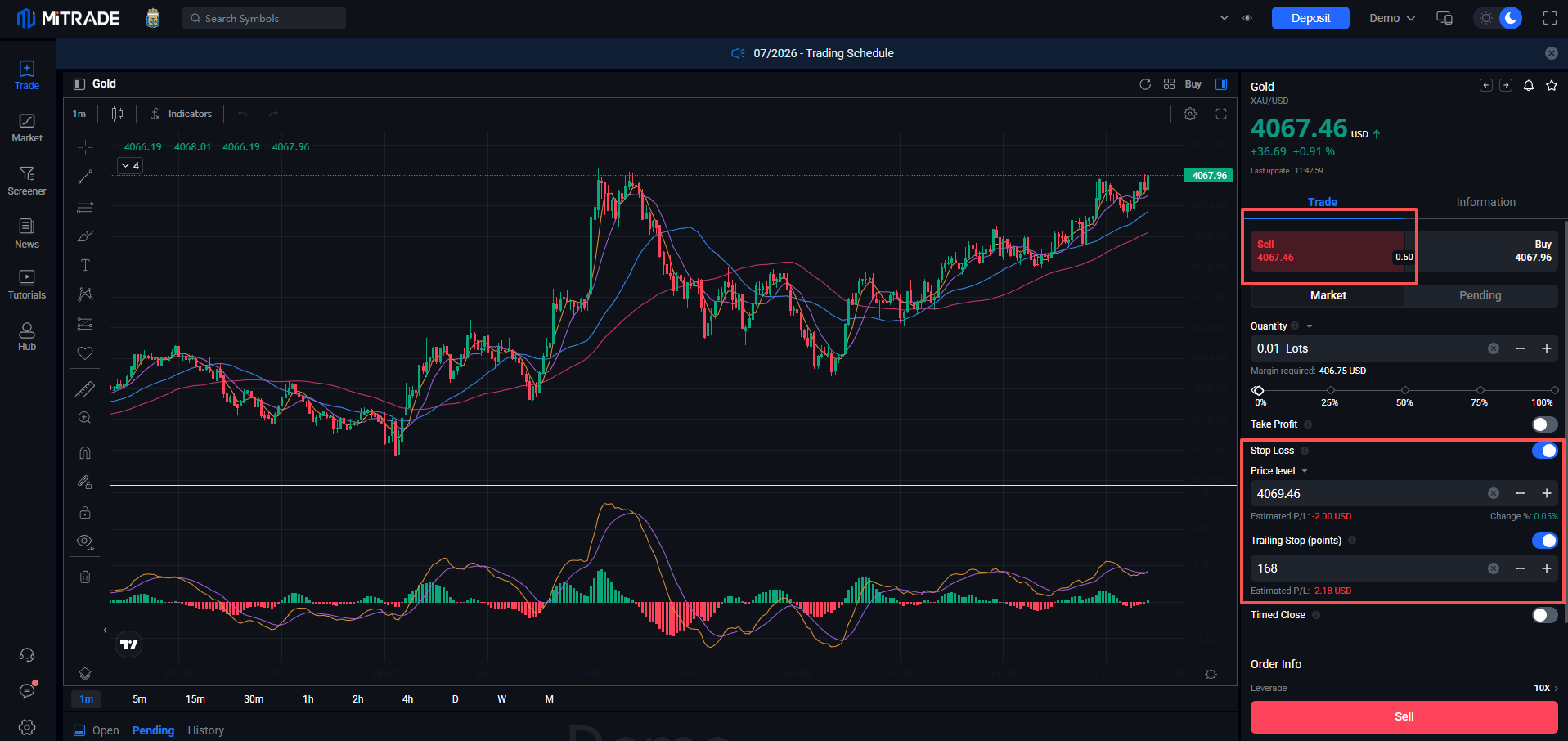
Source: Short selling and SL Panel on Mitrade platform
Step 6: Monitor and Close the Trade: If the asset price falls as expected, you can close the trade to realise your profit. If the market rises, your stop-loss can help limit potential losses.
👉 Ready to Start Short Selling?
Mitrade offers commission-free CFD trading, competitive spreads, a free demo account and an easy-to-use platform designed for Australian traders. Whether you want to short stocks, indices, forex, gold or cryptocurrencies, you can open an account in minutes and start practising with virtual funds before trading with real money.


You might be interested in…
1. Is short selling legal in Australia?
Yes. Short selling is legal in Australia and regulated by ASIC. Retail investors can short financial markets through CFD brokers, while traditional share short selling is generally available through margin accounts with eligible brokers.
2. What is the best short selling broker in Australia?
The best broker depends on your trading style. Mitrade is a strong choice for beginners due to its commission-free CFD trading and user-friendly platform, while Pepperstone is popular among active traders seeking ultra-low spreads.
3. Can I short ASX stocks using CFDs?
Yes. Most ASIC-regulated CFD brokers allow you to short many ASX-listed shares, enabling you to potentially profit when Australian stock prices decline.
4. What markets can I short with a CFD broker?
Depending on the broker, you can typically short:
Australian and international shares
Stock indices
Forex pairs
Gold and other commodities
Cryptocurrency CFDs
Disclaimer: The content presented above, whether from a third party or not, is considered as general advice only. CFD trading involves significant risk of loss. Past performance does not guarantee future results. This article serves informational purposes only and does not constitute financial advice. Consider your risk tolerance before trading.


