




Gold just snapped a multi-week slide - what’s next?

After weeks of drifting lower, gold has found buyers again. Bullion prices climbed back above US$4,100 per ounce, snapping a multi-week decline after weaker-than-expected US employment data changed expectations for interest rates.
The move quickly spilled into Australian markets, causing local gold miners to surge. Catalyst Metals (ASX: CYL) jumped +19.2%, Genesis Minerals (ASX: GMD) rose +16.7%, and several more companies jumped by double-digits, as the precious metal bounced sharply from multi-year support levels and traders rotated back into the sector.
Across trading desks, attention has turned to whether gold’s recent weakness marked a temporary pullback—or the beginning of another leg higher.
For Australian traders, the rebound is a reminder that gold often returns to the spotlight whenever expectations around interest rates, inflation, or global uncertainty begin to shift.
What’s driving gold’s rebound?
Gold’s rebound isn’t being driven by a single event. Instead, traders are reassessing the broader macroeconomic backdrop after several key market drivers shifted in bullion’s favour.
The biggest catalyst was the latest US employment report, which showed the economy created just 57,000 jobs, well below expectations.
The weaker labour market immediately reduced expectations for further Federal Reserve tightening, sending bond yields and the US dollar lower. Because gold doesn’t generate income like bonds or savings accounts, lower interest rate expectations generally improve its relative appeal.
But the jobs report wasn’t the only force supporting gold. Several other macroeconomic factors are also shaping the outlook for bullion:
The rebound has also reignited one of the market’s oldest investment debates. If interest rate expectations continue easing, gold’s role as both a defensive asset and an inflation hedge could once again come into sharper focus for institutional investors.
For Australian traders, opportunities like these no longer require purchasing physical bullion or waiting for local gold miners to react. Contracts for Difference (CFDs) make it possible to trade movements in the gold price directly, with the flexibility to benefit from both rising and falling markets.
Whether gold continues its recovery or volatility returns, Australian traders have more ways than ever to respond as market conditions change.
“Trade gold CFDs with an ASIC-regulated broker. Fast AUD funding via PayID. ”
Why traders are paying attention to gold again
Gold has once again reminded investors why it remains one of the world’s most closely watched assets. Whether markets are responding to interest rate expectations, inflation concerns, or geopolitical developments, gold is often one of the first places capital moves.
Unlike physical bullion sitting in a vault, however, the global gold market trades almost continuously, reacting in real time to changing macroeconomic conditions.
That constant flow of market-moving news is one of the reasons gold remains so attractive to active traders, with periods of relative calm often giving way to sharp price moves when several catalysts align.
Why trading gold isn’t always straightforward
Whether it’s physical bullion, gold ETFs, or mining shares, each offers a different way to gain exposure to the precious metal—and each comes with its own practical limitations.
Many Australian investors quickly discover that traditional approaches aren’t always as simple or flexible as they first appear.
Physical ownership: Buying bullion means paying the full purchase price upfront, while also considering storage, insurance, and dealer buy/sell spreads.
Limited flexibility: Physical gold and many gold ETFs are generally designed for investors expecting prices to rise. They don’t provide a simple way to benefit if gold moves lower.
Around-the-clock markets: Gold trades almost 24 hours a day, with some of the biggest price swings occurring during the London and New York sessions while many Australians are asleep.
For traders looking to respond quickly to changing market conditions, these practical limitations can make timely execution more difficult.
How Mitrade helps remove these barriers
Mitrade uses Contracts for Difference (CFDs) to give traders exposure to movements in the gold price without the need to own physical bullion or purchase gold-related investments outright.
Trade rising and falling markets. Unlike physical bullion or many traditional gold investments, CFDs allow traders to take either long or short positions, creating opportunities in both rising and falling markets.
Use capital more efficiently. Under ASIC rules, retail gold CFDs offer leverage of up to 20:1, allowing traders to gain exposure with a smaller initial margin than purchasing bullion outright or building a sizeable position in gold-related investments.
Stay in control around the clock. Gold trades almost 24 hours a day, but you don’t need to monitor every market session. Entry orders, stop-losses, and take-profit levels can all be set in advance, allowing trades to execute automatically if your target price is reached.
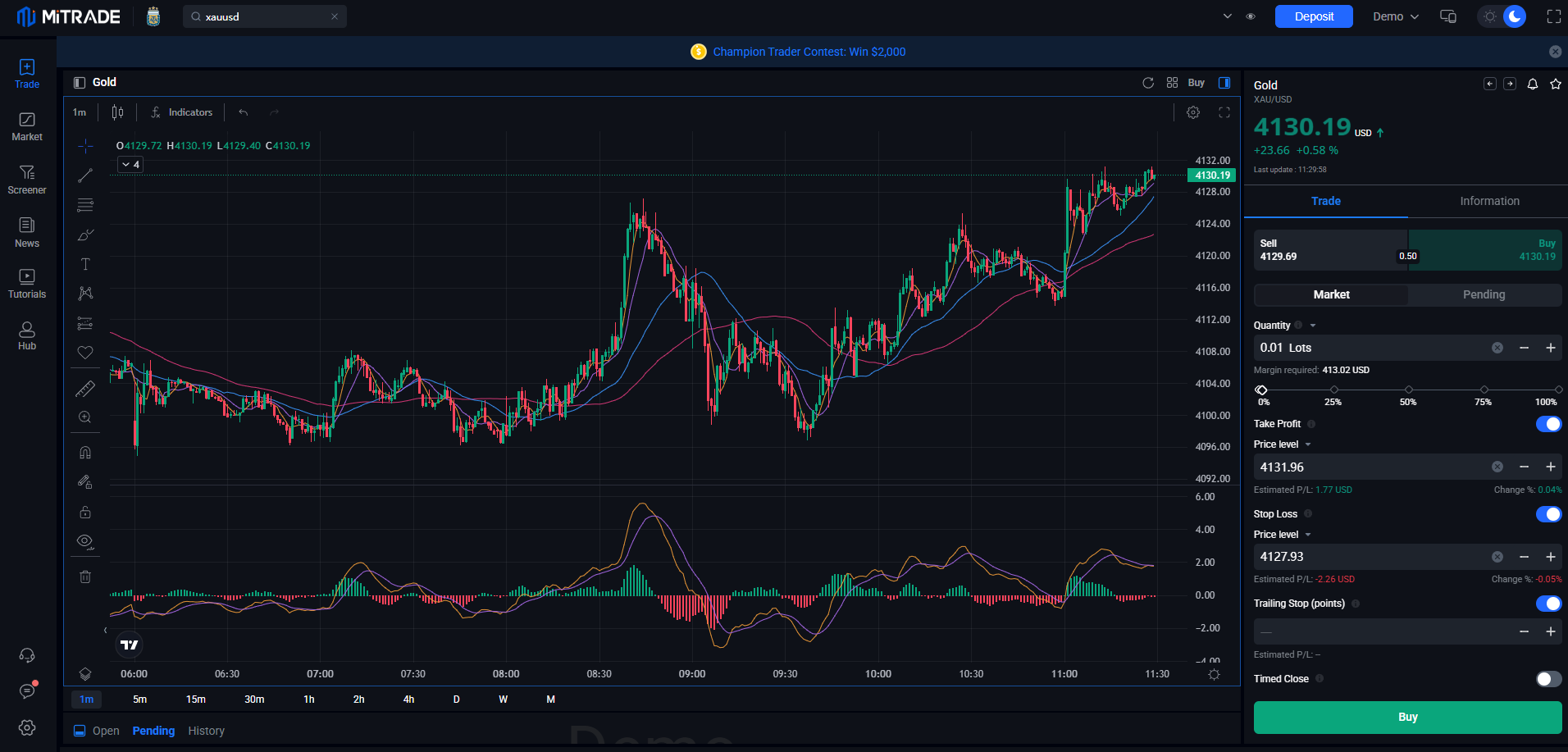
Having the right tools is only part of the equation. The next challenge is recognising when market conditions are beginning to shift—and being ready to act when they do.
“Trade gold CFDs with an ASIC-regulated broker. Fast AUD funding via PayID. ”
What could drive gold’s next move?
The weaker-than-expected US jobs report may have halted gold’s recent decline, but traders are already looking ahead to the next catalysts that could determine whether the rebound has further to run or quickly loses momentum.
Three developments are likely to remain firmly in focus.
Federal Reserve commentary: After the weak payrolls report reduced expectations for another rate hike, traders will be looking to upcoming Federal Reserve commentary and meeting minutes for confirmation that policymakers are becoming less hawkish. Any shift in tone could quickly influence gold prices.
US inflation and bond yields: Gold’s latest rebound was driven partly by falling Treasury yields. Upcoming inflation data will help determine whether yields continue easing or begin climbing again, with both outcomes likely to influence bullion prices.
The US dollar: Gold and the US dollar often move in opposite directions. While the dollar weakened after the jobs report, any recovery could limit gold’s upside, while further weakness would likely provide additional support for the precious metal.
For active traders, the focus has already shifted beyond last week’s payrolls report. The next round of economic data will determine whether gold’s rebound develops into a broader recovery—or simply proves to be another short-lived rally.
Be ready for what comes next
The weak jobs report may have reignited interest in gold, but traders are already looking ahead to the next market-moving event.
Upcoming inflation data, Federal Reserve commentary, and movements in the US dollar all have the potential to reshape expectations in the days ahead.
Mitrade helps Australian traders stay prepared with:
AUD-based accounts, eliminating manual currency conversion.
0% commission trading, with costs incorporated into competitive spreads.
Advanced charting and risk management tools built into the platform.
A mobile app designed for monitoring overseas markets.
ASIC regulation, with retail client funds held in segregated trust accounts.
A free $50,000 demo account to test trading strategies before risking real capital.
Start Trading Gold CFDs in Three Simple Steps
Getting started takes just a few minutes.
Open an Account: Register manually via the Mitrade homepage, or use the fast sign-up process by linking your existing Google or Facebook credentials.
Fund Your Account: Deposit your initial margin using secure Australian payment methods, including POLi or Visa/Mastercard.
Trade CFDs: Access the platform, analyze your preferred trading instruments, define your risk parameters, and execute your long or short position.
Gold is back in focus. Open your account today and be ready for whatever comes next.


1. What moves the gold price the most?
Gold prices are influenced by several global factors, including US interest rate expectations, movements in the US dollar, bond yields, central bank buying, inflation expectations, and geopolitical events. Major economic releases such as US employment data and Federal Reserve announcements can also trigger significant short-term price movements.
2. Can I trade gold without buying physical bullion?
Yes. Gold CFDs allow you to trade movements in the gold price without owning or storing physical gold. Instead of buying bullion, you speculate on whether the price will rise or fall.
3. Can I trade gold if prices are falling?
Yes. Unlike physical gold ownership, CFDs allow traders to take both long and short positions. This means you can potentially benefit from either rising or falling gold prices, depending on market conditions.
Disclaimer: The content presented above, whether from a third party or not, is considered as general advice only. CFD trading involves significant risk of loss. Past performance does not guarantee future results. This article serves informational purposes only and does not constitute financial advice. Consider your risk tolerance before trading.


