


United States Dollar Index declines amid easing safe-haven demand
- US Dollar Index falls as safe-haven demand fades amid growing diplomacy to reopen the Strait of Hormuz.
- Rebounding 10-year US Treasury yields could limit the Greenback's downside amid cooling inflation risks.
- Fed's Schmid called current policy "not tight," warning that high inflation and AI-related investment could drive future price pressures.
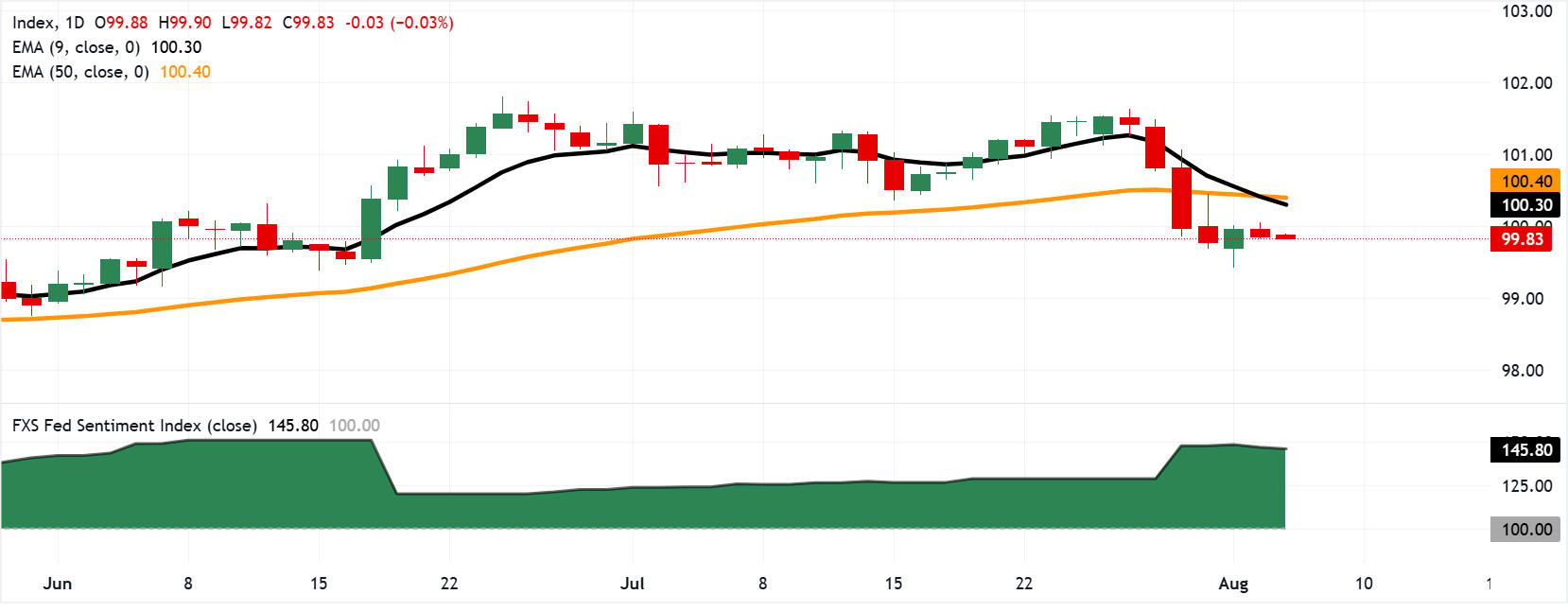
The US Dollar Index (DXY), which measures the value of the US Dollar (USD) against six major currencies, is extending its losses for the second successive day and trading around 99.90 during the Asian session on Wednesday. The Greenback may continue to lose ground as safe-haven demand recedes amid growing diplomatic momentum surrounding a potential agreement to reopen the Strait of Hormuz.
Qatari officials announced on Tuesday that an interim proposal had been drafted, with both Washington and Tehran signaling tangible progress toward restoring access to the critical maritime transit route. This diplomatic breakthrough follows US President Donald Trump’s decision to suspend planned military strikes against Iran, opting to give negotiations room to work while maintaining his demand for the immediate reopening of the waterway.
However, the US Dollar could find minor support from a recovery in the benchmark 10-year US Treasury yield after it dipped toward 4.61% on Tuesday. That initial decline in yields was driven by falling energy prices, which helped cool inflation fears and tempered expectations of a hawkish response from the Federal Reserve (Fed).
Schmid flags AI-driven inflation risks, keeping Dollar bulls alert despite sentiment pullback
Fed’s Schmid delivered a modestly more hawkish message, with a 7.3/10 FXS Speechtracker score slightly above the 7/10 historical average, stressing that current policy is “not tight” and that inflation remains “too high” and “worrisome.” The emphasis on AI-related investment as a fresh inflation driver, the warning that recent disinflation and lower energy costs may be temporary, and the call for tighter monetary policy to secure the 2% target collectively underscore a bias toward further restraint even as growth and the labor market appear resilient and roughly balanced. By reaffirming the PCE gauge as the preferred inflation metric and cautioning against downplaying supply-shock-driven price pressures, the speech leans hawkish for the Dollar despite acknowledging recent progress on inflation.
The FXS Fed Sentiment Index slipped by 0.96 points to 145.80, signaling a slight moderation in perceived hawkishness relative to the prior reading. However, with the index still well above the 100 neutral line, the Fed remains firmly in hawkish territory despite the pullback, aligning with Schmid’s message that policy may need to tighten further even as the FXS Speechtracker score edges only marginally above the established baseline.
Recommended Articles


