


The Federal Reserve hikes to 4%, back above Britain's 3.75%
- GBP/USD drops 39 pips in five minutes through its 200-day average on the Fed
- Fed's rate rises to 3.75-4.00%, passing the Bank of England's 3.75%
The Fed has raised its rate to 3.75-4.00%, its first increase since 2023 and its first move since the cut in December 2025. The UK Bank Rate, the Bank of England's own rate, has been 3.75% since December 2025. Take the middle of the new American range and money held in Pounds stops paying more than money held in Dollars and starts paying less, which is the mechanism this pair runs on. British inflation reached 3.1% in August, exactly the forecast, and the rise came from motor fuel rather than from anything domestic. The American vote was unanimous at 12-0, and the statement gave no guidance on what follows. Britain's rate is now the lower of the two. The Bank of England gets to answer that at 11:00 GMT tomorrow, and is forecast not to.
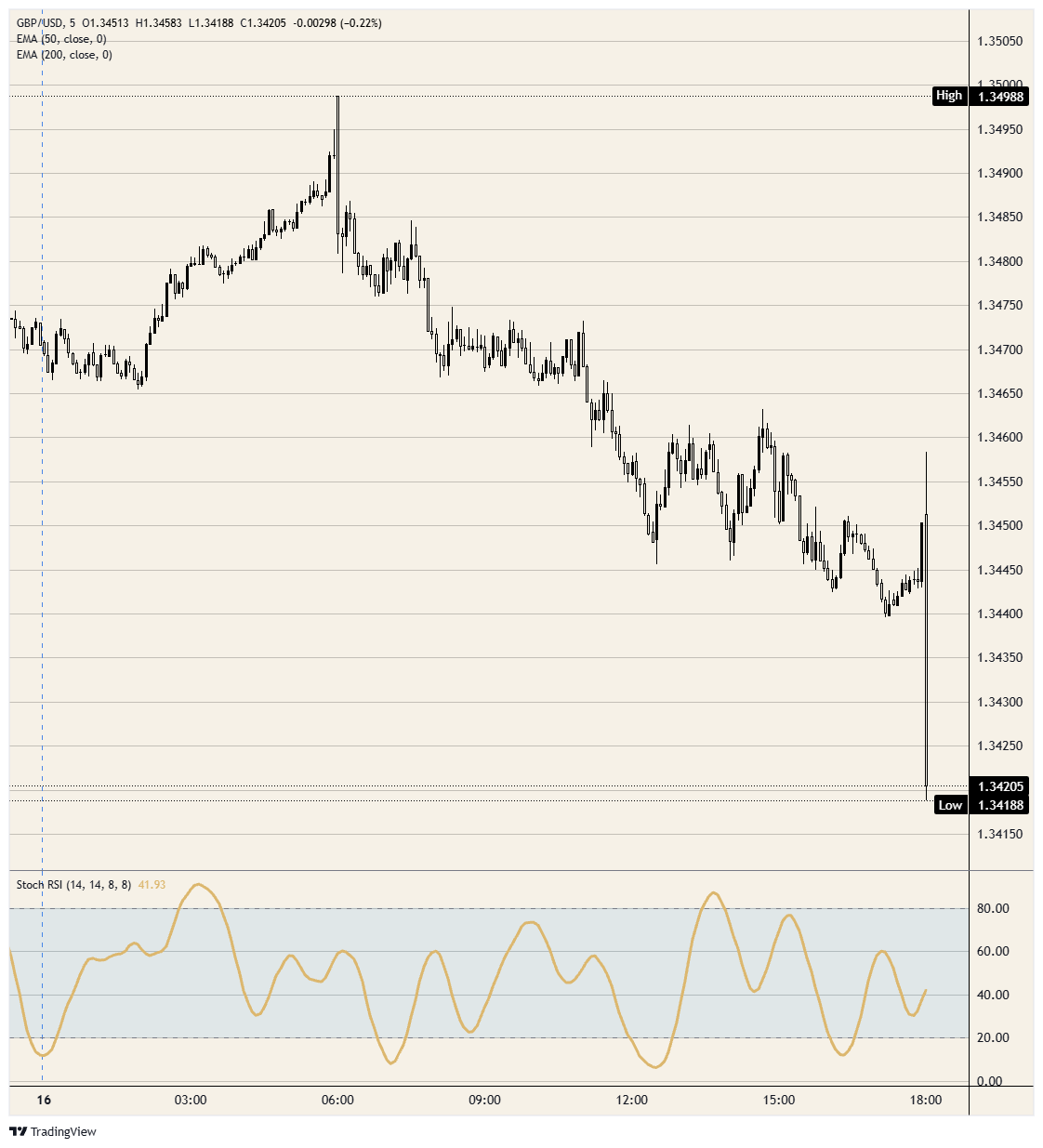
Price ticked up to near 1.3450 on the release and then fell 39 pips inside that one five-minute bar, which is half the range the pair had covered all session. It changes hands in the 1.3400 area at the low of the day, roughly 25 pips below where it sat going into 18:00 GMT. That is clean through the 200-day Exponential Moving Average (EMA) near 1.3450, which this morning's low had gone a single pip beneath and recovered from. The low sits 80 pips under the day's high, set on the 06:00 GMT inflation release. The five-minute momentum gauge reads near 42, which is mid-range, because the drop came faster than the indicator measures.
GBP/USD 5-minute chart
Fed FAQs
Monetary policy in the US is shaped by the Federal Reserve (Fed). The Fed has two mandates: to achieve price stability and foster full employment. Its primary tool to achieve these goals is by adjusting interest rates. When prices are rising too quickly and inflation is above the Fed’s 2% target, it raises interest rates, increasing borrowing costs throughout the economy. This results in a stronger US Dollar (USD) as it makes the US a more attractive place for international investors to park their money. When inflation falls below 2% or the Unemployment Rate is too high, the Fed may lower interest rates to encourage borrowing, which weighs on the Greenback.
The Federal Reserve (Fed) holds eight policy meetings a year, where the Federal Open Market Committee (FOMC) assesses economic conditions and makes monetary policy decisions. The FOMC is attended by twelve Fed officials – the seven members of the Board of Governors, the president of the Federal Reserve Bank of New York, and four of the remaining eleven regional Reserve Bank presidents, who serve one-year terms on a rotating basis.
In extreme situations, the Federal Reserve may resort to a policy named Quantitative Easing (QE). QE is the process by which the Fed substantially increases the flow of credit in a stuck financial system. It is a non-standard policy measure used during crises or when inflation is extremely low. It was the Fed’s weapon of choice during the Great Financial Crisis in 2008. It involves the Fed printing more Dollars and using them to buy high grade bonds from financial institutions. QE usually weakens the US Dollar.
Quantitative tightening (QT) is the reverse process of QE, whereby the Federal Reserve stops buying bonds from financial institutions and does not reinvest the principal from the bonds it holds maturing, to purchase new bonds. It is usually positive for the value of the US Dollar.
Recommended Articles


